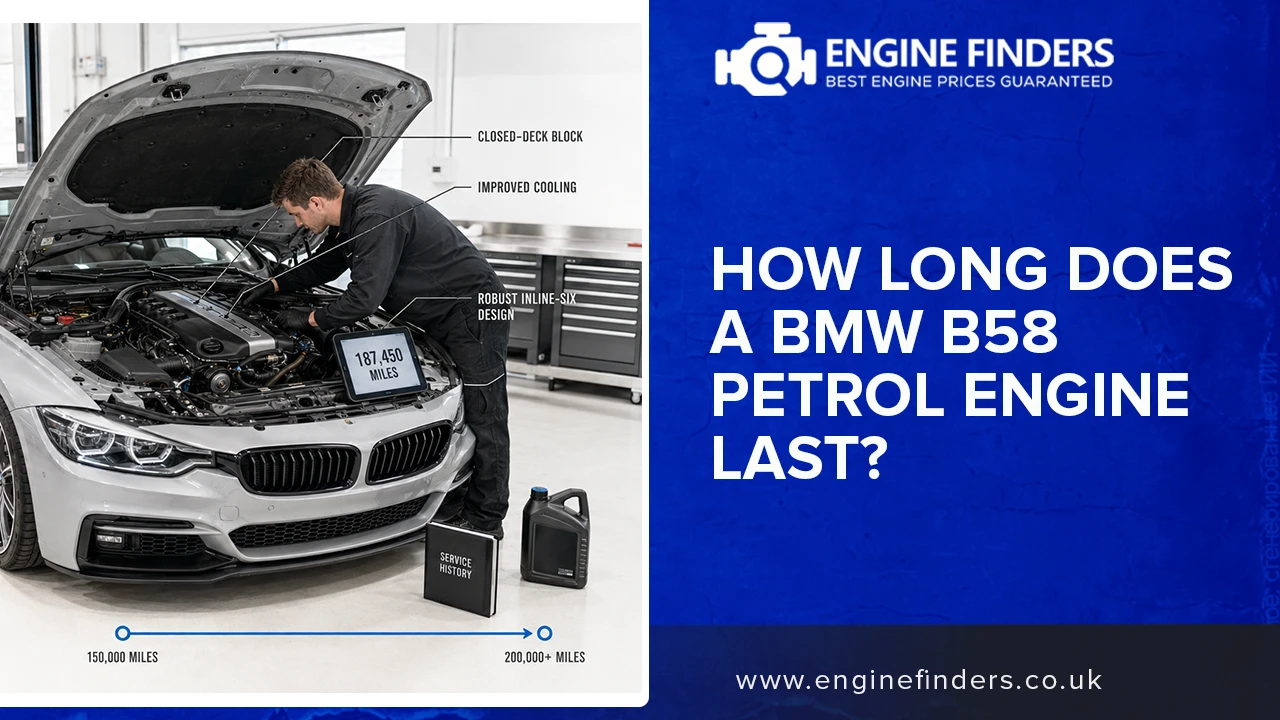
The BMW B58 inline-six petrol engine is widely regarded by UK automotive specialists as one of the most robust and durable modern engines produced by the manufacturer. With proper maintenance, UK owners and independent workshops frequently report B58 engines surpassing 150,000 to 200,000 miles without major internal failure. Unlike its predecessor (the N55), the B58 features a closed-deck block, an integrated exhaust manifold, and a significantly improved cooling system, all of which directly enhance its long-term longevity.
If you are researching the lifespan of this engine, you likely want to know if your vehicle is a safe long-term investment or if you are approaching a costly replacement. This article provides a factual, evidence-led breakdown of B58 reliability, common failure points, realistic UK replacement costs, and practical steps to maximise its lifespan.
Quick Summary: BMW B58 Engine Lifespan
- Expected Lifespan: 150,000 – 200,000+ miles with strict adherence to maintenance schedules.
- Reliability Assessment: Highly reliable for a modern turbocharged direct-injection engine. Considered a vast improvement over the N55.
- Common Problems: Coolant leaks (water pump/expansion tank), oil leaks (valve cover gasket), and carbon buildup on intake valves.
- Indicative UK Replacement Cost: £3,500 – £8,500+ fully installed, depending on whether you choose a used or reconditioned unit.
- Best Buying Advice: Prioritise engines with a verifiable, stamped service history. Avoid vehicles with extended 15,000-mile oil change intervals.
- What to Avoid: Ignoring early coolant loss warnings or using non-OEM-specification engine oil.
What Is the BMW B58 Engine?
Introduced in 2015, the B58 is a 3.0-litre turbocharged inline-six petrol engine that replaced the N55. It was developed with a focus on efficiency, reduced emissions, and improved durability. The engine family includes several variants, such as the B58B30M0, B58B30M1, and B58B30O0, featuring power outputs ranging from 320 bhp to over 380 bhp depending on the tune and application.
You will find the B58 engine powering a wide range of popular BMW 3 Series models, including the 340i and M340i, as well as the BMW X3 M40i, the Toyota Supra (as the B58B30C), and various other premium vehicles. For detailed technical specifications of this engine family, you can review the BMW B58 engine specifications.
Real-World BMW B58 Lifespan: UK Mileage Expectations
When discussing engine longevity, it is vital to separate marketing claims from real-world workshop data. While no engine is guaranteed to reach a specific mileage, the B58’s design inherently supports high mileage.
- 0 – 80,000 miles: Generally trouble-free if routine maintenance is followed. Minor external seepage may begin to appear.
- 80,000 – 120,000 miles: This is the typical window where preventative maintenance becomes critical. Coolant system components (like the expansion tank and water pump) and gaskets often require replacement to prevent cascading failures.
- 120,000 – 200,000+ miles: With proactive care, the B58’s core internal components (pistons, crankshaft, connecting rods) remain highly resilient. Many examples in the UK comfortably exceed 150,000 miles. For broader context on high-mileage durability, see our guide on engines that last over 200,000 miles.
Lifespan is heavily dictated by maintenance habits. Vehicles subjected to frequent short trips, aggressive driving, or neglected oil changes will experience accelerated wear, particularly concerning carbon buildup and turbocharger stress.
Common BMW B58 Problems That Can Shorten Its Lifespan
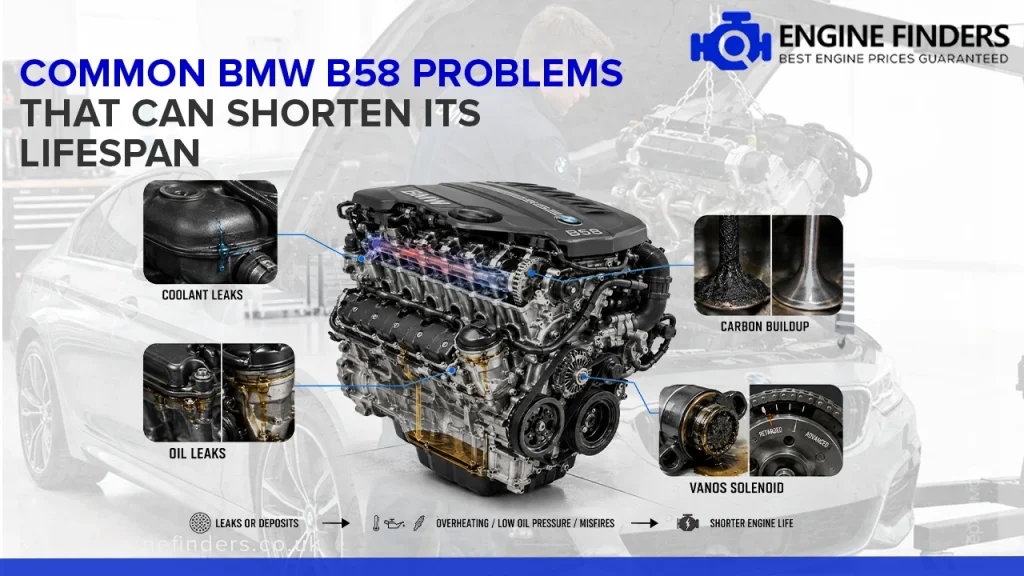
Understanding the B58’s known weaknesses allows owners to address them before they cause catastrophic damage. Based on UK specialist workshop data, the most frequent issues include:
Coolant System Leaks
The B58’s plastic coolant expansion tank and associated hoses are prone to developing micro-cracks over time due to heat cycling. A failing water pump can also lead to sudden coolant loss. If ignored, this can quickly result in overheating and severe internal engine damage.
Oil Leaks
As the engine ages, the valve cover gasket and oil filter housing gasket can degrade. While initially just a nuisance that causes a burning oil smell, significant oil loss can lead to low oil pressure, which is a primary cause of premature engine wear.
Carbon Buildup
Like most modern direct-injection engines, the B58 is susceptible to carbon deposits on the intake valves, as fuel no longer washes over them to keep them clean. Severe buildup can cause rough idling, misfires, and reduced performance. Walnut blasting is the standard, effective remedy for this.
VANOS Solenoid Issues
The Variable Valve Timing (VANOS) solenoids can become clogged with debris or fail electrically, triggering a check engine light and noticeable loss of low-end torque. This is generally an inexpensive and straightforward repair.
How Much Does a BMW B58 Engine Replacement Cost in the UK?
If preventative maintenance has been neglected and the engine suffers a major internal failure (such as spun bearings or severe overheating damage), replacement becomes necessary.
Based on current UK market research in 2026, here is a realistic breakdown of indicative costs. Note: These figures represent average market rates and can vary based on your specific model, location, and supplier.
- Used B58 Engine (Low Mileage): £2,500 – £4,500 (Engine only)
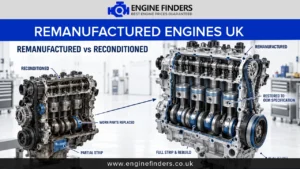
- Reconditioned B58 Engine: £4,500 – £7,000+ (Engine only, typically including new gaskets, seals, and a warranty)
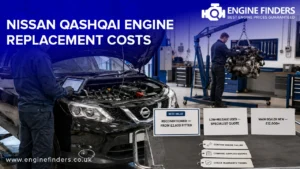
- Labour and Fitting: £800 – £1,500 (Depending on workshop hourly rates and vehicle complexity)
- Ancillaries and Fluids: £300 – £600 (Oil, coolant, filters, and potentially a new water pump/thermostat while the engine is out)
Estimated Total Installed Cost: £3,600 – £9,100+
For a deeper dive into broader market figures, you can review our guide on average engine replacement costs in the UK. It is crucial to remember that a cheap, unverified used engine may save money upfront but carries a higher risk of hidden faults compared to a professionally rebuilt unit.
Used vs Reconditioned B58 Engines: Which Should You Buy?
When facing a replacement, choosing the right type of engine is as important as the installation itself.
| Feature | Used B58 Engine | Reconditioned B58 Engine |
| Condition | As removed from a donor vehicle. Unknown internal wear. | Stripped, cleaned, inspected, and rebuilt with new wear components. |
| Price | Lower upfront cost (£2,500 – £4,500). | Higher upfront cost (£4,500 – £7,000+). |
| Warranty | Typically 30 to 90 days (varies wildly by supplier). | Typically 12 to 24 months (comprehensive parts and labour). |
| Reliability Risk | Moderate to High (depends entirely on donor history). | Low (faults are addressed during the rebuild process). |
| Best For | Tight budgets, older vehicles with lower resale value. | Long-term ownership, peace of mind, preserving vehicle value. |
If you are considering your options, exploring reconditioned BMW engines often provides the best balance of cost and long-term reliability. Alternatively, if you are on a stricter budget, sourcing a low-mileage used engine from a reputable supplier with a solid return policy is a viable path.
Need a precise figure for your vehicle?
Engine replacement costs vary significantly by model and location. Get a free, no-obligation quote today, and our network of verified UK suppliers will provide competitive, transparent pricing tailored to your exact BMW chassis and engine code.
How to Maximise Your BMW B58 Engine’s Lifespan
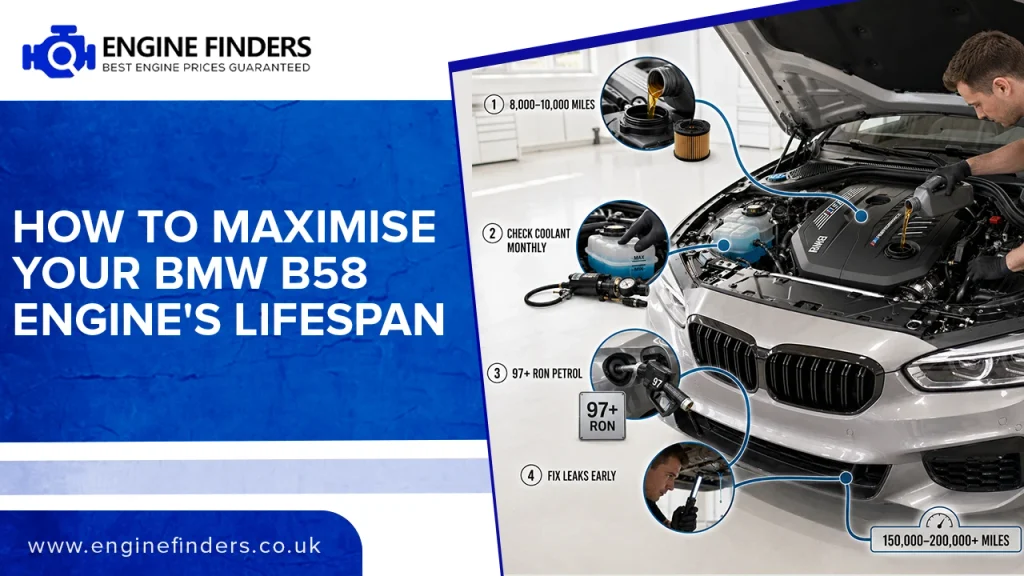
You can significantly influence how long your engine lasts by adopting proactive maintenance habits. General BMW engine reliability and repair cost data consistently shows that preventative care is the strongest predictor of longevity.
- Shorten Oil Change Intervals: Do not wait for the manufacturer’s maximum 15,000-mile service interval. UK specialists recommend changing fully synthetic, BMW Longlife-approved oil every 8,000 to 10,000 miles to prevent sludge and protect the turbocharger.
- Monitor Coolant Levels: Check the expansion tank monthly. If you find yourself topping it up frequently, have the system pressure-tested immediately to locate micro-leaks.
- Use Quality Fuel: Premium unleaded petrol (97+ RON) helps reduce the rate of carbon buildup and supports optimal engine mapping.
- Address Leaks Promptly: A small oil or coolant seepage is a warning sign, not a “normal characteristic” of an aging BMW. Fix it early to avoid secondary damage.
For more actionable advice, read our guide on 10 simple ways to extend your car engine’s lifespan.
Enter Your REG to Get a Free Engine Quote

Frequently Asked Questions
How many miles can a BMW B58 engine last?
With strict adherence to maintenance schedules, particularly frequent oil changes, a BMW B58 engine can reliably last between 150,000 and 200,000 miles. Some well-maintained examples exceed this, but proactive care is essential.
What are the most common BMW B58 engine problems?
The most frequently reported issues are coolant leaks (from the expansion tank or water pump), oil leaks (valve cover or oil filter housing gaskets), and carbon buildup on the intake valves due to direct injection.
Is the BMW B58 engine reliable?
Yes, the B58 is widely considered one of the most reliable modern turbocharged engines produced by BMW. Its closed-deck block and integrated cooling system make it significantly more durable than its N55 predecessor. You can read more in our analysis of the most reliable BMW engines.
How much does it cost to replace a BMW B58 engine in the UK?
A fully installed replacement typically costs between £3,600 and £9,100+. This range depends on whether you choose a used or reconditioned engine, current labour rates, and the cost of necessary ancillary parts like the water pump and fluids.
Should I buy a used or reconditioned BMW B58 engine?
If you plan to keep the vehicle long-term, a reconditioned engine is highly recommended due to its comprehensive warranty and rebuilt internal components. A used engine is a viable option only if budget is the primary constraint and the unit comes with verifiable, low mileage.
Does the BMW B58 engine have a timing chain problem?
Unlike the notorious timing chain issues found in older BMW N47 diesel engines, the B58 timing chain is located at the rear of the engine and is highly durable. Timing chain failure is exceptionally rare on the B58 under normal operating conditions.
Final Thoughts
The BMW B58 petrol engine represents a high point in modern inline-six engineering. Its robust internal architecture gives it the potential to deliver well over 150,000 miles of reliable service. However, this longevity is not automatic; it is earned through diligent, proactive maintenance. By addressing minor coolant or oil leaks early and adhering to strict service intervals, UK owners can protect their investment and avoid premature, costly replacements.
If your B58 engine has already suffered a major failure, do not settle for the first quote you receive. Explore verified BMW replacement engines through trusted networks to ensure you receive a high-quality unit backed by a solid warranty.