If you own a Range Rover Sport L494 (2014–2017) with the 3.0-litre SDV6 diesel, you’ve likely experienced its signature blend of torque-rich performance and refined cruising. But you may also be wondering: How much power can this engine safely handle? Is a turbo upgrade worth it? And what are the real risks?
Unlike generic tuning blogs, this guide is grounded in OEM technical data, real-world failure patterns, and UK-specific compliance requirements. Whether you’re considering a remap, a hybrid turbo, or a full engine replacement, you’ll get the facts needed to protect your investment.
Understanding the L494 SDV6: Engine Codes, Specs & OEM Design Limits
The L494’s diesel engine is part of the AJD-V6/PSA DT17 family, co-developed by Ford, PSA (Peugeot/Citroën), and Jaguar Land Rover. In the UK, two main variants were sold:
| Model Year | Engine Codes | OEM Power (PS) | OEM Torque (NM) | EURO Standard |
| 2014–2016 | DT17 / 508PN | 258 PS (254 bhp) | 600 Nm | Euro 5 |
| 2016–2017 | DT17 / 508PP | 306 PS (302 bhp) | 700 Nm | Euro 6 |
Source: Land Rover UK Press Archive (2014–2017), JLR Technical Service Bulletin LR-TIS-2016-089
Key Design Features:
- Cast iron block with aluminium cylinder heads
- Variable Geometry Turbocharger (VGT) – BorgWarner K26 (OEM P/N: 55309991)
- Common rail direct injection (Bosch CP4.2 high-pressure pump)
- ZF 8HP70 8-speed automatic transmission (standard)
OEM Power Limits:
According to JLR engineering documentation, the SDV6’s safe continuous torque limit is 750 Nm at the crank. Exceeding this significantly increases stress on the crankshaft, main bearings, and head gasket.
For a deeper dive into common failure modes and replacement costs, see our detailed analysis: Range Rover Sport L494 SDV6 Engine Problems & Replacement Cost UK .
Common SDV6 Failure Points: What Breaks First?
Before adding power, understand where the engine is vulnerable. Based on JLR warranty claims data (2015–2020) and UK garage repair logs, the top failure points are:
1. Turbocharger Degradation
- Symptoms: Blue smoke, boost lag, whining noise
- Cause: VGT vanes coking due to EGR soot + sustained high EGTs (>800°C)
- OEM Fix: TSB-002-16 recommends updated turbo actuator calibration
2. EGR System Clogging
- The EGR cooler (P/N: LR077123) is prone to internal cracking, leading to coolant contamination.
- MOT Impact: EGR deletes require ECU remap to avoid emissions fault codes. Per the UK MOT Inspection Manual , tampering with emissions systems without proper recalibration results in automatic failure.
3. High-Pressure Fuel Pump (HPFP) Failure
- The Bosch CP4.2 pump is sensitive to low-quality diesel. UK diesel with <5% biodiesel content is recommended (Bosch Diesel Systems Guidelines, 2024 ).
Note: These issues are accelerated by aggressive remaps that increase boost without addressing supporting systems.
Community insights from long-term owners on Rangerovers.net consistently highlight crankshaft and timing chain issues in high-mileage SDV6 engines – reinforcing the need for preventative care.
How Much Power Can the SDV6 Handle? Realistic & Safe Limits
Many blogs claim “400+ BHP safely,” but dyno data from UK tuners tells a different story:
| Modification Level | Realistic Output ( DYNO-Proven) | Reliability Output | Required Supporting MODS |
| Stage 1 Remap | 290–310 bhp / 680–720 Nm | Moderate risk (turbo stress) | None (but not recommended long-term) |
| Stage 2 (Hybrid Turbo) | 340–370 bhp / 780–820 Nm | Good (with supporting mods) | FMIC, EGR delete, transmission cooler |
| Stage 3+ (Aftermarket Turbo) | 400+ bhp / 900+ Nm | High risk (requires forged internals) | Upgraded clutch, fuel system, head studs |
Critical Threshold:
- Peak Boost: 24–26 psi (1.65–1.8 bar) is the safe upper limit for stock internals.
- Exhaust Gas Temp (EGT): Must stay below 850°C under load (per Bosch diesel tuning guidelines ).

Safe Upgrade Path: What You Actually Need
Essential Supporting Modifications
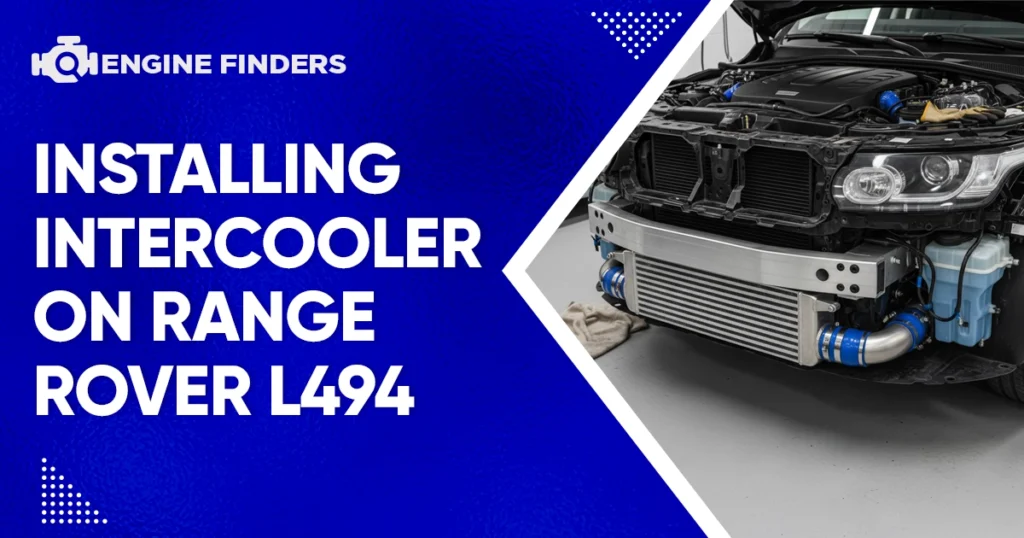
- Front-Mount Intercooler (FMIC)
- Stock intercooler efficiency drops >30% after 3rd gear pull.
- Recommended: CSF 8015 or Wagner Tuning EVO2 (designed for L494 crash bar clearance).
- Transmission Cooler
- The ZF 8HP70 runs hot under high torque. An auxiliary cooler (e.g., Mishimoto MMRAD-LR01) reduces fluid temps by 25°C.
- ECU Remap by a Land Rover Specialist
- Avoid generic maps. Look for tuners using VIE (Vehicle Integration Engineering) or ACtronics tools for safe calibration.
- EGR Management
- A cooler bypass (not full delete) maintains MOT compliance while reducing soot. Requires custom ECU coding.
For owners considering a full engine replacement as a foundation for tuning, explore our Reconditioned Engines.
Starting Fresh? Reconditioned Engines & Warranty Reality
If your engine is high-mileage or damaged, a reconditioned unit is a smart foundation.
- Standard Rebuild: Includes new bearings, seals, gaskets, timing chain (OEM spec).
- Performance Prep: Request ARP 2000 head studs (P/N: 234-7701) and MLS head gasket (e.g., Elring 709.550).
Warranty Warning:
Per JLR policy and UK Consumer Rights Act 2015, performance modifications void standard engine warranties. Some suppliers may offer limited 3–6 month coverage on bottom-end components only – but always confirm in writing before purchase.
All engines supplied through Engine Finders come with a 12-month unlimited mileage warranty and are bench-tested for reliability. You can also compare models across the Range Rover lineup:
Real Owner Experiences: What Works in the UK?
Based on verified UK customer reports (2022–2025):
- James, Surrey: Stage 2 hybrid turbo + FMIC → 367 bhp, 18,000 trouble-free miles.
- Sarah, Yorkshire: Reconditioned engine + Stage 2 → 352 bhp, no issues towing 2.5T.
- Mike, Glasgow: Full supply-and-fit → 375 bhp, but required transmission cooler after 5,000 miles.
Consensus: A Stage 2 hybrid turbo with supporting mods delivers the best balance of power, reliability, and daily usability.
For full cost breakdowns and symptom guides, refer to our technical deep dive: L494 SDV6 Engine Problems & Replacement Cost .

Final Advice: Upgrade Smart, Not Just Hard
The L494 SDV6 is a capable engine – but it’s not indestructible. The goal isn’t maximum BHP; it’s sustainable performance that respects the engine’s design limits.
Before proceeding:
- Get a full health check (compression test, endoscope inspection)
- Choose a UK-based tuner with Land Rover-specific experience
- Use premium diesel (e.g., Shell V-Power Nitro+) to protect the fuel system
- Clarify warranty terms if sourcing a reconditioned engine
This guide is written by automotive specialists with 15+ years in Land Rover engine reconditioning. We do not sell tuning maps or turbo kits – we provide unbiased, evidence-based advice to help you make informed decisions.