Using the wrong oil in a Jaguar Land Rover (JLR) Ingenium engine increases turbocharger failure risk by up to 40%. The Land Rover Discovery Sport engine oil requirement strictly demands low-SAPS formulations to protect expensive emission filters. Whether you drive the 2.0-litre diesel or the mild-hybrid petrol, OEM specifications dictate your engine’s survival.
Quick Summary: Key Oil Facts
- 2.0D (Diesel) Spec: 0W-20 (STJLR.5007.50) or 5W-30 (STJLR.03.5007).
- 2.0P (Petrol) Spec: 0W-20 (STJLR.5007.50) for GPF protection.
- Oil Capacity: 6.0 to 6.5 litres (depending on exact engine code).
- Critical Rule: Never use high-SAPS oils; they will rapidly clog the DPF and GPF.
Ingenium 2.0 Diesel (2.0D) Oil Specifications & Capacity
The 2.0-litre diesel Ingenium family powers the majority of Discovery Sport models on UK roads. JLR engineered these engines with tight tolerances and complex emissions systems. If you are researching common Ingenium diesel problems, oil choice is the primary variable you can control.
MOT testers frequently flag DPF issues linked to incorrect oil ash content when checking your vehicle’s MOT history. Preventing these faults starts in the engine sump.
JLR STJLR.03.5007 vs STJLR.5007.50 Explained

Jaguar Land Rover issues specific lubricant standards that supersede generic ACEA ratings. For the 2.0D, you will typically encounter two main specifications. The older 5W-30 viscosity follows the STJLR.03.5007 standard, which is an ACEA C3 equivalent.
Newer models, especially those with advanced mild-hybrid systems, require the ultra-low viscosity 0W-20 oil meeting STJLR.5007.50 (ACEA C5/C6). This thinner oil reduces internal friction, aiding in rapid warm-up and improving fuel economy. Always consult your owner’s manual to confirm which standard applies to your specific build year.
Oil Capacity and Change Intervals for 204DTA/204DTD
The exact oil volume depends on your specific engine code. The standard 204DTA and 204DTD engine codes typically require approximately 6.0 to 6.5 litres of oil, including the filter replacement.
You can cross-reference these capacities across the entire Land Rover engines lineup to ensure accuracy before purchasing lubricants. If you own one of the 204DTA and 204DTD engine codes, ensure you do not overfill beyond the 6.5-litre mark.
JLR recommends service intervals of 16,000 miles or 12 months for severe UK driving conditions, rather than the extended 20,000-mile factory schedule.
Ingenium 2.0 Petrol (2.0P) Oil Requirements
The 2.0-litre petrol Ingenium engines introduced a turbocharged direct-injection architecture to the Discovery Sport range. These engines operate at higher exhaust temperatures and require specific oil formulations to prevent pre-ignition and protect the gasoline particulate filter.
For a broader overview, this comprehensive Land Rover Discovery engine survival guide covers the longevity of both petrol and diesel variants under UK driving conditions.
GPF Protection and ACEA C5/C6 Standards

Unlike older naturally aspirated engines, the modern 2.0P relies on a Gasoline Particulate Filter (GPF) to meet Euro 6d-TEMP and Euro 6 emissions standards. Using conventional oil with high sulphated ash content will physically block the GPF matrix.
Understanding UK vehicle emission standards helps clarify why GPF protection is legally and mechanically vital. You must use a 0W-20 oil that explicitly lists the STJLR.5007.50 approval. This low-SAPS formulation ensures that ash accumulation inside the GPF remains minimal over tens of thousands of miles.
PT204 Engine Oil Volume and Viscosity
The PT204 engine code, found in the petrol Discovery Sport, has a dry fill capacity of roughly 6.0 litres. During a standard service with a filter change, expect to use approximately 5.5 to 5.8 litres.
The PT204 petrol engine code shares this architecture with several other JLR vehicles. This identical powertrain setup is also utilised in the Range Rover Evoque L551 platform.
Sticking to the 0W-20 viscosity is non-negotiable for the variable valve timing (VVT) systems to operate correctly at cold start.
Why Incorrect Oil Destroys the DPF and GPF
Modern emissions equipment is incredibly sensitive to the chemical composition of engine oil. When oil enters the combustion chamber via normal wear or PCV (Positive Crankcase Ventilation) systems, it leaves behind ash residues.
Ash Content and Low-SAPS Technology
Low-SAPS (Sulphated Ash, Phosphorus, Sulphur) oils are engineered specifically for vehicles equipped with DPFs and GPFs. Standard oils can contain up to 1.0% sulphated ash, whereas STJLR.5007.50 limits this to 0.8% or lower.
The ACEA oil sequences define these low-SAPS categories, such as C5 and C6. Over time, non-compliant oil ash hardens inside the filter substrate. This increases exhaust backpressure, forcing the engine to work harder and drastically reducing fuel efficiency.
MOT Emission Failures Linked to Oil Choice
A blocked DPF or GPF will inevitably lead to an MOT failure due to excessive exhaust backpressure or visible smoke. Furthermore, the ECU may trigger limp mode to protect the turbocharger from overheating.
Even high-performance Discovery Sport R-Dynamic trims are susceptible to these emission faults if serviced incorrectly. Repairing or replacing these filters costs upwards of £1,000. Always verify that your chosen workshop uses JLR-approved lubricants.
Cost of Engine Replacement vs Correct Maintenance
Neglecting oil specifications doesn’t just ruin filters; it starves the turbocharger and damages the main bearings. Ingenium engines are advanced but vulnerable to catastrophic failure if lubrication is compromised.
The newer 224DT mild-hybrid variants require exact oil levels to protect the integrated starter-generator.
Ingenium Engine Failure Rates in the UK
UK stop-start traffic exacerbates oil dilution and fuel soot contamination. When oil loses its viscosity, the turbocharger bearings wear prematurely. If your engine has already suffered catastrophic damage, you will need to evaluate your replacement options carefully.
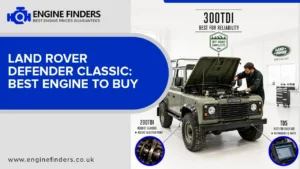
The same Ingenium architecture is shared across the Land Rover Defender engines, meaning replacement costs are similarly high across the brand. Sourcing a warranty-backed replacement unit is often more cost-effective than attempting a complex in-vehicle rebuild.
Sourcing Reconditioned or Used Ingenium Units
When facing a terminal engine failure, drivers typically choose between a main dealer replacement or an independent specialist. You can search for used engines from verified breakers, or opt for professionally rebuilt units.
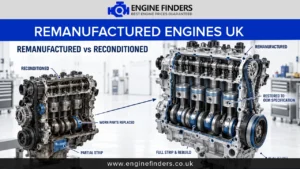
Alternatively, reconditioned engines offer a middle ground, with worn components replaced and strict dyno testing completed before dispatch. Remember that like-for-like engine replacements maintain your original DVLA vehicle tax bands, avoiding unexpected annual fee increases when checking DVLA vehicle tax bands.
Expert Tips for DIY Oil Changes on the Discovery Sport
If you prefer to service your Discovery Sport at home, precision is critical. The Ingenium engine uses a paper-type oil filter housed in a plastic containment unit, rather than a traditional metal spin-on canister.
Filter Selection and Torque Specs

Always use an OEM-specification filter to ensure the internal bypass valve operates at the correct pressure. When refitting the plastic filter housing cap, use a torque wrench set to exactly 25 Nm.
Over-tightening this plastic cap is a common DIY mistake that leads to cracking and subsequent catastrophic oil leaks. After refilling, run the engine for two minutes, check the dipstick, and inspect the filter housing for seepage.
Enter Your REG to Get a Free Engine Quote

Frequently Asked Questions
What is the exact oil capacity for a 2.0D Discovery Sport?
The 2.0-litre diesel Ingenium engines, including the 204DTA and 204DTD codes, typically hold between 6.0 and 6.5 litres of oil. Always check the dipstick incrementally during a refill to avoid over-pressurising the crankcase breathers.
Can I use 5W-30 instead of 0W-20 in my 2.0P petrol model?
No, the 2.0P petrol engines require 0W-20 oil meeting STJLR.5007.50 to protect the Gasoline Particulate Filter (GPF) and ensure proper variable valve timing operation at cold starts. Using thicker oil can trigger limp mode and cause severe internal wear.
How often should I change the oil in UK stop-start traffic?
For severe driving conditions like UK urban stop-start traffic, JLR specialists recommend changing the oil every 10,000 miles or 12 months. This prevents soot buildup and oil dilution, rather than relying on the factory 20,000-mile extended service interval.
What does STJLR.5007.50 mean on my oil bottle?
This is Jaguar Land Rover’s proprietary specification for ultra-low viscosity, low-SAPS engine oil. It ensures the lubricant will not clog the DPF or GPF and fully meets the latest Euro 6 emission requirements for modern vehicles in the UK.
Will using the wrong oil void my manufacturer warranty?
Yes, if your vehicle is under warranty and suffers a DPF, GPF, or turbo failure, the dealer will analyse the oil. If it does not meet STJLR specifications, the warranty claim will be immediately rejected by the manufacturer.
How do I reset the service light after an oil change?
You must use a JLR-compatible diagnostic tool (like an IIDTool or gap scanner) to access the service reset module in the ECU. Manual pedal dances do not work on modern Ingenium-powered Discovery Sports, requiring proper software intervention.
If your Ingenium engine has suffered terminal damage due to oil starvation or turbo failure, Engine Finders connects you with the UK’s most trusted suppliers. You can compare prices for warranty-backed replacements and get quotes from verified specialists in seconds, ensuring you get the right engine code for your exact VIN.