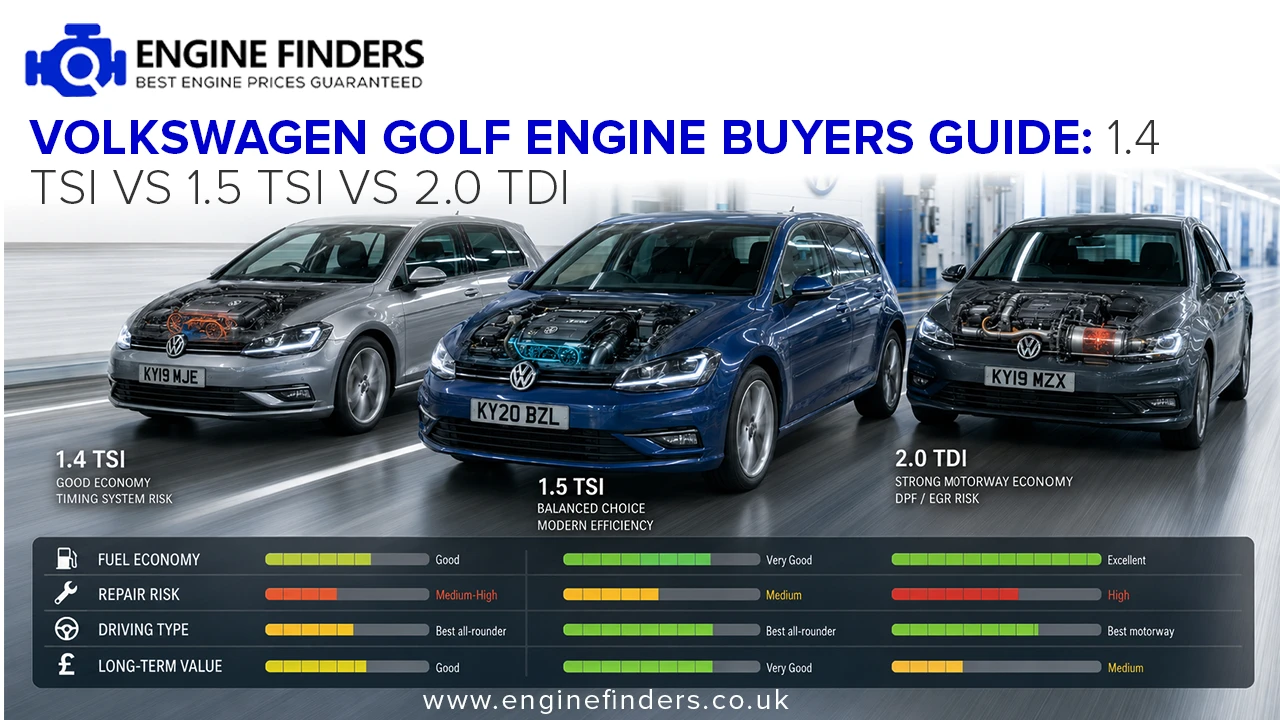
Over 40% of Volkswagen Golf owners face unexpected engine repairs before reaching 80,000 miles, with timing chain and DPF failures representing the most significant financial risks. Choosing the right powertrain is no longer just about fuel economy; it is about long-term survivability and avoiding catastrophic repair bills.
This guide breaks down the technical realities of the 1.4 TSI, 1.5 TSI, and 2.0 TDI engines to help you make an informed, data-driven decision.
Quick Summary: VW Golf Engine Reliability & Costs at a Glance
- 1.4 TSI (EA211): Prone to early timing chain tensioner wear and carbon buildup. Best avoided in high-mileage examples.
- 1.5 TSI Evo (EA211): Features Active Cylinder Technology (ACT) and improved thermal management. Significantly higher long-term reliability.
- 2.0 TDI (EA288): Excellent torque and motorway efficiency, but highly susceptible to DPF clogging and EGR cooler leaks on short urban journeys.
- Replacement Costs: Expect to pay between £1,500 and £3,500 for a verified replacement, depending on whether you choose used or reconditioned units.
- What to Avoid: Do not purchase a 2.0 TDI Golf if your daily commute is under 10 miles. Diesel emission systems will fail prematurely.
1.4 TSI (EA211) vs 1.5 TSI (EA211 Evo): Petrol Engine Comparison
The transition from the 1.4 TSI to the 1.5 TSI represents a major engineering shift within the Volkswagen Group’s EA211 engine family. While both are turbocharged, direct-injection four-cylinder units, their internal architectures and long-term durability differ substantially.
For detailed technical data, reviewing the official 1.5 TSI petrol engine specifications is highly recommended before making a purchase.
1.4 TSI Technical Specifications and Common Faults
The 1.4 TSI (engine codes such as CUNA, CZDA) features a 1,395cc displacement, producing between 122 and 150 PS. It relies on a traditional Otto cycle with a single-scroll turbocharger.
OEM service bulletins have historically highlighted weaknesses in the hydraulic timing chain tensioner. If the tensioner fails, the chain can skip a tooth, leading to catastrophic valve-to-piston contact. Additionally, direct injection without port injection allows carbon deposits to accumulate on the intake valves, restricting airflow and causing rough idling over time.
1.5 TSI Evo: Is the Upgrade Worth It?
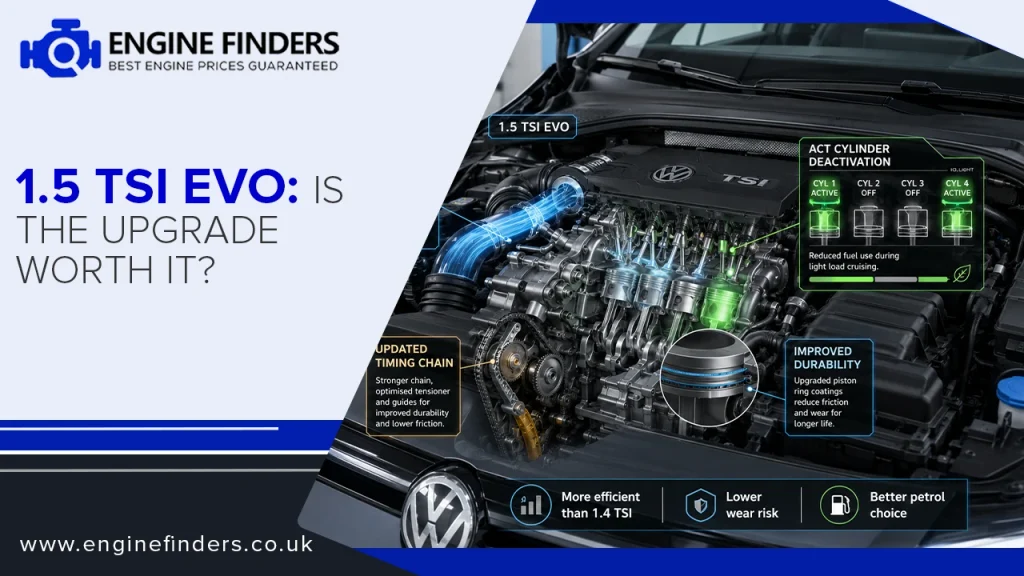
The 1.5 TSI Evo (engine codes such as DPCA, DFGA) increases displacement to 1,498cc and introduces the Miller combustion cycle. This delays the closing of the intake valves, improving thermal efficiency and reducing pumping losses.
Crucially, it features Active Cylinder Technology (ACT), which seamlessly deactivates cylinders two and three under light loads to improve WLTP fuel economy. The updated timing chain design and improved piston ring coatings have largely resolved the premature wear issues seen in the 1.4 TSI, making it the superior petrol choice for Volkswagen Golf engine replacements.
2.0 TDI (EA288) Diesel Engine: Performance and MOT Compliance
The 2.0 TDI remains a staple for high-mileage drivers. The EA288 modular diesel engine family (commonly the 150 PS variant, engine codes such as DFHA, DBGA) utilises a common-rail direct injection system operating at up to 2,000 bar of pressure.
When evaluating a diesel Golf, you must ensure it meets strict MOT emissions standards, particularly regarding smoke opacity and DPF integrity.
2.0 TDI Reliability: DPF, EGR, and Turbocharger Issues
While the mechanical bottom end of the EA288 is robust, its emissions control systems are a frequent point of failure. The Diesel Particulate Filter (DPF) requires sustained high exhaust temperatures to regenerate. Short, stop-start urban journeys prevent this, leading to ash accumulation and restricted exhaust flow.
Furthermore, the Exhaust Gas Recirculation (EGR) cooler is prone to internal micro-fractures. This allows coolant to mix with the intake charge, potentially causing hydrostatic lock or severe engine damage. For a deeper dive into these specific failures, read our analysis of common 2.0 TDI engine problems.
If you live in a city with strict clean air zones, understanding Volkswagen engine ULEZ compliance is essential before committing to a diesel powertrain.
Volkswagen Golf Engine Replacement Cost UK (2026 Data)
Engine failure does not always mean your vehicle is a write-off. Understanding the financial landscape of average engine replacement costs in the UK can save you thousands compared to dealership estimates.
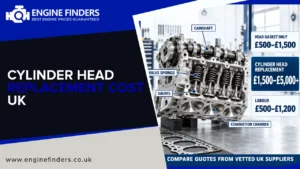
Based on UK supplier data for 2026, a complete engine swap for a VW Golf typically ranges from £1,500 to £3,500. This variance depends entirely on the source of the replacement unit and the complexity of the installation.
Labour vs Parts: Breakdown of Reconditioned vs Used Engines
A used engine is the most budget-friendly option, typically costing between £800 and £1,500 for the unit itself. However, it carries the risk of unknown maintenance history and hidden wear.
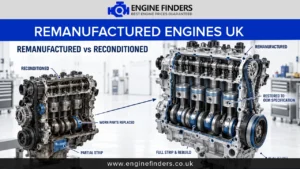
Conversely, reconditioned engines are stripped, cleaned, and rebuilt with new critical components such as piston rings, main bearings, timing chains, and seals. While the initial outlay is higher (£1,500 to £2,500 for the unit), they often come with a 12-to-24-month warranty and offer near-new reliability.
Labour typically accounts for 40% to 50% of the total bill. For a precise breakdown of workshop rates, review our guide on engine replacement labour costs. Historical data also shows that prices fluctuate based on supply chain demands, as detailed in the latest UK engine replacement cost trends.
How to Choose the Right Replacement Engine for Your VW Golf
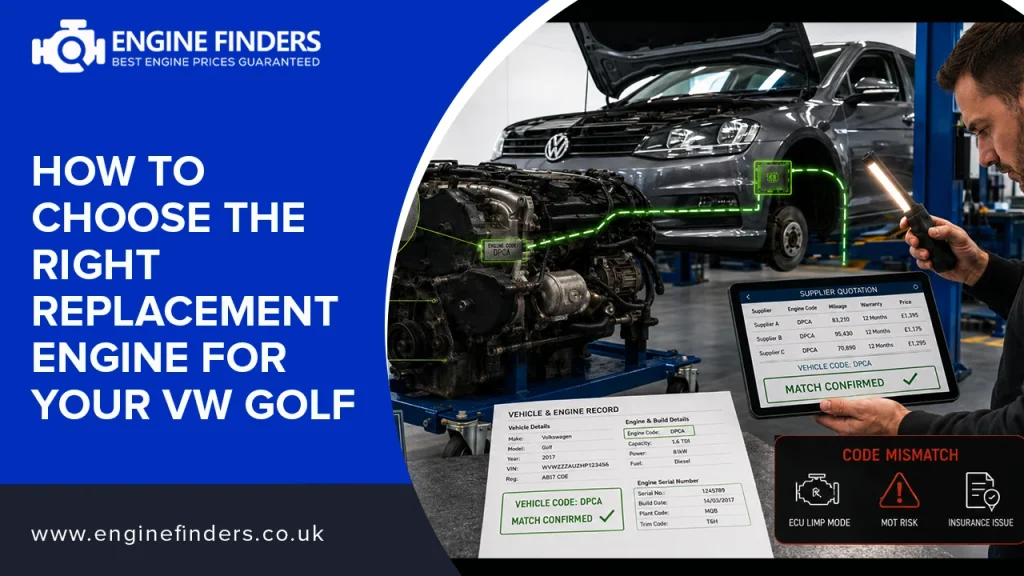
Selecting the correct replacement requires more than just matching the model year. You must verify the exact engine code, which is stamped on the engine block and listed on your V5C registration document.
Installing an incompatible engine can trigger ECU limp mode, void your insurance, and cause you to fail your MOT. Always cross-reference the donor engine’s code with your vehicle’s build sheet. You can explore a comprehensive catalogue of verified Volkswagen engines to ensure perfect compatibility.
If your Golf’s engine has failed, comparing options is critical to avoiding overpayment. Request a free, no-obligation quote today to find verified, warranty-backed replacement engines tailored to your exact chassis and engine code. You can easily get a personalised quote to compare pricing from trusted UK suppliers instantly.
Before finalising any swap, be aware of your legal obligations. While a like-for-like engine replacement does not change your vehicle’s tax class, you should always verify current vehicle tax bands and ensure the new engine’s serial number is correctly recorded if requested by the DVLA during identity checks.
Finally, always monitor your dashboard. If you are unsure about a noise or performance drop, consult a professional to understand recognising early engine warning signs before minor issues escalate into total failure.
Enter Your REG to Get a Free Engine Quote

Frequently Asked Questions
How much does a VW Golf engine replacement cost in the UK?
A complete Volkswagen Golf engine replacement typically costs between £1,500 and £3,500 in the UK. This includes the price of a verified used or reconditioned engine, new ancillary components (belts, seals, fluids), and professional garage labour rates.
Is the 1.5 TSI more reliable than the 1.4 TSI?
Yes. The 1.5 TSI Evo features an updated timing chain design, improved piston coatings, and better thermal management compared to the 1.4 TSI. These OEM revisions significantly reduce the risk of premature timing chain tensioner failure and carbon buildup.
What are the common signs of 2.0 TDI engine failure?
Common indicators include excessive blue or white smoke from the exhaust, a persistent loss of engine power (limp mode), coolant mixing with engine oil, and frequent DPF regeneration warnings on the dashboard. These often point to EGR cooler or turbocharger failures.
Can I replace a 1.4 TSI with a 1.5 TSI in my Golf?
While physically possible, swapping a 1.4 TSI for a 1.5 TSI requires extensive ECU remapping, wiring harness modifications, and potential transmission updates. It is not a straightforward like-for-like swap and may invalidate your insurance and MOT compliance.
Do I need to notify the DVLA after an engine replacement?
If you replace the engine with an identical unit (same engine code and capacity), you generally do not need to notify the DVLA. However, if the engine capacity or fuel type changes, you must update your V5C logbook immediately to remain legally compliant.
Are reconditioned VW Golf engines covered by a warranty?
Yes, reputable UK suppliers typically provide a 12-to-24-month, unlimited-mileage warranty on reconditioned Volkswagen Golf engines. This warranty covers internal mechanical failures, provided the engine is installed by a VAT-registered garage and serviced correctly.