A knocking noise from your engine is rarely a sound you should ignore. It can range from something as simple as the wrong fuel to a terminal fault like worn crankshaft bearings that spells the end of the engine. The key is identifying which type of knock you are hearing, because a “ping” under acceleration and a deep “bang” at idle mean very different things. This guide explains the seven most common causes, what each one sounds like, and what it typically means for UK drivers.
Quick Summary
- A light metallic “ping” or “pinking” under acceleration is usually detonation (spark knock), often caused by low-octane fuel, carbon buildup, or a faulty knock sensor.
- A deep, hollow knocking at idle or low revs is more serious and may point to worn big-end bearings (rod knock) or a failing timing chain.
- Diesel engines knock naturally due to compression ignition, but excessive diesel knock can indicate injector faults or incorrect injection timing.
- Ignoring a persistent knock can destroy pistons, bearings, and cylinder walls – diagnosis should be treated as urgent, not optional.
- The fix can cost anywhere from £10 for a bottle of injector cleaner to £3,000+ for an engine rebuild or replacement, depending on the cause.
What Does Engine Knocking Actually Sound Like?
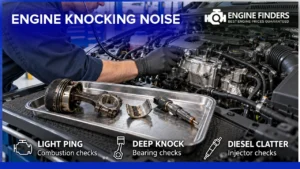
Engine “knock” is an umbrella term, and not every knock is the same. UK drivers typically describe three distinct sounds:
- Pinking or pinging – a light, high-pitched metallic rattle, usually under acceleration or when climbing a hill. This is spark knock (detonation) in a petrol engine.
- Diesel knock – a heavier, more pronounced rattle at idle and low load. Some diesel clatter is normal, but excessive noise is not.
- Deep knocking or banging – a low-frequency thud, often at idle or when revving. This is the most dangerous type and frequently points to bottom-end bearing failure.
Understanding which sound you are hearing is the first step toward knowing what it means. If you are unsure whether the noise is knock or a different fault, our guide to common engine problems in BMW 3 Series covers how different noises present on one of the UK’s most common platforms, and you can explore when checking model-specific issues. If you need to explore compatible units for this range, see our BMW 3 Series engines.
1. Low-Octane or Incorrect Fuel (Petrol)
The single most common cause of light pinking in a petrol engine is using fuel with an octane rating lower than the manufacturer specifies. Higher-compression or turbocharged engines are particularly sensitive.
What it sounds like: A light metallic rattle under acceleration, especially at lower revs in a higher gear.
Why it happens: Low-octane fuel ignites more easily under compression. In a hot combustion chamber, the end-gas (the unburned fuel-air mixture ahead of the flame front) can auto-ignite before the flame arrives, creating a second pressure wave that collides with the normal combustion event.
What to do: Check your vehicle handbook for the minimum recommended octane rating. If it specifies 95 RON or higher, switch to a premium unleaded and see if the noise disappears on the next tank. If it does, the fuel was the cause.
2. Carbon Deposits and Hot Spots
Over time, carbon can build up on piston crowns and cylinder head surfaces. These deposits can glow red-hot during combustion, effectively becoming ignition sources that pre-ignite the fuel-air mixture before the spark plug fires.
What it sounds like: Similar to low-octane knock – a pinging or light rattle, often worse when the engine is hot.
Why it happens: Hot carbon deposits create localised hot spots in the combustion chamber. The fuel-air mixture ignites prematurely, causing pressure spikes that clash with the normal flame front.
What to do: A quality fuel system cleaner or a sustained motorway run at higher revs can sometimes help. For heavier deposits, professional walnut blasting or a decarbonisation service may be required. This is especially common on direct-injection petrol engines like BMW’s N20 or VW/Audi’s EA888 – our guide to BMW X5 G05 B58 carbon buildup explains the same issue on a modern straight-six. You can also compare options by vehicle and specification. For model-specific engine options, see BMW X5 engines.
3. Faulty Knock Sensor
Modern petrol engines use one or more knock sensors – essentially microphones bolted to the engine block – to detect detonation and allow the ECU to retard ignition timing before damage occurs.
What it sounds like: If the sensor fails, the ECU may not be retarding timing when it should, allowing persistent pinking that you can hear clearly.
Why it happens: Knock sensors can fail due to age, heat, or physical damage. A faulty sensor may send no signal, or a weak signal, leaving the engine vulnerable to undetected detonation.
What to do: A diagnostic scan should flag a knock sensor fault code. Replacement is usually straightforward and relatively inexpensive compared to internal engine repairs.
4. Incorrect Ignition Timing or Spark Plugs

If the spark occurs too early (over-advanced timing), cylinder pressure rises too quickly, promoting detonation. Incorrect spark plug heat range or gap can also trigger knock.
What it sounds like: Pinking under load, sometimes accompanied by rough running or misfires.
Why it happens: Over-advanced timing causes peak cylinder pressure to occur before the piston reaches top dead centre, creating conditions where the end-gas auto-ignites. Spark plugs of the wrong heat range can run too hot and become an ignition source themselves.
What to do: Have the ignition timing checked against the manufacturer’s specification. Ensure the correct spark plugs are fitted and gapped properly. This is particularly relevant on older vehicles where timing may have been adjusted manually. Regular servicing is the best defence – our guide on how often you should really service your engine covers the intervals that matter most. For drivers comparing options across the marque, browse BMW engines.
5. Worn Big-End Bearings (Rod Knock)
This is the most serious and potentially terminal cause of knocking. Big-end bearings sit between the connecting rod and the crankshaft journal. When they wear, clearance increases, and the rod begins to hammer against the crank.
What it sounds like: A deep, hollow, rhythmic knock that is often loudest at idle and may change with engine speed. It does not go away when the engine warms up.
Why it happens: Oil starvation, poor maintenance, or simply high mileage can wear the bearing surface. Once metal-to-metal contact begins, the damage accelerates rapidly. This is the same failure mode that affects the Discovery 4 3.0 TDV6 crankshaft, where bottom-end wear is a known and expensive issue. For relevant replacement options, see the Land Rover Discovery 4 engine page.
What to do: Stop driving and have the engine inspected immediately. A compression test, oil analysis for metal particles, and measurement of crankshaft end play can confirm the diagnosis. If rod knock is confirmed, the engine typically needs a rebuild or replacement. For a full picture of what replacement involves, see our complete step-by-step guide to engine replacement.
6. Diesel Injector Faults or Incorrect Injection Timing
Diesel engines rely on compression ignition, and some combustion noise is inherent. However, excessive diesel knock can indicate injector problems.
What it sounds like: A harsh, pronounced rattle at idle and under light load, sometimes accompanied by rough running, misfires, or excessive smoke.
Why it happens: In a diesel engine, a long ignition delay allows more fuel to mix with air before combustion begins. When combustion finally starts, the accumulated fuel-air mixture burns rapidly, creating a sharp pressure rise that produces the knocking sound.
What to do: Diesel injector faults, contaminated fuel, or incorrect injection timing are common culprits. A diesel specialist can test injector performance and check injection timing. If replacement is needed, check the Mercedes OM651.924 diesel engine page for the relevant engine code.
7. Timing Chain or Valve Train Wear
A loose or worn timing chain can produce a rattle that some drivers mistake for engine knock. Similarly, valve train components with excessive clearance can create a rhythmic tapping or knocking sound.
What it sounds like: A rattle or metallic clatter, often most noticeable on cold start or at specific RPM ranges. It may not sound exactly like combustion knock, but it is easily confused.
Why it happens: Timing chains stretch over time, and tensioners can fail. Valve lifters or cam followers can wear, increasing lash and creating noise.
What to do: This requires mechanical inspection. Our BMW N47 timing chain failure guide explains the symptoms and UK costs in detail. For a compatible engine-code page, see the BMW N47D20C diesel engine.
Petrol vs Diesel Knock: What’s the Difference?
| Feature | Petrol Engine Knock | Diesel Engine Knock |
| Typical sound | Light metallic ping or rattle | Heavier, more pronounced rattle |
| Primary cause | Auto-ignition of end-gas (detonation) | Long ignition delay, rapid premixed combustion |
| When most noticeable | Under acceleration, climbing hills | At idle, light load, cold start |
| Most common fixes | Higher octane fuel, timing check, carbon clean | Injector service, injection timing check |
| Severity range | Often manageable if addressed early | Can indicate injector or pump failure |
When Should You Be Worried?
Not every knock is an emergency, but some are. Use this as a rough guide:
Less urgent (but still worth investigating):
- Light pinking only under hard acceleration, disappears with premium fuel
- Occasional rattle on cold start that fades within seconds
Urgent – stop driving and diagnose:
- Deep, consistent knocking at idle
- Knocking that gets louder as the engine warms up
- Knocking accompanied by low oil pressure warning, metal particles in oil, or loss of power
- Any knock on a diesel engine that is accompanied by excessive smoke or rough running
A persistent deep knock is rarely something that fixes itself. Continuing to drive can turn a repairable fault into a scrap engine. If you are weighing up whether to repair or replace, our guide on how to know if engine replacement is more cost-effective than repair walks through the decision factors.
What a Knocking Noise Could Cost You
Indicative UK costs vary significantly depending on the cause:
- Fuel additive or injector cleaner: £10–£25
- Knock sensor replacement: £80–£200 (parts and labour, varies by model)
- Spark plug replacement: £60–£200 depending on engine and plug type
- Diesel injector replacement: £300–£800+ per injector, depending on engine
- Timing chain replacement: £600–£1,500+ depending on engine access
- Big-end bearing repair or engine rebuild: £1,500–£3,000+
- Replacement engine (used or reconditioned): £1,200–£4,000+ depending on model and condition
These figures are indicative and will vary by vehicle, engine code, and regional labour rates. For a detailed breakdown of what replacement actually costs across different models, see our UK engine replacement cost guide.
Diagnosing Engine Knock: What a Garage Will Check
If you take your car to a garage with a knocking complaint, a competent technician will typically:
- Listen to the noise – location, rhythm, and whether it changes with engine speed or load.
- Scan for fault codes – knock sensor codes, misfire codes, or timing-related faults.
- Perform a compression test – low or uneven compression points to internal mechanical issues.
- Check oil condition – metal particles in the oil are a strong indicator of bearing wear.
- Inspect ignition components – spark plugs, coils, and timing on petrol engines.
- Test injectors and fuel pressure – particularly on diesel engines.
Getting an accurate diagnosis before authorising repairs is essential. Throwing parts at a knock without understanding the cause can be expensive and ineffective. If you are considering a replacement engine, our guide on what to check before buying a reconditioned engine online covers the due diligence that protects you.
A Note on Diesel Knock and UK Driving
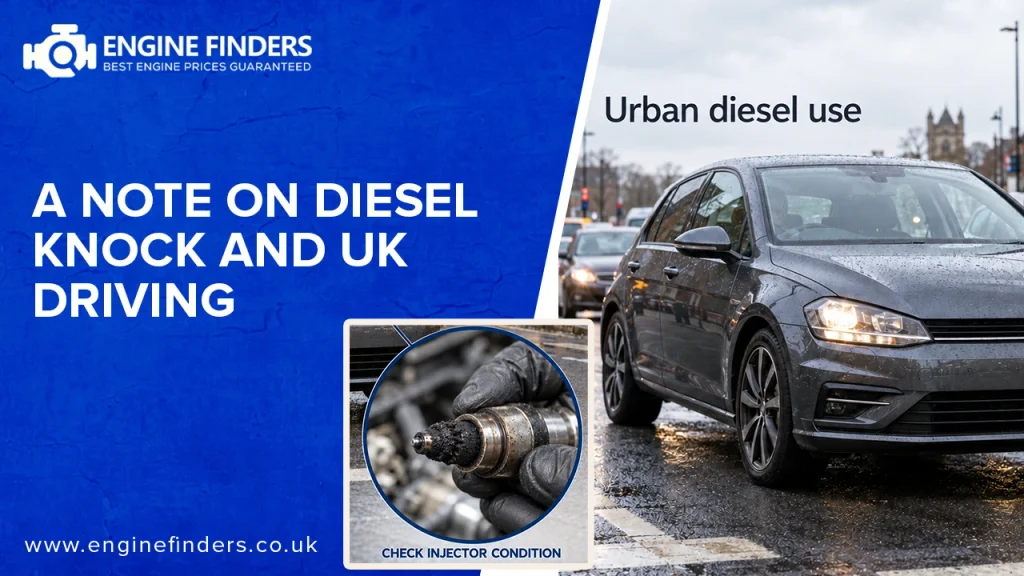
UK drivers who do a lot of short, urban journeys may notice diesel knock more than those who regularly do motorway miles. Short trips prevent the engine from reaching full operating temperature, which can affect combustion quality and contribute to injector coking and DPF clogging. This is particularly relevant for modern common-rail diesels fitted to vehicles used primarily in towns and cities. For Land Rover owners, the <a href=”https://enginefinders.co.uk/land-rover-engines.html”>Land Rover engine range</a> can help narrow down the correct application. For official guidance on emissions compliance and clean air zones, see the GOV.UK clean air zone checker.
If you are in the market for a replacement engine or want to understand your options before committing to a repair, get quotes from vetted UK suppliers can give you a clearer picture of what is available for your vehicle.
Frequently Asked Questions
Is engine knocking serious?
It depends on the cause. Light pinking under acceleration is often manageable with higher-octane fuel or a tune-up. A deep knock at idle, however, can indicate worn bearings or a failing timing chain and may require immediate attention to avoid complete engine failure.
Can I drive with a knocking engine?
If the knock is a light ping only under hard acceleration, you can usually drive gently to a garage. If it is a deep, consistent knock, stop driving and seek professional advice – continuing to drive risks catastrophic damage.
What causes engine knock in a diesel?
Diesel knock is caused by a long ignition delay that allows fuel and air to mix before combustion. When combustion begins, the accumulated mixture burns rapidly, creating a sharp pressure rise. Faulty injectors or incorrect injection timing make it worse.
How do I stop engine pinking?
Try a tank of higher-octane fuel first. If that does not resolve it, have the ignition timing checked, inspect the spark plugs, and consider a carbon clean. Persistent pinking despite these steps may indicate a faulty knock sensor or a more fundamental tuning issue.
Does engine knock mean my engine is ruined?
Not necessarily. Early diagnosis is key. A knock caught before significant metal-to-metal wear occurs may be repairable with relatively modest work. Once a bearing has failed or a piston has cracked, the engine is likely beyond economic repair.
Is it worth fixing a knocking engine?
That depends on the diagnosis, the vehicle’s value, and its overall condition. A £200 knock sensor is usually worth replacing. A £3,000 bottom-end rebuild on a car worth £2,500 is a different calculation. The decision should factor in the vehicle’s MOT history, other major components, and how long you intend to keep it.
Does a knocking noise always mean a new engine is needed?
No. Many causes – fuel quality, sensors, spark plugs, injectors, carbon deposits – can be resolved without engine replacement. Only when the knock stems from internal mechanical failure (bearings, pistons, timing chain failure) does engine replacement typically enter the conversation.
Where can I check my vehicle’s MOT history if I’m buying a used car?
You can check any vehicle’s MOT history and recorded mileage on the official GOV.UK MOT history service, which is a useful step before committing to a used engine or a used car purchase.
Where to Get Expert Help
If you have confirmed that your engine is making a knock that is not just fuel-related, the next step is a proper diagnosis. A compression test and oil analysis are the two most valuable early checks for distinguishing a sensor or fuel issue from internal wear.
For drivers facing the possibility of engine replacement, comparing options before committing is essential. A reconditioned engine can offer a balance of cost and longevity compared to a used unit, while a trusted supplier network can help ensure the replacement is correctly matched to your vehicle’s engine code and specification. For owner-reported reliability context on specific engines, forums such as BimmerForums UK can be useful as community discussion – though they should never replace official technical documentation or a proper diagnostic inspection.