The BMW 3 Series is known for its exceptional driving experience, luxury, and precision engineering. However, like all vehicles, even the BMW 3 Series isn’t immune to engine issues. Understanding the common engine problems specific to the 3 Series can help owners prevent expensive repairs, extend the life of their cars, and maintain performance. In this blog, we’ll discuss some of the most frequent engine problems faced by 3 Series owners, how to spot the warning signs, and the best ways to address these issues.
1. Oil Leaks in the BMW N52 Engine

The N52 engine, which powers several BMW 3 Series models (2004-2010), is generally reliable. However, a common issue with this engine is oil leaks, particularly around the valve cover gasket. Over time, the gasket can become brittle and crack, leading to oil leaks. This problem can result in engine damage if left unchecked, so it’s crucial to address it early.
Signs to Look For:
- Oil spots under the car
- Burning oil smell
- Visible oil leakage around the valve cover area
How to Fix It:
The primary fix is to replace the valve cover gasket. This is a relatively inexpensive repair and, in most cases, can be done quickly. Regular oil checks can also help you avoid running the engine low on oil, preventing further damage.For detailed maintenance schedules and tips, check out the Official BMW maintenance guidelines.
2. High-Pressure Fuel Pump Failures (BMW N54 Engine)

BMW’s turbocharged N54 engine, found in models from 2007 to 2012, has a well-known flaw: high-pressure fuel pump (HPFP) failure. This engine problem is often cited as one of the most frustrating issues, as it leads to a loss of engine power, rough idling, and stalling.
Symptoms of HPFP Failure:
- Engine misfires or hesitation during acceleration
- Check engine light or reduced engine power
- Rough idling or stalling, especially at low speeds
How to Fix It:
The high-pressure fuel pump typically needs to be replaced to restore proper engine function. BMW has issued recalls for some of these issues, so it’s worth checking if your model is covered. Otherwise, a replacement pump will get your engine running smoothly again.
3. Carbon Buildup in BMW N55 Engines

Another common engine issue affecting the BMW 3 Series, particularly the later models with the N55 engine, is carbon buildup on the intake valves. This problem arises from the direct fuel injection system, which results in less cleaning of the intake valves compared to older port-injected engines.
Symptoms of Carbon Buildup:
- Rough idling
- Decreased acceleration or performance
- Engine knocking or misfires at higher RPMs
How to Fix It:
The solution to carbon buildup is typically a cleaning process called walnut blasting, where a special abrasive media is used to clean the intake valves. Regular maintenance, such as using fuel additives or performing an intake valve cleaning, can also help prevent this problem.
4. Cooling System Failures (Water Pump and Thermostat)
Cooling system failures are another common issue, especially as the BMW 3 Series ages. Components like the water pump, thermostat, and radiator hoses can wear out, causing the engine to overheat. Overheating can lead to severe engine damage if not addressed promptly.
Signs of Cooling System Failure:
- Overheating warning light on the dashboard
- Fluctuating temperature gauge
- Coolant leaks under the car
How to Fix It:
Replacing the water pump and thermostat at regular intervals (typically every 60,000 miles) can prevent major issues. In addition, always ensure the coolant is topped up to avoid overheating. If you notice any leaks or unusual temperature readings, it’s important to get the cooling system checked immediately.
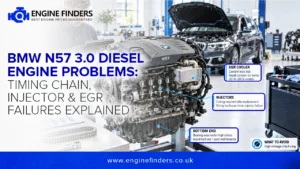
5. Timing Chain and Vanos Issues in BMW Engines
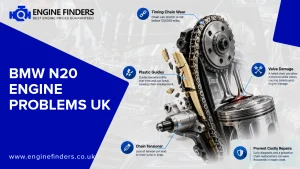
BMW uses Vanos (variable valve timing) technology in many of its engines, including the 3 Series. While this system helps improve efficiency and power, it can also lead to problems with the timing chain and Vanos solenoids, which can stretch or wear out over time.
Symptoms of Timing Chain or Vanos Issues:
- Rattling noises on startup
- Rough or erratic idling
- Loss of engine power or hesitation during acceleration
How to Fix It:
If the timing chain is worn or stretched, it will need to be replaced. Likewise, issues with the Vanos solenoid often require repair or replacement to restore smooth engine operation. If these problems are caught early, you can avoid more serious damage to the engine.
Need a Reliable BMW Engine Replacement?
If your BMW’s engine is showing signs of trouble, EngineFinders can assist you in finding the perfect solution. Whether you’re looking for a dependable used engine or a professionally reconditioned unit, EngineFinders connects you to trusted options that meet high-quality standards. Let us help you get your BMW 3 Series back to peak performance without the hassle.
Conclusion
While the BMW 3 Series is renowned for its performance and reliability, it’s not immune to common engine problems. By understanding the typical issues faced by your engine and taking preventive measures, you can maintain your car’s performance and avoid costly repairs down the line. Whether it’s oil leaks, fuel pump failures, carbon buildup, cooling system problems, or timing chain issues, early detection and regular maintenance are key.Always consult with a trusted mechanic or technician who specialises in BMW vehicles for repairs. Regular check-ups and addressing problems at the first signs of trouble can help extend the life of your BMW and keep it running smoothly for many years to come.