Executive Summary
The BMW N20 is a 2.0-litre four-cylinder turbocharged petrol engine fitted to a huge range of UK BMWs between 2011 and 2017, including the 3 Series (320i, 328i), 5 Series (520i, 528i), X1, X3, Z4 and 1 Series. While smooth and economical, the N20 has a well-documented reputation for premature timing chain failure, and this single fault is responsible for the majority of catastrophic engine failures on the platform.
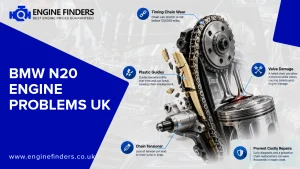
The core problem is a weak timing chain and guide assembly. On early N20 engines the chain, tensioner and plastic guides can wear or stretch well before 100,000 miles, and in the worst cases the chain jumps or snaps. Because the N20 is an interference engine, a failed chain allows the pistons to strike the valves, causing extensive internal damage that often makes a full engine replacement more economical than a repair.
For UK owners, a preventative timing chain replacement typically costs between £1,200 and £2,000, while a reconditioned N20 engine supplied and fitted usually ranges from £3,000 to £4,500 depending on specification and warranty. Recognising the early warning signs and acting quickly is the single most important factor in avoiding a five-figure repair bill.
Engine Finders is a price comparison platform, not a direct engine seller. Final pricing, warranty terms, and availability vary by vetted UK supplier. Professional diagnosis is recommended before purchasing any replacement engine.
Detailed Content
What Is the BMW N20 Engine?
The N20 replaced BMW’s naturally aspirated straight-six N52 in many models, part of the industry-wide move toward smaller, turbocharged, more efficient petrol engines. It uses direct injection, a twin-scroll turbocharger, Valvetronic variable valve lift and Double VANOS variable valve timing. Outputs range from around 156 PS in the 18i models up to 245 PS in the 28i variants.
BMW N20 Applications at a Glance
| Model | Variant | Years | Power |
|---|---|---|---|
| 3 Series (F30/F31) | 320i / 328i | 2011–2016 | 184–245 PS |
| 5 Series (F10) | 520i / 528i | 2011–2016 | 184–245 PS |
| X1 (E84/F48) | xDrive20i / 28i | 2011–2017 | 184–245 PS |
| X3 (F25) | xDrive20i / 28i | 2011–2017 | 184–245 PS |
| Z4 (E89) | sDrive20i / 28i | 2011–2016 | 184–245 PS |
| 1 Series | (limited) | 2011–2016 | 184 PS |
The Timing Chain Problem Explained

The defining weakness of the N20 (and its N26 SULEV sibling) is the timing chain system. Unlike the older, more robust chains BMW used previously, the N20 chain, its plastic guide rails and the chain tensioner are prone to premature wear. As the components wear, the chain stretches and can begin to skip teeth on the sprockets.
Why it matters: The N20 is an interference engine. If the timing chain jumps or breaks, the synchronisation between the crankshaft and camshafts is lost. The pistons then collide with open valves at speed, bending valves, damaging pistons and often cracking the cylinder head. What begins as a relatively affordable chain job becomes a full engine rebuild or replacement.
A further complication is the oil pump drive chain, which sits behind the timing chain and shares similar wear characteristics. If it fails, the engine loses oil pressure and can seize, again resulting in catastrophic damage.
Symptoms of N20 Timing Chain Failure
Rattling or “death rattle” noise from the front of the engine, especially on a cold start A whirring or grinding sound that changes with engine speed Engine management light with timing correlation fault codes (such as 2A82, 2A87, 2AA1) Rough running, misfires or reduced power In severe cases, a sudden loss of power and the engine failing to restart
The cold-start rattle is the classic early warning. Any owner who hears a metallic rattle for a second or two on start-up should stop driving the car and have it inspected immediately, because continued use risks turning a manageable repair into a destroyed engine.
Which N20 Engines Are Most at Risk?
Earlier engines, broadly those built up to around mid-2015, are considered most vulnerable. BMW revised the timing chain components over the production run, and later engines are generally regarded as more durable, though not immune. Mileage matters less than many owners assume: failures have been reported well under 100,000 miles, and short-journey, stop-start urban use accelerates wear because the chain and guides spend more time under load without reaching optimal operating temperature.
Other Known N20 Weak Points
While the timing chain dominates the conversation, the N20 has a handful of secondary issues UK owners should budget for:
Oil leaks: The valve cover gasket and oil filter housing gasket commonly weep oil as they age Carbon build-up: As a direct-injection engine, the intake valves can accumulate carbon deposits over time, causing rough running and reduced performance Turbocharger wear: High-mileage examples may need turbo attention, particularly where oil changes have been neglected Water pump and thermostat: Electric water pumps can fail, leading to overheating that risks further damage
Repair vs Replace: What Are the Options?

If the chain is caught early, before it jumps, a preventative timing chain replacement is the sensible route. This involves fitting a revised chain, tensioner, guides and often the oil pump chain at the same time. Because the labour is significant, doing the whole job once is far more economical than repeated visits.
If the chain has already failed and caused internal damage, the decision changes. A full mechanical rebuild can be expensive and time-consuming, and for many owners a reconditioned engine with a warranty represents better value and lower risk.
BMW N20 Cost Breakdown (Indicative UK Ranges)
| Job | Typical Cost |
|---|---|
| Timing chain kit replacement (supply & fit) | £1,200–£2,000 |
| Oil pump chain replacement (combined) | Add £200–£400 |
| Reconditioned engine (supply & fit) | £3,000–£4,500 |
| Used engine (supply only) | from £1,500 |
| Diagnostic inspection | £60–£150 |
Note: These are indicative UK market ranges. Exact quotes vary by supplier, location, and engine condition. Always confirm whether prices include VAT.
For anyone weighing up the cost of repair against replacement, our guide to whether engine replacement is more cost-effective than repair walks through the key financial considerations, and the general engine replacement cost UK guide provides wider context on pricing.
UK-Specific Considerations
MOT and emissions: A poorly running N20 with misfires or carbon issues can cause elevated emissions that risk an MOT failure. The MOT emissions and roadworthiness standards are set out by the DVSA, and any fault causing the engine management light to remain illuminated will result in a failure.
Notifying the DVLA: If you replace the engine with a different unit, you are legally required to notify the DVLA and update your V5C logbook. Full guidance on changing your vehicle’s details is available on GOV.UK.
Consumer rights: If you buy a replacement engine or pay for a repair, the work and parts are covered by the Consumer Rights Act 2015, which requires goods to be of satisfactory quality and services to be carried out with reasonable care and skill.
Practical Takeaways
Recommendations for N20 Owners
Act on the rattle: A cold-start rattle is the single most important warning sign. Stop driving and have the timing chain inspected before it fails Prioritise oil quality: Use the correct BMW-approved fully synthetic oil and stick to shorter service intervals (around 9,000–10,000 miles rather than the extended interval) to reduce chain and guide wear Buy the revised parts: If replacing the chain, insist on the latest revised components, not the original specification Combine the work: Replace the oil pump chain, tensioner and guides at the same time as the main timing chain to avoid paying the labour twice
Buying a Used BMW With an N20
If you are shopping for a used 320i, 328i, 520i, X1 or X3 with the N20, listen carefully on a cold start, check for a full service history with regular oil changes, and ask whether the timing chain has already been replaced with revised parts. A documented chain replacement is a strong positive. For a wider view of the range, our BMW 3 Series engines overview and the guide to the most reliable BMW engines are useful starting points.
When to Use Engine Finders
If your N20 has suffered timing chain damage or a seizure and you need a replacement, compare quotes from vetted UK suppliers to find the right engine for your exact specification. Always confirm your engine code from the VIN, request written warranty terms before committing, and have the vehicle professionally diagnosed to confirm that replacement is the correct solution rather than a repair.
Enter Your REG to Get a Free Engine Quote

Frequently Asked Questions
How much does it cost to replace a BMW N20 timing chain in the UK?
A preventative N20 timing chain replacement typically costs £1,200–£2,000 including parts and labour, rising with the oil pump chain done at the same time. If the chain has already failed and damaged the engine internally, a reconditioned engine supplied and fitted usually costs £3,000–£4,500. Prices vary by supplier and location, so it is worth comparing quotes.
What are the symptoms of BMW N20 timing chain failure?
The classic warning is a metallic rattle from the front of the engine for a second or two on a cold start. Other symptoms include a whirring or grinding noise, misfires, rough running, reduced power and timing correlation fault codes on diagnostics. Any rattle should be inspected immediately, as continued driving risks catastrophic engine damage.
Is the BMW N20 a reliable engine?
The N20 is smooth and economical but is let down by its timing chain design, particularly on earlier engines built up to around mid-2015. Later revised engines are generally more durable. With correct oil, shorter service intervals and prompt attention to any rattle, an N20 can be reliable, but the timing chain remains its defining weak point.
Which BMW models have the N20 engine?
The N20 was fitted to the 3 Series (320i, 328i), 5 Series (520i, 528i), X1, X3, Z4 and some 1 Series models between roughly 2011 and 2017. Confirm your exact engine code from the VIN plate, as some markets and years used the related N26 or the six-cylinder alternatives.
Can a BMW N20 be repaired after the timing chain snaps?
If the chain snaps on the interference-design N20, the pistons usually strike the valves, causing bent valves, damaged pistons and often cylinder head damage. Repair is sometimes possible but frequently uneconomical compared with a reconditioned engine that carries a warranty. Professional diagnosis is essential to establish the extent of the internal damage.
How do I find the right replacement engine for my N20 BMW?
Locate your engine code from the VIN plate and match it to supplier listings, taking care to identify whether you have an earlier or revised specification. You can also use the engine compatibility guide to check fitment before purchasing, and compare quotes from vetted UK suppliers to find the best value.