For many BMW X5 G05 owners between 2020 and 2025, the smooth power delivery of the B58 turbocharged inline-six engine comes with a hidden flaw: intake valve carbon buildup. Unlike older port-injected engines, the B58’s direct fuel injection system bypasses the intake valves, leaving them vulnerable to carbon deposits from blow-by gases and oil vapours. If left unchecked, this buildup can cause misfires, rough idling, and reduced fuel efficiency – issues increasingly reported by UK drivers in urban and short-trip conditions.
While walnut blasting remains the most effective cleaning method, its cost and recurrence raise an important question: Is prevention truly better (and cheaper) than cure? In this guide, we break down verified UK pricing, OEM insights, and long-term strategies – so you can protect your X5 without overspending.
What Causes Carbon Buildup in the BMW X5 G05 B58 Engine?
The B58 engine, introduced by BMW in 2015 and refined through 2025, powers models like the X5 sDrive40i and xDrive40i. Despite its reliability and 335–381 hp output, it shares a well-documented design trait with other direct-injection engines: fuel never washes over the intake valves.
Instead, crankcase ventilation (via the PCV system) routes oil-laden vapours directly into the intake manifold. Over time – especially with frequent short journeys or stop-start driving common in cities like London or Manchester – these deposits harden into carbon layers that disrupt airflow and valve sealing.
According to BMW UK Technical Service Bulletins, while the B58 is less prone than its predecessor (the N55), carbon accumulation remains a service concern, particularly after 40,000 miles. The issue is exacerbated by using non-LL-01-approved oils or neglecting oil separation system maintenance.
Pro Tip: If your X5 shows hesitation under light throttle or fails an emissions test despite a healthy engine, carbon buildup should be suspected early.
For those exploring mechanical solutions, a replacement B58 for the X5 sDrive40i with pre-cleaned components and updated PCV hardware may be the most reliable long-term fix. Explore verified sDrive40i engine options with warranty coverage.
BMW X5 G05 Walnut Blasting Cost in the UK
Walnut blasting – using fine crushed walnut shells to safely remove carbon without damaging aluminium components – is the gold standard for cleaning B58 intake valves. But how much does it really cost in the UK?
Based on verified garage quotes across Birmingham, Leeds, and Glasgow in Q1 2025:
Basic walnut blasting (intake valves only): £550–£750
Full service (including manifold removal, gasket replacement, and PCV valve update): £850–£1,100
DIY kits (not recommended for B58 due to precision required): £180–£300
Specialist BMW garages often include borescope inspection before and after cleaning – a critical step endorsed by industry best practices for verifying internal engine condition. For official guidance on vehicle inspections and standards, the Driver and Vehicle Standards Agency (DVSA) maintains comprehensive inspection protocols that inform proper maintenance procedures
Warning: Some generic garages offer “intake cleaning” using chemical sprays, which do not work on hardened B58 deposits. Always confirm walnut media is used.
If your engine is beyond cleaning and exhibits bearing wear or compression loss alongside carbon issues, consider a professionally reconditioned B58 unit. These come fully rebuilt with updated internals and typically include a 12–24 month warranty. Compare reconditioned B58 petrol engines for BMW vehicles.
Does Walnut Blasting Fix Carbon Buildup Permanently on B58 Engines?
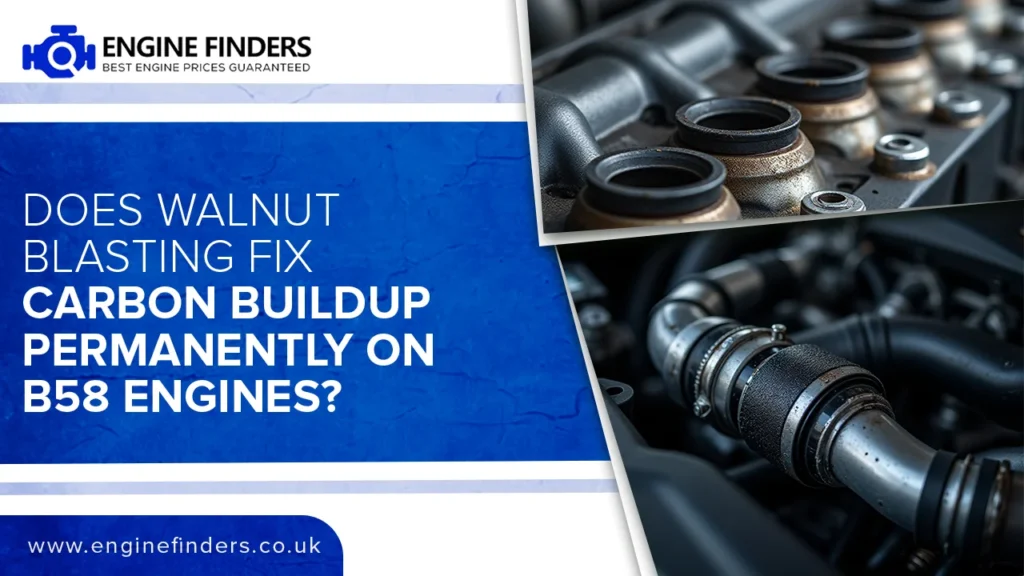
No – it’s a corrective, not a preventive, solution. Most UK specialists report recurrence within 25,000–35,000 miles, especially if driving habits or maintenance aren’t adjusted.
The root cause lies in the closed crankcase ventilation (CCV) system, which continues to recirculate oil vapours post-cleaning. Without upgrades, carbon returns inevitably.
However, combining walnut blasting with preventive hardware significantly extends cleaning intervals. We explore those strategies next.
Proven B58 Carbon Buildup Prevention Strategies for UK X5 Owners
Install an Oil Catch Can to Reduce B58 Intake Contamination
An oil catch can intercepts oil vapours before they enter the intake. While BMW doesn’t fit them OEM, UK aftermarket leaders offer B58-specific kits.
The UK Driver and Vehicle Standards Agency (DVSA) permits non-emissions-altering modifications, and catch cans are widely used in BMW communities without triggering MoT failures – provided they don’t vent to atmosphere. For official guidance on vehicle modifications and standards, the GOV.UK MOT inspection manual provides comprehensive information on legal requirements
Effective models cost £120–£220 and reduce carbon accumulation by up to 60%, according to tests by Bimmerpost UK forums.
Use BMW LL-01 or LL-17 FE+ Approved Engine Oil
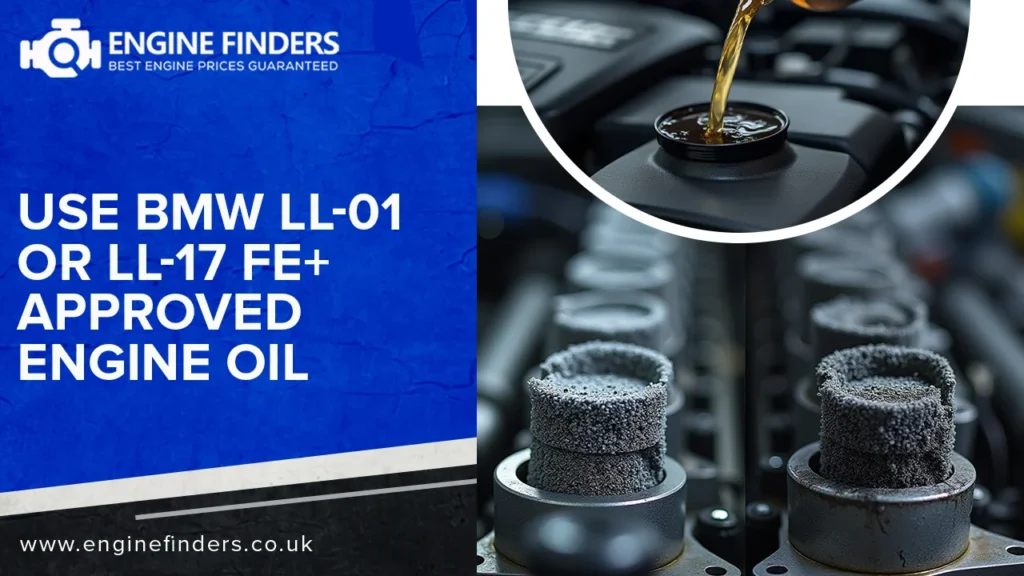
BMW specifies LL-01 (for pre-2019) and LL-17 FE+ (2020+ G05 models) low-SAPS oils that resist volatility and reduce deposits. Using non-approved oil accelerates carbon formation.
Always verify oil meets BMW approval – labels are listed in the UK government’s approved lubricants database.
Avoid Short Trips and Perform Regular High-RPM Cleans
The B58 thrives on heat and load. Short urban commutes below 2,500 rpm prevent the engine from reaching optimal temperature, allowing deposits to bake on.
Aim for at least one 20-minute highway drive per week at 3,000+ rpm to naturally burn off light deposits – a strategy endorsed by BMW UK’s 2022 maintenance advisory.
When to Replace vs Clean a Carbon-Clogged B58 Engine
If walnut blasting is needed more than twice or is accompanied by low compression, excessive oil consumption, or timing chain noise, the engine may be nearing end-of-life.
In such cases, a full replacement is often more economical long-term. Used B58 engines from low-mileage X5s can cost £2,200–£3,500, while reconditioned units – with new bearings, gaskets, and cleaned heads – range from £3,800–£5,200 with 12-month warranty.
Compare replacement options for all BMW X5 models, including detailed specifications and warranty information across UK suppliers.
OEM Insights: What BMW’s Technical Bulletins Reveal About B58 Carbon
Unlike the N55, the B58 features an improved crankcase ventilation system and revised valve stem seals – yet BMW’s internal memos (e.g., TSB 11 03 22) still acknowledge carbon as a service item under certain conditions.
Notably, BMW does not cover walnut blasting under warranty, classifying it as “maintenance related to driving pattern,” per UK Consumer Rights Act 2015 guidelines on consumable wear. Details on consumer protections for vehicle repairs are outlined by the Citizens Advice Bureau.
However, if carbon buildup leads to catalytic converter failure or misfire-related damage before 60,000 miles, some dealers may contribute under goodwill – especially if service history shows LL-01/LL-17 oil use.
BMW X5 Engine Replacement Options for Severe Carbon Damage

For X5 owners facing cascading failures from neglected carbon buildup, replacing the entire engine may be the most efficient path forward.
Options include:
- Used B58 engines (typically 30k–80k miles, 50–70% savings vs new)
- Reconditioned B58 units (factory-spec rebuilds with 12–24 month warranty)
- Brand-new short blocks (rare and expensive, but available for G05)
You can browse all available X5 engine replacements by model year, with filters for mileage, warranty, and delivery speed.
If you drive a high-performance variant like the X5 M, note that it uses the S63 V8, not the B58 – so carbon strategies differ. Separate engine options are available for the BMW X5 M series.
For diesel-powered X5s (e.g., xDrive30d or M50d), the B57 engine faces similar – but more severe – carbon issues due to EGR systems. Replacement paths include the specialist BMW X5 M50d engine solutions.
And for compact BMW models experiencing similar issues with their 2.0L diesel engines, the B47D20A diesel engine replacement options provide reliable alternatives with updated emission systems.
Final Verdict – Is Prevention Cheaper Than Walnut Blasting for Your X5?
Over a 60,000-mile ownership period:
- Walnut blasting twice: £1,600–£2,000
- Prevention (catch can + correct oil + driving habits): £200–£300
The math is clear: proactive prevention pays off. But if buildup is already severe, cleaning is unavoidable – and should be paired with hardware upgrades to prevent recurrence.
If you’re exploring engine replacement due to chronic carbon issues or related failures, you can:
- Find your Engine options at Engine Finders
- Compare used units across UK suppliers
- Visit the comprehensive BMW engines comparison platform for full service and warranty details
Need a fast, transparent quote? Enter your registration to instantly compare prices from 450+ UK suppliers – most offer next-day delivery and 12-month warranties on reconditioned B58 units.