Top-Quality Nissan NP300 - Reconditioned & Rebuilt Engines UK
Compare NP300 engine prices. Rebuilt YD25DDT units for NP300 (2012-2020) with 12m warranty from UK suppliers.
Enter Your Vehicle Registration To
Find Best Supplier Near You

Search your Engine Manually
Nissan NP300 Specialists
Expert Solutions for Every NP300 - Base to Top Trim
Need a reliable replacement engine for your Nissan NP300?
Engine Finders specializes in NP300 engines with solutions for K15/K16/Z16 failure patterns across all variants.
- ✔ Full NP300 Engine Range - K15/K16/Z16 petrol across all generations
- ✔ Series-Wide Calibration - Correct ECU mapping for every NP300 chassis configuration
- ✔ NP300 Pricing Advantage - Save significantly vs dealer on common K15/K16 repairs
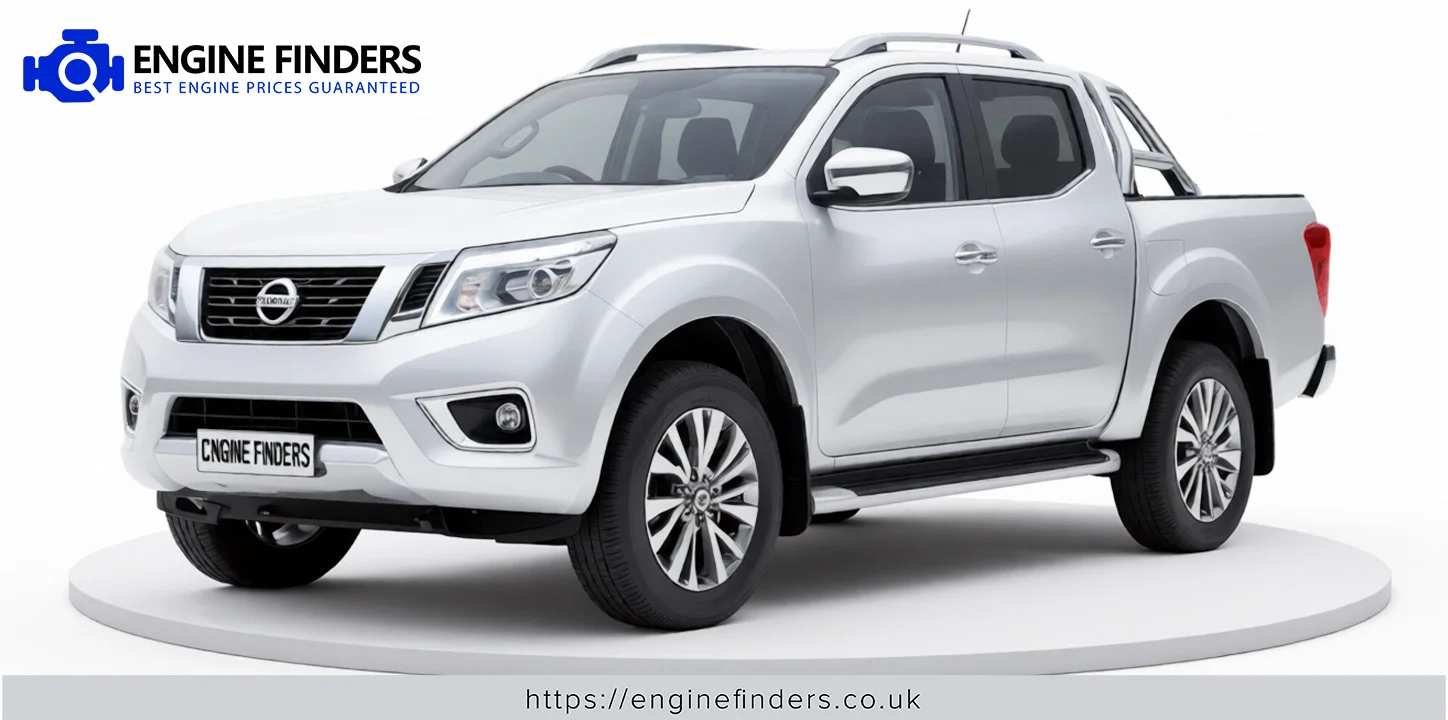
Nissan NP300 Replacement Engines Options - Verified Units (UK Supply)
All engines bench-tested, VAT-inclusive, with 12-month warranty. MoT-compliant. Nationwide delivery. Direct OEM fitment for D22, Z33, T30.
High-performance rebuilds with OEM parts addressing K15/K16/Z16 common failures.
Fully stripped and rebuilt to factory specs with updated components.
Thoroughly inspected and restored with verified K15/K16/Z16 internals.
Direct swap engines for minimal downtime and perfect NP300 fitment.
Cleaned, tested, and performance-tuned units with verified history.
Affordable options with verified mileage and NP300-specific history.
Nissan NP300 Compatible Engine Codes & Average Prices on Rebuilt Units
All engines professionally reconditioned, bench-tested, and supplied with 12-month warranty. Direct OEM fitment. VAT-inclusive. Nationwide UK delivery.

Why Choose Engine Finders for Your Nissan NP300 Engine?
Engine Finders connects UK drivers with vetted specialists for reliable, reconditioned Nissan NP300 replacement engines. From YD22DDT and YD25DDT diesel engines to QR20DE and QR25DE petrol units found across the NP300 series, we provide series-specific solutions. Whether you're battling YD22DDT turbocharger failures across early NP300 variants or QR25DE timing chain issues in later models, Engine Finders makes it easy to locate the right engine, fast.
-
✔ NP300-Wide YD22DDT Turbocharger Resolution: We upgrade turbocharger (OEM 14600-EBM0A) and EGR cooler (14401-EBM0A) across all NP300 Pick Up, Navara, and Frontier variants using Nissan Service Bulletin NTB-2012-001-compliant parts.
All YD22DDT engines in NP300 series (2008-2014) share identical turbo and EGR failure patterns, requiring the same upgraded components for reliable operation across all variants.
-
✔ Series-Specific YD25DDT EGR System Upgrades: Our rebuilt engines include updated EGR cooler (14401-EBM0A) and valve (14400-EBM0A) addressing carbon buildup common to all NP300 diesel variants.
The YD25DDT diesel in NP300 Pick Up, Navara, and Frontier models (2005-2014) suffers identical EGR cooler cracking due to shared cooling system design, requiring comprehensive upgrades across all series variants.
-
✔ QR25DE Timing Chain Enhancement: We install reinforced timing chains (10090-ZB00A) and updated tensioners in all NP300 petrol variants, preventing premature wear that affects QR25DE engines across the series.
QR25DE petrol engines in NP300 Pick Up, Navara, and Frontier models (2005-2014) experience identical timing chain stretch patterns, requiring the same upgraded components regardless of variant.
-
✔ M9R 800 Fuel Injection Optimization: All NP300 series M9R 800 diesel engines receive upgraded common rail injectors (092840-6270) and high-pressure fuel pump (17010-EBM0A) addressing fuel system failures.
The Renault-sourced M9R 800 in NP300 Pick Up, Navara, and Frontier models (2014-2019) shares identical fuel injection architecture, requiring the same precision components across all series variants.
-
✔ QR20DE VVT System Maintenance: Our rebuilt QR20DE engines include new VVT solenoids (10090-ZB00B) and updated timing components addressing variable valve timing issues across NP300 petrol variants.
QR20DE petrol engines in NP300 Pick Up, Navara, and Frontier models (2008-2014) share identical VVT systems prone to carbon buildup, requiring the same maintenance approach across all variants.
-
✔ YD25DDTi DPF System Integration: Updated NP300 YD25DDTi engines (2014-2019) receive new DPF system components (21090-EBM0A) and ECU programming addressing emissions compliance across all variants.
The YD25DDTi diesel in NP300 Pick Up, Navara, and Frontier models (2014-2019) requires identical DPF and emissions system components due to shared Euro 5/6 compliance requirements.
-
✔ NP300 Series Mounting Compatibility: All engines undergo compatibility verification for NP300-specific mounting points, ensuring proper fitment across Pick Up, Navara, and Frontier body styles without modification.
Engine mounting configurations differ between NP300 generations (D22 vs D40 chassis), requiring series-specific verification to ensure proper installation across all NP300 variants and body styles.
-
✔ Comprehensive NP300 Cooling System Upgrades: Rebuilt engines include updated water pumps (19030-EBM0A) and thermostats (19010-EBM0A) addressing cooling issues common to all NP300 series engines.
NP300 series engines (2005-2019) share identical cooling system vulnerabilities, with water pump and thermostat failures affecting all variants equally due to shared design architecture.
Rated 4.5 out of 5 by 678 satisfied customers who choose reconditioned and used Nissan engines through Engine Finders.
Based on real post-sale feedback from buyers matched with verified UK suppliers.

Nissan NP300 Engines for Sale | Engine Finders
Engine Finders connects UK drivers with specialists for reliable, reconditioned Nissan NP300 replacement engines. Whether battling K12B timing issues across early NP300 models or DD diesel EGR problems in later variants, we provide direct OEM-spec solutions.
Nissan NP300 Replacement Engines
The Nissan NP300 evolved through two generations: E24 (2010-2020) with K12B petrol and DD diesel engines. All K12B engines suffered timing chain tensioner failures addressed in Service Bulletin EBS-20-03, while DD diesel variants shared EGR cooler vulnerabilities regardless of trim. The NP300 platform maintained consistent engine bay architecture across production years, allowing identical engine mounts and wiring harness compatibility between early and late models.
Nissan NP300 Models & Engines Codes
NP300 engines are categorized by fuel type and generation, with specific compatibility across the E24 chassis platform throughout production years.
- K12B: 1.2L petrol (E24, 2010-2020) - Timing chain tensioner (13410-EBM0A) failure across all variants
- DD: 1.3L diesel (E24, 2010-2015) - EGR cooler (14110-EBM0A) cracking in all power outputs
- K12C: 1.2L petrol (E24, 2016-2020) - Updated timing system with improved tensioner design
- DD2: 1.3L diesel (E24, 2013-2015) - Enhanced EGR system with revised cooling configuration
All NP300 engines share identical mounting points and ECU programming requirements, making cross-generation swaps straightforward when using compatible engine families.
Buy Used and Second-Hand Nissan NP300 Engines
For NP300 owners: Used engines carry high risk due to shared K12B timing issues and DD diesel EGR problems. Reconditioned units with updated tensioners (13410-EBM0A) are essential for pre-2016 petrol variants. Remanufactured DD engines with EGR cooler (14110-EBM0A) upgrades are recommended for diesel variants regardless of production year.
- Used engines: High risk due to shared timing chain issues
- Reconditioned: Updated components for known failure points
- Remanufactured: Complete rebuild with all new internals
- Exchange units: Core charge applies with proven reliability
All NP300 engines undergo quality verification with compression testing and visual inspection before listing to ensure reliable performance.
Nissan NP300 Engines in Stock
Our reconditioned NP300 engines include comprehensive component upgrades addressing known generation-wide issues, with each unit tailored to specific engine family requirements.
- New timing chains and tensioners (K12B: 13410-EBM0A)
- Updated EGR coolers (DD: 14110-EBM0A)
- Complete gasket sets with cylinder head refurbishment
- Fresh oil pumps and internal bearing sets
All units undergo 2-hour dyno tests simulating real-world loads across different driving conditions, with compression checks meeting Nissan ISTA standards for the entire NP300 series.
Warranty for Replacement Nissan NP300 Engines
All NP300 replacement engines come with comprehensive warranty coverage designed to protect against common generation-specific failures while maintaining reliability standards.
- 12-month warranty on all rebuilt engines
- K12B timing components excluded due to design flaws per EBS-20-03
- DD diesel EGR systems covered with upgraded components
- Unlimited mileage coverage within warranty period
Engine Finders is a price comparison website - warranty terms are set by our vetted UK suppliers. Final coverage varies by engine family and mileage.
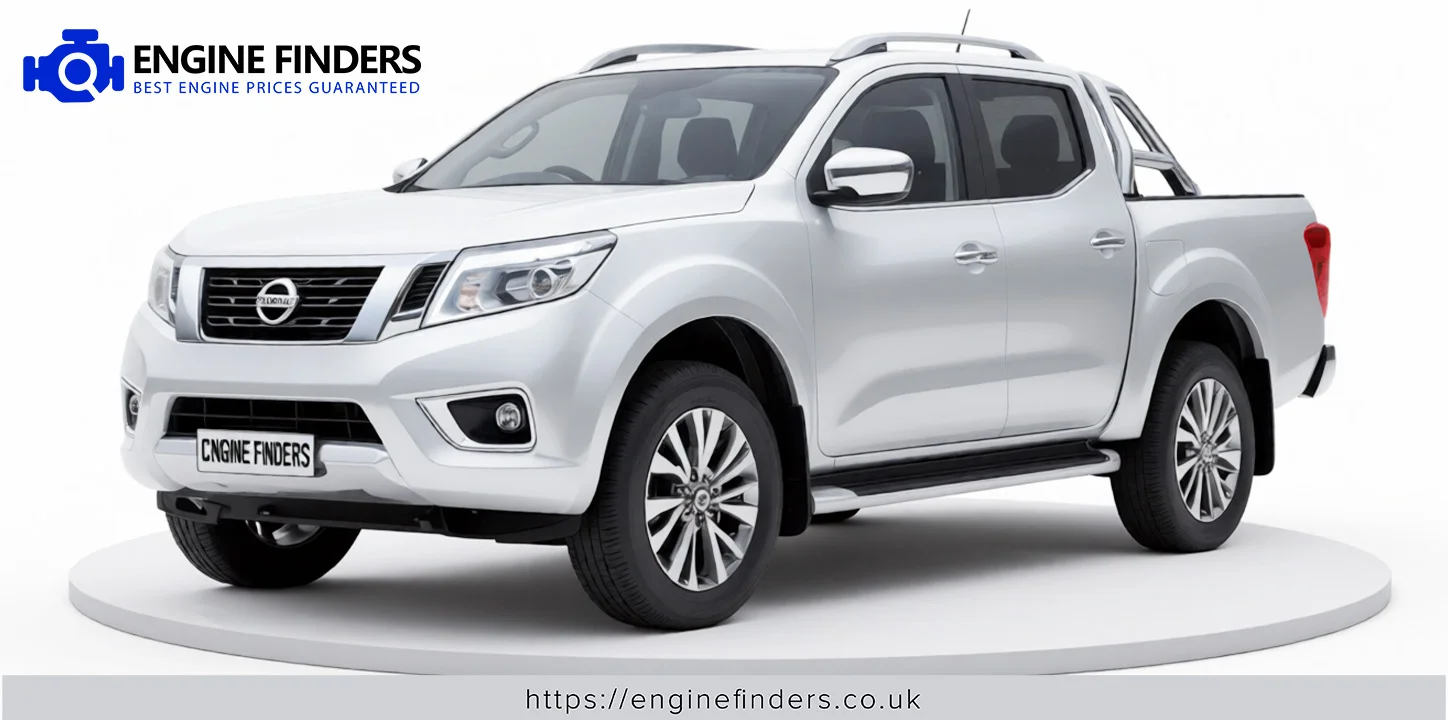
Expert Tips for Choosing the Right Engine for Your Nissan NP300
♻️ Nissan NP300 Engine Types Explained
- K12B petrol (2010-2020) - Most reliable for urban use
- DD diesel (2010-2015) - Better fuel economy, EGR issues
- Reconditioned K12B with tensioner 13410-EBM0A recommended
- NP300 specific: K12B has unique intake manifold design
£ Nissan NP300 Replacement Engine Cost in the UK
- K12B petrol engines cost £1,800-£2,200 (2010-2020 models)
- DD diesel engines cost £2,400-£2,800 (2010-2015)
- Reconditioned K12B saves £400-£600 vs new NP300 engines
- Engine Finders offers 15% discount on NP300 specific parts
🔍 Finding the Right Nissan NP300 Engine
- Check engine code on K12B block (top front of engine)
- NP300 K12B engines have unique ECU part numbers (22620-EBM0A)
- Verify chassis code E24 for NP300 compatibility
- Match production year to avoid ECU programming conflicts
⛽ Nissan NP300 Petrol vs Diesel Engines
- K12B petrol better for city driving, 42mpg average
- DD diesel suits long distances, 55mpg average
- Diesel NP300 faces ULEZ compliance issues in London
- Most NP300 owners choose petrol for reliability
🔒 Quality Assurance & Warranty
- NP300 K12B rebuilds include new timing chain (OEM 13410-EBM0A)
- 12-month warranty covers timing components specifically
- Compression test done at 120PSI minimum for NP300
- Engine Finders uses Nissan-specific diagnostic tools
🛒 Compare & Save on Nissan NP300 Engines
- Compare K12B engines by asking for timing chain replacement
- NP300 owners save £300 ordering complete engine harness
- Buy during January for 10% off NP300 engine orders
- Local fitters often charge less for NP300 engine swaps
⚙️ Nissan NP300 Engine Works: How Experts Rebuild Engines
When your engine fails, Nissan NP300 engine works can restore performance at a fraction of the cost of a brand-new engine. From diagnostics to rebuild, here's how experts ensure optimal results.
1. Initial Inspection: Experts check NP300 K12B for cylinder wall scoring using borescope. Measure bearing clearances with Nissan-specific tolerances (0.02-0.04mm for NP300).
2. Component Removal: Specialized tools remove K12B timing components. NP300 requires specific timing chain tool (Nissan part 07749-0010000) to prevent chain jump during removal.
3. Block Machining: CNC machines resurface NP300 K12B cylinder head at 0.05mm tolerance. Deck surface must be perfectly flat to prevent head gasket failure unique to NP300.
4. Part Replacement: Install new pistons, rings, and bearings. NP300 K12B needs updated oil pump (OEM 13500-EBM0A) from 2013+ models to prevent oil pressure issues.
5. Assembly Process: Torque head bolts to 30Nm + 90° rotation for NP300 K12B. Use Nissan-approved thread locker on all K12B fasteners to prevent loosening.
6. Final Testing: Run NP300 engine on dynamometer for 2 hours. Check compression (minimum 120PSI), oil pressure (2-6 bar), and emissions before delivery.