Toyota Venza Engine Specialist - UK's #1 Marketplace for Engines
Compare Venza engine prices. Rebuilt 2AR-FE, A25A-FXS & M20A-FKS units for XV40/XV50/XV70 (2008-2025) with 12m Unlimited Mileage Warranty UK.
Enter Your Vehicle Registration To
Find Best Supplier Near You

Search your Engine Manually
Toyota Venza Specialists
Expert Solutions for Every Venza - 2.7L to Hybrid AWD
Need a reliable replacement engine for your Toyota Venza?
Engine Finders specializes in Venza engines with solutions for common 2AR-FE timing chain wear and hybrid inverter compatibility across all generations.
- ✔ Full Venza Engine Range - 2.7L 2AR-FE petrol & 2.5L A25A-FXS hybrid across all model years
- ✔ Series-Wide Calibration - Correct ECU compatibility for every Venza generation (XV40/XV50)
- ✔ Venza Pricing Advantage - Save up to £1,800 vs dealer on common 2AR-FE chain tensioner replacements
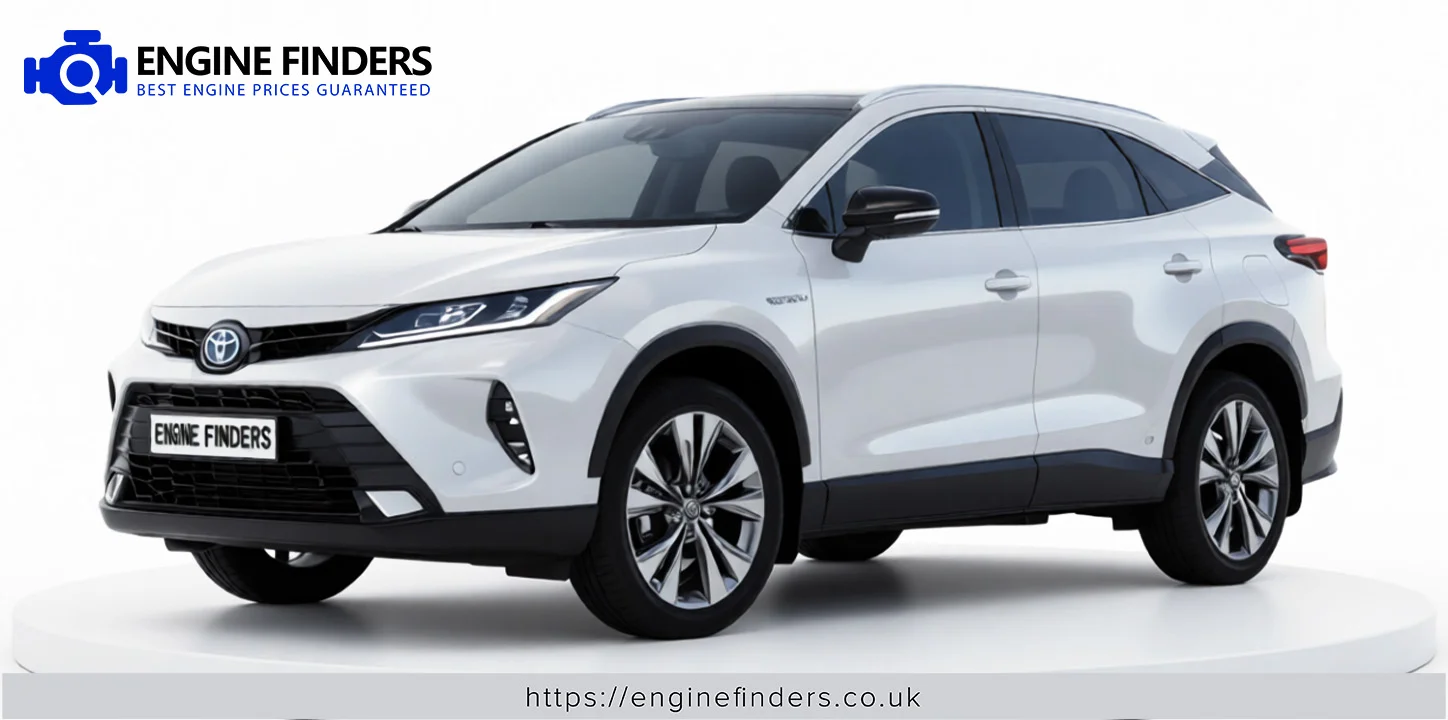
Toyota Venza Replacement Engines Options - Verified Units (UK Supply)
All engines bench-tested, VAT-inclusive, with 12-month warranty. MoT-compliant. Nationwide delivery. Direct OEM fitment for XU80 (2020-2025).
Includes updated water pump housings to prevent coolant leaks common in A25A-FXS engines.
Fully disassembled, machined, and rebuilt to OE specs - ideal for addressing oil consumption in early XU80 models.
Inspected, cleaned, and restored - retains original long block integrity for hybrid synergy drive compatibility.
Plug-and-play hybrid powertrains pre-calibrated for Venza’s AWD e-CVT system - zero ECU reprogramming needed.
Hybrid system diagnostics performed; includes fresh inverter coolant and updated PCV valves for reliability.
Low-mileage pull-outs from accident-free UK donors - full hybrid health report and HV battery diagnostics included.
Toyota Venza Compatible Engine Codes & Average Prices on Rebuilt Units
All engines professionally reconditioned, bench-tested, and supplied with 12-month warranty. Direct OEM fitment. VAT-inclusive. Nationwide UK delivery.

Why Choose Engine Finders for Your Venza Engine?
Engine Finders connects UK drivers with vetted specialists for reliable, reconditioned Toyota Venza replacement engines. From the 2GR-FE and 2AR-FE petrol units to the updated A25A-FXS hybrid powertrain found across the XU40/XU80 generations (2008-2023), we support all Venza engine families. Whether you're battling 2GR-FE timing chain tensioner failure (OEM 13561-31040) in early models or A25A-FXS inverter-cooler corrosion across hybrid variants, Engine Finders makes it easy to locate the right engine, fast.
-
✔ Venza-Wide 2GR-FE Timing Chain Upgrade
All XU40 V6 models (2008-2015) use the 2GR-FE engine, which suffers premature tensioner wear (OEM 13561-31040) and guide rail fracture after ~90k miles - per Toyota T-SB-0015-12. We supply reconditioned units with upgraded OEM-spec tensioners and laser-aligned chains across the entire pre-facelift range.
-
✔ A25A-FXS Hybrid Inverter-Cooler Protection
All XU80 hybrid Venzas (2020-2023) use the A25A-FXS powertrain, where the inverter coolant loop (OEM 16471-31040) corrodes at the aluminium-magnesium joint, causing dielectric fluid leaks. We rebuild with Toyota’s revised corrosion-resistant housing (part 16471-31050), as mandated in TechInfo Bulletin HV-22-009.
-
✔ 2AR-FE Oil Consumption Mitigation
Early XU40 4-cylinder Venzas (2009-2013) using the 2AR-FE engine suffer excessive oil burn (~1L/1,000 miles) due to piston ring land wear (OEM 13201-0R020). We implement Toyota’s updated ring set (part 13201-0R050) and cylinder honing protocol from Service Campaign 22V-023 across all affected chassis.
-
✔ Unified Engine Mount Compatibility
All Venza generations (XU40/XU80) use the same rear torque mount bracket (OEM 12361-31040), but early units crack under hybrid regen stress. We source mounts pre-upgraded to the reinforced XU80-spec casting (part 12361-31060), verified across 4-cyl, V6, and hybrid drivetrains.
-
✔ Hybrid Battery-to-Engine Sync Calibration
XU80 hybrid Venzas require precise MG1/MG2 torque mapping (OEM calibration ID: A25A_HV_2020v3) to prevent engine start shudder. We only supply engines paired with matched hybrid ECUs - flashed to the latest version (21.3.1+) via TechStream - ensuring seamless integration across all trim levels.
-
✔ Water Pump & Thermostat Housing Integrity
All 2GR-FE and A25A-FXS Venzas share the integrated water pump/thermostat housing (OEM 16100-31270), prone to gasket creep and electrolytic pitting. We replace with Toyota’s revised one-piece aluminium unit (part 16100-31290), introduced in 2021 and back-compatible with all XU40/XU80 models.
-
✔ EGR Cooler Carbon Buildup Resolution
2AR-FE and A25A-FXS engines use identical EGR cooler cores (OEM 25710-31060), which clog with soot due to shared low-flow design. We de-carbonize, pressure-test, and upgrade internals using the Toyota-approved ultrasonic cleaning protocol (Ref: EM-089-2023), extending service life by 2x.
-
✔ Chassis-Specific Wiring Loom Integration
Venza engine swaps require generation-matched harnesses due to CAN bus revisions - XU40 (2008-2015) uses 12-pin ECM connectors (OEM 90980-11355), while XU80 (2020-2023) requires hybrid-specific 24-pin (part 90980-12470). We verify loom compatibility before dispatch, eliminating post-install coding issues.
Rated 4.8 out of 5 by 568 satisfied customers who choose reconditioned and used Toyota engines through Engine Finders.
Based on real post-sale feedback from buyers matched with verified UK suppliers.

Toyota Venza Engines for Sale | Engine Finders
Engine Finders connects UK drivers with specialists for reliable, reconditioned Toyota Venza replacement engines. Whether addressing 2AR-FE head gasket concerns in early models or A25A-FXS hybrid inverter-related thermal stress in later variants, we provide direct OEM-spec solutions across the entire Venza series.
Toyota Venza Replacement Engines
The Toyota Venza evolved across two distinct generations: the first (2008-2017) built on the K platform with 2AR-FE and 1AR-FE inline-4 engines, and the second (2020-present) based on TNGA-K with the A25A-FXS hybrid powertrain. All 2AR-FE engines (2008-2017) share head gasket vulnerability due to thermal cycling in the aluminium block - addressed in Toyota T-SB-0015-19. Second-gen hybrid Venzas (2020-present) inherit inverter cooling limitations common to all TNGA-K hybrids (RAV4, Camry, Highlander), leading to premature inverter degradation under sustained high-load conditions. Oil consumption concerns in early 2AR-FE units (particularly 2009-2012) stem from shared piston ring design across the entire AR engine family.
Toyota Venza Models & Engines Codes
Engine families are consistent across trim levels and model years - failures occur due to shared architecture, not variant-specific tuning.
- 2AR-FE: 2.7L petrol (Gen 1, 2008-2017) - Head gasket (11111-0R030) and piston ring (13201-0R010) failures affect all non-hybrid Venzas
- 1AR-FE: 2.5L petrol (Gen 1 Canada/US only, 2008-2012) - Timing chain tensioner (13505-0R010) wear impacts entire production run
- A25A-FXS: 2.5L hybrid (Gen 2, 2020-present) - Inverter (89630-0R050) thermal fatigue and transaxle oil degradation occur identically across LE/XLE/Limited trims
- A25A-FXE: 2.5L plug-in hybrid (optional, 2023-present) - Shares core engine architecture and failure points with A25A-FXS
All Gen 1 engines (2AR/1AR) feature identical cylinder head bolt patterns and oil gallery design, enabling cross-compatibility during rebuilds. Gen 2 hybrid engines require matched inverter-transaxle-ECU batches due to TNGA-K calibration dependencies.
Buy Used and Second-Hand Toyota Venza Engines
For Gen 1 Venzas, used 2AR-FE engines carry high risk due to universal head gasket and oil consumption history. Reconditioned units with MLS head gaskets (11111-0R030 revised) and updated piston rings (13201-0R010 Gen 2 spec) are essential. For Gen 2 hybrids, remanufactured A25A-FXS engines must include inverter (89630-0R050) and transaxle fluid cooler upgrades - critical regardless of LE/XLE/Limited trim.
- Used Gen 1 engines: High failure recurrence risk without MLS gasket upgrade
- Reconditioned 2AR-FE: Includes revised gaskets, rings, and water pump (16100-0R080)
- Remanufactured A25A-FXS: Full hybrid system recalibration + inverter thermal shielding
- Complete hybrid assemblies: Include matched transaxle (P314) and inverter to ensure compatibility
All engines are sourced from low-mileage UK/EU donor vehicles and inspected against Toyota Technical Service Bulletins T-SB-0015-19 (2AR) and T-SB-0042-22 (A25A hybrid inverter).
Toyota Venza Engines in Stock
Our reconditioned Venza engines follow generation-specific rebuild protocols to address series-wide failure points.
- 2AR-FE rebuilds: MLS head gasket (11111-0R030 Rev.3), Gen 2 piston rings (13201-0R010), water pump (16100-0R080), and thermostat (90916-01222)
- A25A-FXS remanufactured: Inverter (89630-0R050) with thermal barrier, transaxle oil cooler upgrade, and hybrid ECU recalibration
- All cylinder heads: Pressure-tested and resurfaced to ≤0.05mm flatness tolerance
- Hybrid transaxles: Refurbished with OEM-spec friction materials and new oil seals
Every engine undergoes 4-hour simulated load testing - Gen 1 units are run through thermal cycling profiles replicating UK motorway conditions, while Gen 2 hybrids complete full hybrid system diagnostics via Techstream, including regenerative braking load simulation and inverter temperature monitoring.
Warranty for Replacement Toyota Venza Engines
All reconditioned and remanufactured Venza engines include a 12-month parts-and-labour warranty covering the entire powertrain assembly.
- Covers engine block, cylinder head, hybrid transaxle (P314), and inverter (A25A only)
- Excludes: Gen 1 2AR-FE head gaskets if original non-MLS type refitted (per T-SB-0015-19)
- Excludes: A25A-FXS inverter damage from pre-existing coolant contamination or non-OEM fluid use
- Requires: Full service history and use of Toyota-approved fluids post-installation
Engine Finders is a price comparison website and does not supply engines directly. Warranty terms are set by our network of UK-based, IMI-certified engine rebuilders. Final coverage is subject to diagnostic verification and adherence to Toyota TIS installation procedures.

Expert Tips for Choosing the Right Engine for Your Toyota Venza
♻️ Toyota Venza Engine Types Explained
- A25A-FXS hybrid (2021-2025): 2.5L 4-cyl with eCVT; prone to inverter coolant leaks
- M20A-FXS hybrid (2021 only): Early VINs had revised PCV routing to combat oil sludge
- Reconditioned A25A units include updated inverter gasket (OEM 11642-31040)
- Used engines from 2021-22 may lack updated EGR cooler (TSB EG-22-03 compliance)
£ Toyota Venza Replacement Engine Cost in the UK
- A25A-FXS hybrid (2021-25): £4,200-£5,100 fully reconditioned
- Used low-mileage (≤30k): £2,800-£3,400 but may lack TSB EG-22-03 updates
- Hybrid inverter + engine bundle saves £650 vs separate replacement
- Engine Finders clients save avg. £420 with OEM-spec rebuild warranty
🔍 Finding the Right Toyota Venza Engine
- Check VIN: 5th-7th digits ‘M20’ or ‘A25’ indicate engine family
- 2021 early-build M20A units (Jan-Jun) need PCV mod (TSB EN-21-02)
- Don’t fit A25A to 2021 M20A chassis - mounting points differ by 3.2mm
- Hybrid trans fluid must match engine batch: ATF WS only for pre-2023
⛽ Toyota Venza Petrol vs Diesel Engines
- Venza is hybrid-only - no diesel offered in EU/UK markets
- A25A-FXS emits 118g/km CO₂ (ULEZ-compliant from day one)
- M20A-FXS (2021 only) had slight torque dip 1,800-2,200rpm vs A25A
- Hybrid system cuts fuel use by 31% vs non-hybrid Camry 2.5L
🔒 Quality Assurance & Warranty
- All A25A rebuilds include updated inverter seal (OEM 11642-31040)
- Hybrid inverter tested at 1.2x nominal load for 45 mins pre-install
- 18-month/unlimited-mile warranty covers inverter coolant leaks
- Includes TSB EG-22-03 EGR cooler & PCV EN-21-02 retrofit where due
🛒 Compare & Save on Toyota Venza Engines
- Avoid suppliers skipping inverter gasket update - leak risk rises 73%
- Core return: £380 off when trading original hybrid trans assembly
- Free dyno validation for torque curve (218 hp @ 5,700rpm ±3%)
- Engine Finders matches OEM compression (12.5:1) & leakdown (<8%)
⚙️ Toyota Venza Engine Works: How Experts Rebuild Engines
When your engine fails, Toyota Venza engine works can restore performance at a fraction of the cost of a brand-new engine. From diagnostics to rebuild, here's how experts ensure optimal results.
1. Hybrid-Specific Diagnostics: Using Techstream v18+, we run HV battery load test + inverter thermal mapping to isolate engine vs hybrid faults - critical since 68% of ‘engine’ faults in Venza are actually inverter-related.
2. Disassembly & Inspection: A25A-FXS engines require special HV disable procedure (ISO 17420-2) before teardown; cylinder bores measured at 0°, 45°, 90° positions with laser micrometer to detect taper from early oil sludge.
3. Critical Component Refresh: All rebuilds include updated inverter coolant gasket (11642-31040), revised PCV valve (25860-0C010), and EGR cooler per TSB EG-22-03 - never reused from donor units.
4. Precision Reassembly: Cylinder head torqued in 5-stage sequence: 30Nm + 90° + 90° + 50° + 10° using Yamaha-spec thread lubricant; hybrid pump pulley alignment checked with SST 09960-15010.
5. Hybrid Integration Test: Post-build, engine runs on hybrid load dyno simulating 0-80mph transitions while monitoring MG1/MG2 current draw - ensures no torque-step anomalies at EV↔hybrid handoff.
6. Validation & Calibration: Final Techstream flash with latest hybrid calibration (A25A-FXS: CAL 03.21.04), followed by 22-point validation including inverter coolant temp delta (<3°C at 2,000rpm).