Executive Summary
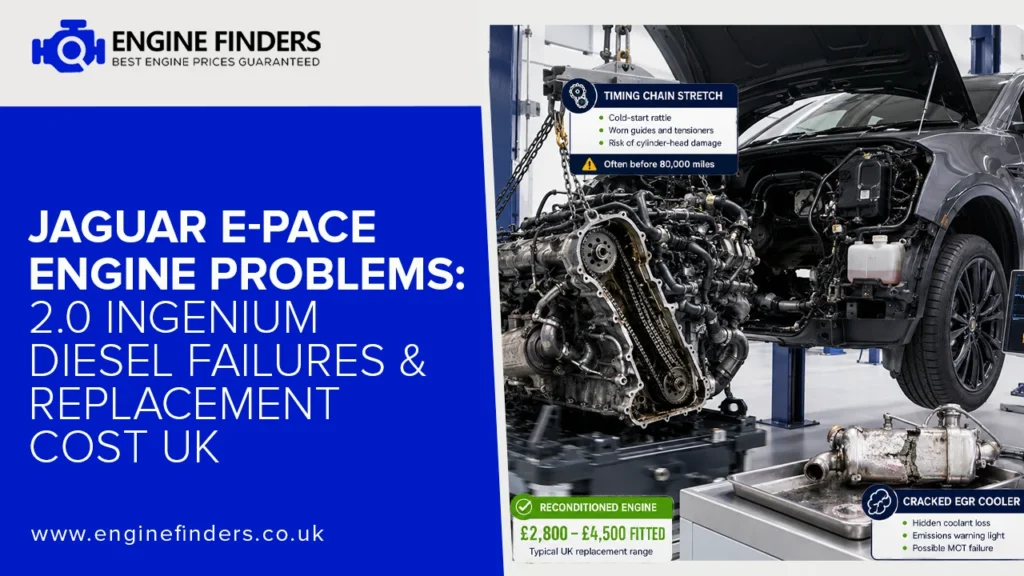
The Range Rover Sport SDV6 3.0 (engine code 306DT) is one of the most capable diesel SUVs on UK roads, but it carries a well-documented reputation for catastrophic engine failure, often between 60,000 and 100,000 miles. The primary culprit is crankshaft and bearing failure, a design vulnerability that can strike without warning and typically requires a full engine replacement costing £5,000 to £7,500. Timing chain wear, turbocharger failure, and DPF-related issues are also common, particularly in vehicles with poor service histories or those used predominantly for short journeys.
Engine Finders is a price comparison platform, not a direct engine seller. Final pricing, warranty terms, and availability vary by vetted UK supplier. Professional diagnosis is recommended before purchasing any replacement engine.
If you own or are considering buying a 2013 to 2019 Range Rover Sport L494 with the 3.0 SDV6, understanding these failure modes is essential. This guide covers the engine’s known issues, what they sound like, what they cost to fix, and, most importantly, whether replacement is the right decision.
What Is the SDV6 3.0 Engine?
The 3.0 SDV6 (engine code 306DT) is a 2,993cc V6 turbo diesel engine used extensively across the Land Rover and Range Rover range from approximately 2010 onwards. It is the twin-turbo evolution of the earlier TDV6, offering improved power output (up to 306hp) and torque (up to 700Nm).
In the Range Rover Sport L494 (2013 to 2022), the SDV6 was the dominant diesel option and remains the most common engine found in UK used examples. The engine was offered in various power outputs, typically 258hp, 292hp, and 306hp variants, and was paired exclusively with the ZF 8HP eight-speed automatic transmission.
Key specifications:
- Displacement: 2,993cc
- Configuration: V6, 60-degree angle
- Fuel system: Common rail diesel
- Turbochargers: Sequential twin-turbo (SDV6) or single turbo (TDV6)
- Emissions: Euro 5 (pre-2015) or Euro 6 (2015 onwards)
The Big One: Crankshaft and Bearing Failure
What Happens
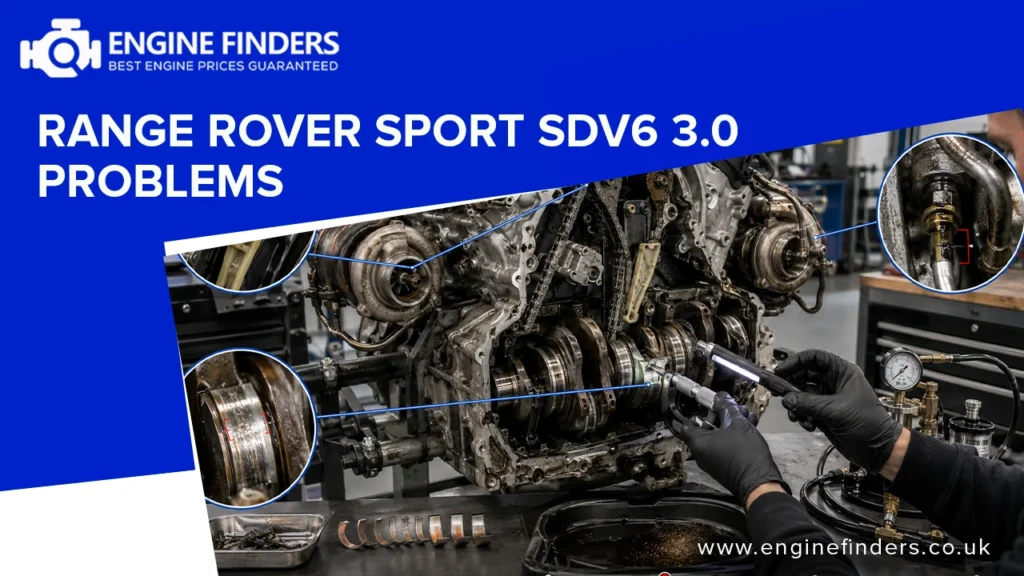
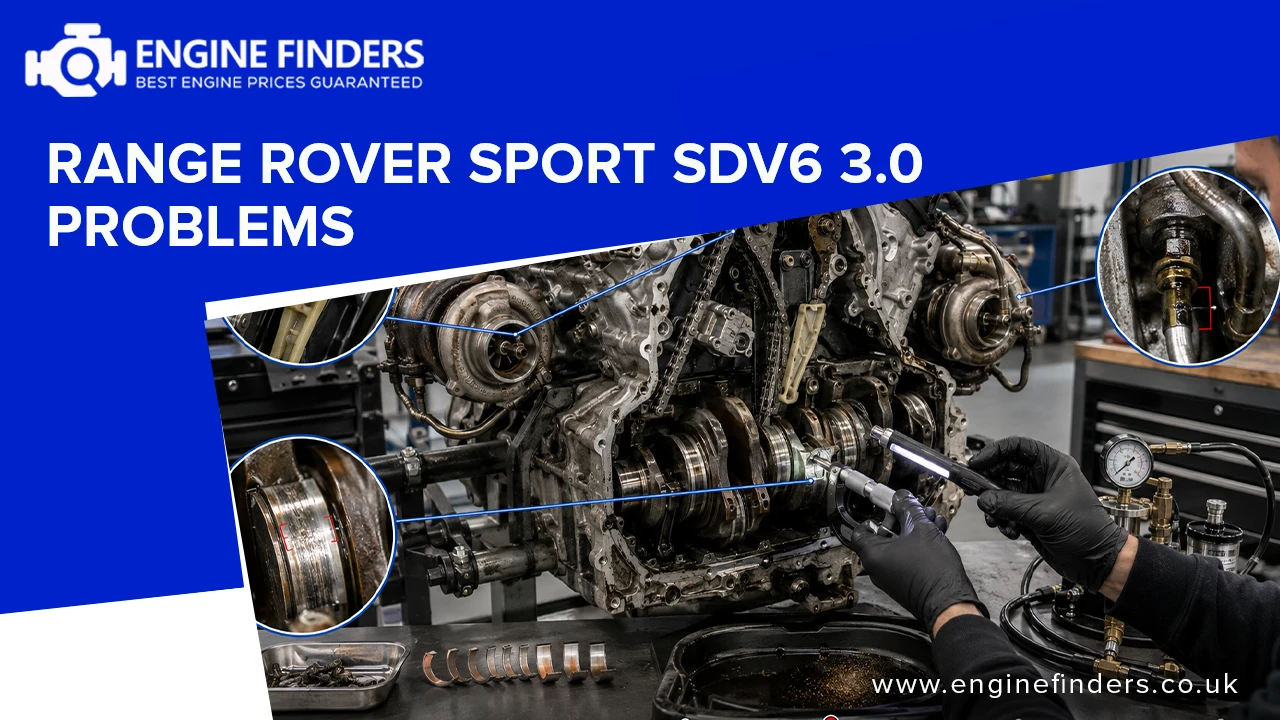
The SDV6’s most notorious failure is crankshaft and main bearing failure. Land Rover issued Special Service Message SSM 72578 in 2016 acknowledging “Crankshaft/crankshaft bearing failure” on the 3.0 TDV6 Diesel Engine, covering models including the Range Rover Sport L494. The issue involves rotation of the main bearing shells, which leads to oil starvation and eventual crankshaft fracture. This is the same failure mode documented in our Discovery 4 TDV6 crankshaft failure guide, which applies directly to the SDV6.
Why It Happens at ~80,000 Miles
The 3.0-litre V6 diesel retains a narrow bearing design inherited from the earlier 2.7 TDV6. Under load, especially with the high torque output of the SDV6, the bearings can spin, blocking oil flow to the crank. Contributing factors include:
- Extended oil change intervals, as JLR’s long-life servicing (up to 21,000 miles) is widely considered inadequate for this engine
- Blocked oil pick-up strainers, where carbon build-up from EGR systems can restrict oil flow
- Low-quality or old oil, as oil degradation reduces bearing protection
- Coolant contamination, where EGR cooler leaks can introduce coolant into the oil system
Symptoms
Land Rover’s official technical communication lists these symptoms:
- A loud rumbling or knocking sound when running, worsening under load
- Oil pressure warning light flashing or continuously illuminated
- Engine seizure, unable to turn via starter or crank pulley bolt
- Holed oil sump or cylinder block with oil leakage and metallic debris
Owner-reported experiences include a 2013 Range Rover Sport with only 85,000 miles suffering complete engine destruction, with multiple rods and pistons destroyed, holes in the block, and severe damage to the oil pan. Another owner reported a snapped crankshaft on a 2017 model.
Replacement Cost
Once the crank has gone, rebuilding the bottom end is rarely cost-effective. A full reconditioned long engine replacement typically costs:
| Component | Cost (inc. VAT) |
|---|---|
| Reconditioned long engine (exchange) | ~£4,250 |
| Labour (16 hours) | ~£1,272 |
| Gaskets, seals, fluids, filters | ~£240 |
| Oil cooler and EGR flush | ~£300 |
| ECU setup, diagnostics, road test | ~£100 |
| Total (fitted) | ~£7,610 |
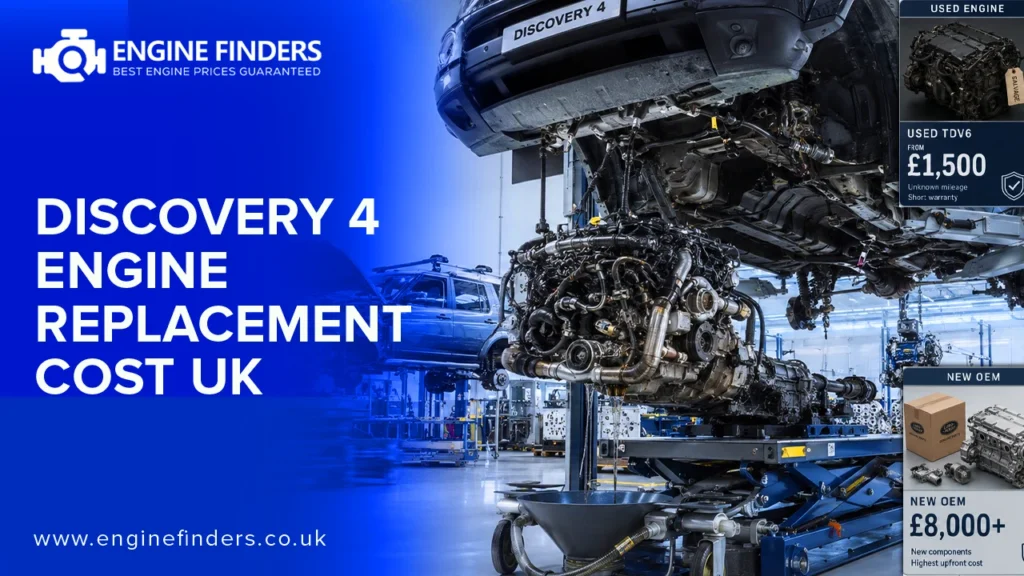
Note that Gen 2 long engines are more expensive due to updated piston and component costs. Used SDV6 engines can be sourced for £2,000 to £4,000, but fitting costs remain significant. For a fuller breakdown, see our Range Rover engine replacement cost guide.
Compare quotes from vetted UK suppliers for no-obligation pricing on SDV6 replacement engines.
Timing Chain Wear: The Second Major Weakness
Why It’s a Problem
The 3.0 SDV6 and TDV6 are the most commonly affected engines for timing chain wear. Chain stretch, tensioner wear, and guide failure typically develop gradually over high mileage. Poor maintenance and delayed oil changes accelerate this wear significantly.
Symptoms
Early warning signs include:
- Rattling on cold start, the most common early indicator
- Engine misfires or rough running
- Reduced performance and increased fuel consumption
- Engine knocking or rattling that persists when warm
- Difficulty starting
- Engine warning light illumination
Consequences
Left unaddressed, a failing timing chain can lead to catastrophic internal damage, including valve and piston contact, bent valves, and complete engine destruction. Replacement typically requires engine-out access.
Replacement Cost
Timing chain replacement on the SDV6 is a major job. The engine is usually lifted from the chassis for access. A full timing chain kit including chains, tensioners, and guides typically costs £800 to £1,500 in parts, with labour adding £1,000 to £1,800. Total costs often exceed £2,500 at a specialist.
Turbocharger Failure: Oil Starvation and DPF Regens
The Problem
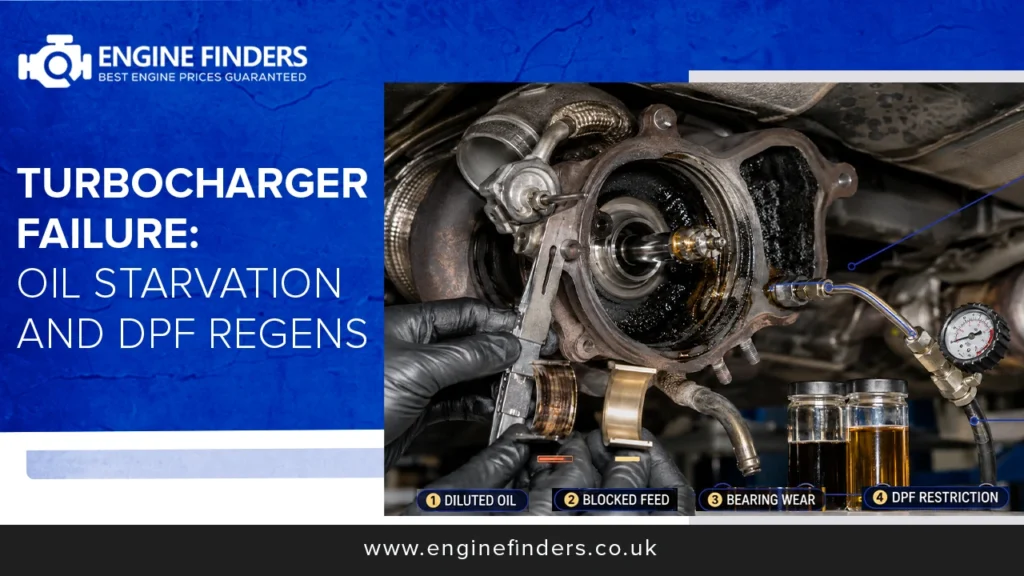
The SDV6’s twin-turbo system relies on clean oil supply for lubrication and cooling. When oil quality degrades or oil change intervals are extended, the turbo bearings wear rapidly. A blocked or failing DPF can also cause high exhaust backpressure, stressing the turbos.
On Ingenium diesel engines (and the SDV6 shares similar architecture), repeated DPF regeneration cycles can cause fuel to enter the sump and thin the oil, reducing bearing protection.
Symptoms
- Sharp loss of power and sluggish acceleration
- Restricted Performance message on dashboard
- Whistle or siren-like noise rising with engine speed
- Black smoke on acceleration or white/blue smoke if oil is passing seals
- Fault codes for overboost, underboost, or actuator control
- Visible oil leaks around turbocharger or intercooler hoses
What to Do
Simply replacing the turbo without addressing the underlying cause often leads to repeat failure. Professional diagnosis should confirm:
- Oil feed and return lines are clear
- DPF is functioning correctly
- Oil quality and level are correct
DPF and Emissions System Issues
The Problem
The SDV6’s Diesel Particulate Filter (DPF) is a common source of frustration for UK owners. The DPF regeneration process injects additional fuel during the exhaust stroke to burn off soot. Problems arise when:
- The vehicle is used mainly for short journeys, preventing passive regen
- The DPF becomes blocked, causing backpressure
- Regeneration cycles fail, leading to oil dilution
Owner reports include a 2015 Range Rover Sport SDV6 requiring multiple manual regenerations over the space of 18 months at great expense. Another owner reported persistent DPF issues from new on a 2018 model.
Common Fault Codes
- P2002: Diesel Particulate Filter Efficiency Below Threshold (Bank 1)
- P010C: Mass or Volume Airflow B Circuit Low
Repair Costs
DPF-related repairs range from £200 for cleaning to £3,500 for full DPF replacement including labour.
EGR and Intake Manifold Issues
The Problem
EGR (Exhaust Gas Recirculation) valve clogging is common on high-mileage SDV6 engines. Carbon build-up from the EGR system can restrict oil galleries and cause rough idle, reduced power, and increased emissions.
The inlet manifold is another known weak point. Cracking or failure leads to boost leaks, reduced performance, fault codes, and limp mode. Symptoms include whistling or hissing from the intake and visible oil residue around the manifold.
Oil Consumption and PCV Valve Issues
Some SDV6 owners report excessive oil consumption and oil entering the intake system. One owner described a 2016 SDV6 HSE dropping oil into the intake and expelling it through the exhaust, causing heavy smoke. The PCV (Positive Crankcase Ventilation) valve is often the culprit.
Which Models Are Most Affected?
The SDV6 was fitted across multiple Land Rover and Range Rover models:
| Model | Years Affected |
|---|---|
| Discovery 4 | 2009–2016 |
| Range Rover Sport L494 | 2010–2019 |
| Range Rover L405 | 2013–2019 (selected models) |
The issues affect both early and later 3.0 TDV6/SDV6 engines. While Land Rover introduced running updates to the engine (including reduced main bearing run-out tolerance from 50 to 30 microns from engine number 011215-1001200), failures continue to be reported on later vehicles. Our analysis of TDV6 and SDV6 real mileage data shows how durability varies across production years.
The newer Ingenium straight-six diesel engines (D250, D300, D350) introduced from 2021 have improved chain durability, but they are a fundamentally different design.
Practical Takeaways
Should You Buy a Range Rover Sport SDV6?
Buy if:
- The vehicle has a full, verifiable service history with oil changes at maximum 10,000-mile intervals (not JLR’s 21,000-mile LongLife schedule)
- You are prepared for potential £5,000 to £7,500 engine replacement costs
- You can afford a specialist warranty that explicitly covers crankshaft and bearing failure
- You primarily use the vehicle for longer journeys (DPF health)
Avoid if:
- The service history is incomplete or oil changes are beyond 15,000 miles
- You hear any rattle on cold start, which is often the first warning of timing chain or bearing wear
- You cannot budget for major engine work within the first 12 to 24 months of ownership
- You mainly do short trips (DPF and oil dilution risks are high)
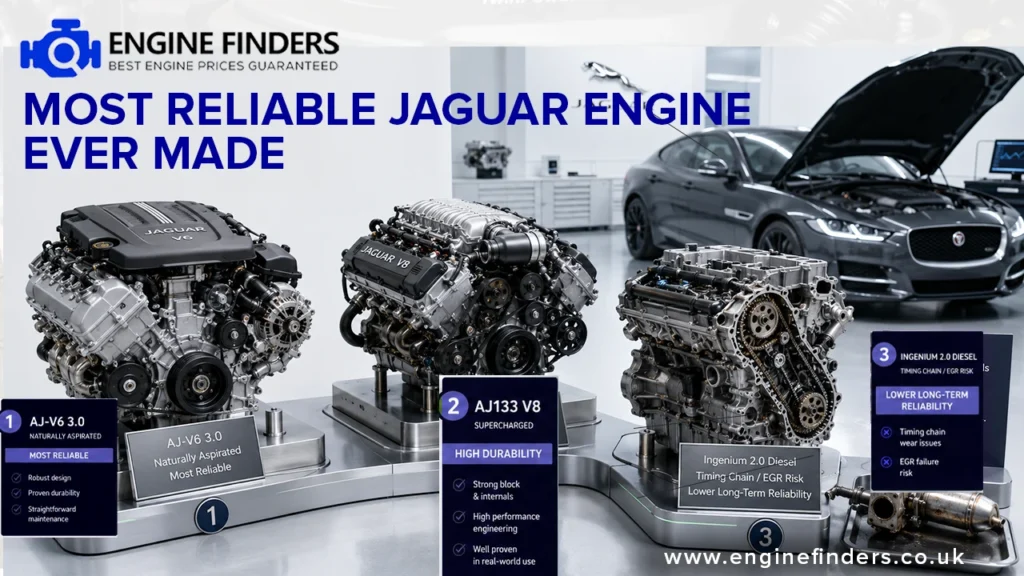
For a wider view, our guide to the most reliable Range Rover engines ranks the SDV6 against the alternatives, and our SDV6 reliability and safe upgrade guide covers how to make an L494 SDV6 as dependable as possible.
Engines to Avoid
- Early 3.0 TDV6 (pre-2013), which has higher failure rates
- Any SDV6 with incomplete service history, as oil condition is critical
- High-mileage examples (over 100,000 miles) without documented timing chain or turbo work
When to Use EngineFinders
If your SDV6 has suffered catastrophic failure, comparing quotes for a replacement engine is essential. Engine Finders connects you with vetted UK suppliers offering used, reconditioned, and new engines.
For timing chain or turbo repairs, compare costs against replacement, as sometimes a reconditioned engine with warranty is more cost-effective than a £2,500+ repair on a high-mileage unit. Our engine repair versus replacement guide helps you make the call.
Professional Verification Requirements
- Always have any SDV6 diagnosed by a Land Rover specialist before purchasing a replacement engine
- Confirm the exact engine code (306DT) and variant (Euro 5 or Euro 6) for your vehicle
- Check the DVSA recall database and the GOV.UK MOT history service for any outstanding recalls or previous engine advisories
- Check turbochargers, DPF, and EGR systems before fitting a replacement, because if they caused the failure, they will kill the new engine too
Frequently Asked Questions
What is the most common cause of Range Rover Sport SDV6 engine failure?
Crankshaft and main bearing failure is the most common catastrophic failure, recognised by Land Rover in SSM 72578. It typically occurs between 60,000 and 100,000 miles and is often linked to extended oil change intervals or oil starvation. Complete engine replacement is usually required.
How much does a Range Rover Sport SDV6 engine replacement cost?
A reconditioned SDV6 long engine fitted costs approximately £5,000 to £7,500 including VAT. A full supply-and-fit package for models up to 2015 costs around £7,610 including VAT. Used engines can be cheaper (£2,000 to £4,000) but carry higher risk. Compare quotes from vetted UK suppliers for no-obligation pricing.
What are the early warning signs of SDV6 timing chain failure?
Rattling on cold start is the most common early indicator. Other symptoms include engine misfires, reduced performance, rough idling, and difficulty starting. If you hear timing chain rattle, have it inspected immediately, because delaying can lead to catastrophic engine damage.
Can the SDV6 crankshaft failure be prevented?
Regular oil changes at 8,000 to 10,000 mile intervals (not JLR’s 21,000-mile LongLife schedule) are the single most important preventive measure. Use the correct grade of high-quality oil and ensure the oil pick-up strainer is clear. However, the narrow bearing design means even well-maintained engines can fail.
Is the Ingenium D300 more reliable than the SDV6?
The Ingenium straight-six diesel (D300) introduced from 2021 has improved chain durability and a revised architecture. However, it is a different engine family and is not a direct replacement for the SDV6. Early Ingenium diesel engines have their own known issues, particularly with oil dilution from DPF regens, as covered in our Discovery Sport Ingenium diesel problems guide.
Should I replace my SDV6 engine or buy a new car?
If the vehicle is otherwise in good condition and you can source a reconditioned engine with warranty (12 months/30,000 miles), replacement is often more cost-effective than purchasing a replacement vehicle. Compare quotes from vetted UK suppliers and factor in fitting costs before deciding.