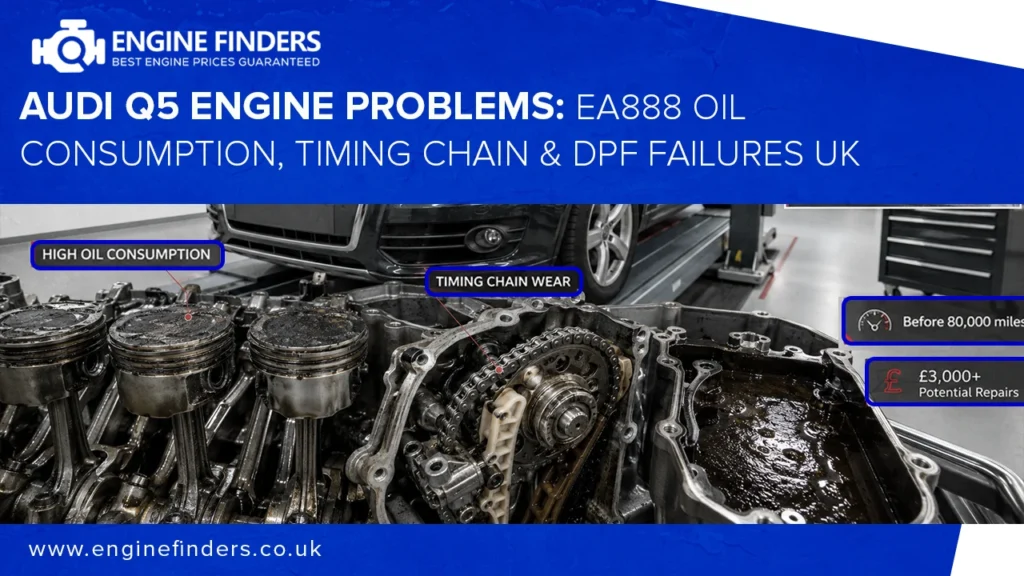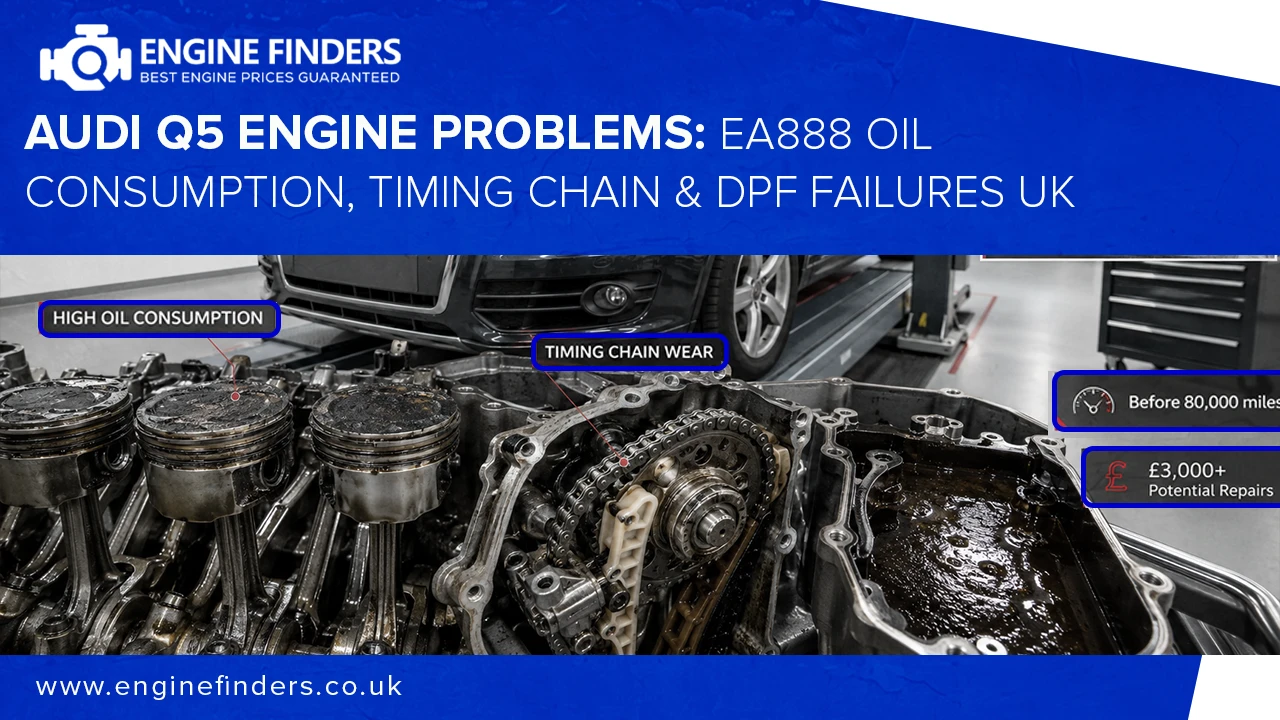
Over 30% of early-generation Audi Q5 2.0 TFSI models experience significant oil consumption or timing chain issues before reaching 80,000 miles. For UK owners, this mechanical vulnerability often translates to unexpected repair bills exceeding £3,000 if not addressed proactively. Understanding the root causes of these failures is critical for protecting your investment and ensuring your vehicle remains roadworthy.
Quick Summary: Audi Q5 Engine Reliability Facts
- Primary Failure Point: Gen 2 EA888 2.0 TFSI engines are prone to oil consumption due to flawed piston ring design.
- Timing Chain Risk: Weak plastic tensioners can fail, causing catastrophic valve-to-piston contact.
- DPF Vulnerability: Frequent short urban journeys accelerate Diesel Particulate Filter (DPF) clogging in 2.0 TDI variants.
- Replacement Cost: A fully reconditioned Audi Q5 engine typically costs between £2,500 and £4,500, including VAT and labour.
- What to Avoid: Do not ignore the “oil level” warning light; top-ups are a symptom, not a solution.
Audi Q5 EA888 Oil Consumption Causes and Symptoms
The Volkswagen Group’s EA888 engine family powers millions of vehicles, but the second-generation 2.0 TFSI variant is notorious for excessive oil consumption. Owners frequently report burning up to one litre of oil every 1,000 miles.
This issue primarily stems from the original piston ring design, which allowed oil to bypass the rings and enter the combustion chamber. Over time, carbon buildup exacerbates this, causing the rings to stick. Additionally, the Positive Crankcase Ventilation (PCV) valve diaphragm is prone to rupture. When this happens, it creates excessive crankcase vacuum, pulling oil vapour directly into the intake manifold.
If you own a Audi Q5 from the 2009–2012 production window, monitor your dipstick weekly. A distinct blueish tint in the exhaust smoke and a persistent smell of burning oil are definitive indicators that internal sealing has compromised.
Audi Q5 Timing Chain Failure: Warning Signs and Repair Costs
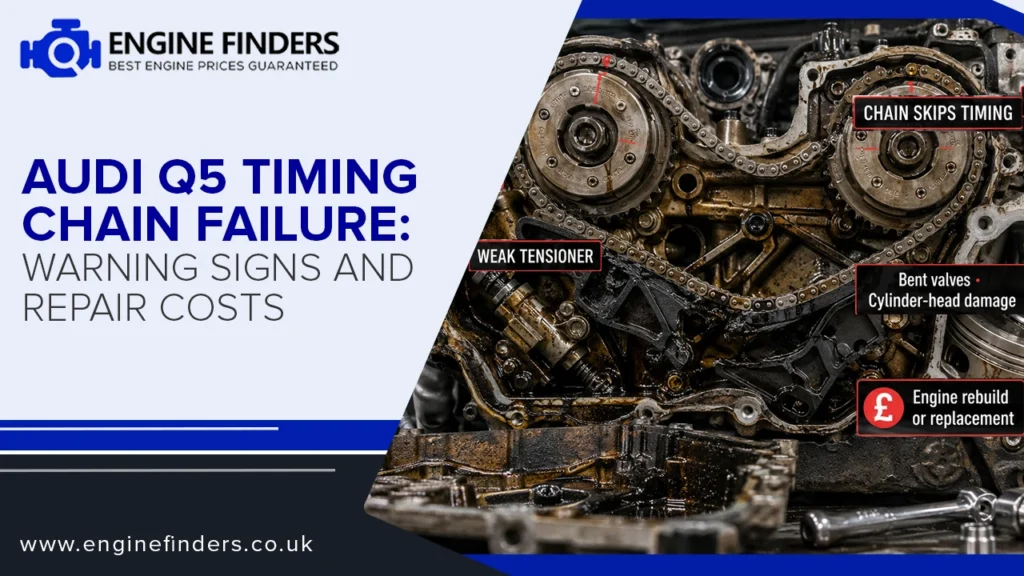
Timing chain failure is arguably the most catastrophic issue affecting the VW EA888 2.0 TSI petrol engine platform. Unlike robust timing belts, the chains in these engines are stretched by a weak, plastic-guided tensioner that degrades under high heat and oil starvation.
When the tensioner fails, the chain skips teeth on the camshaft sprockets. This desynchronises the engine’s timing, almost always resulting in valves colliding with pistons. The outcome is a destroyed cylinder head and bent valves, requiring a complete engine rebuild or replacement.
Early Warning Signs:
- A metallic rattling or slapping noise from the timing cover during cold starts.
- Illuminated Check Engine Light (CEL) with camshaft position correlation codes (e.g., P0016).
- Rough idling or a noticeable loss of engine power under acceleration.
Addressing a rattling timing chain early with an updated OEM tensioner kit costs approximately £800 to £1,200. Waiting until the chain snaps will push repair costs well beyond £4,000.
Audi Q5 DPF Failure Symptoms and MOT Implications
For diesel variants, the 2.0 TDI engine is generally robust, but its emissions control systems are highly sensitive. The Diesel Particulate Filter (DPF) traps soot to meet Euro 5 and Euro 6 standards. However, it requires sustained high-exhaust temperatures to initiate “regeneration,” a process that burns off accumulated soot.
UK drivers who primarily undertake short, stop-start urban commutes prevent the DPF from reaching regeneration temperature. This leads to rapid ash and soot accumulation. Furthermore, a failing Exhaust Gas Recirculation (EGR) cooler can leak coolant into the combustion chamber, creating a sludge that permanently blocks the DPF matrix.
A blocked DPF will trigger limp mode and cause a definitive MOT failure. According to the official MOT inspection manual for private passenger vehicles, any visible smoke from a diesel vehicle or a tampered emissions system results in an immediate dangerous fail.
Audi Q5 Engine Replacement Cost UK Breakdown
When an engine suffers catastrophic timing chain failure or severe oil consumption damage, replacement is often more economical than a top-end rebuild. Understanding your options is vital for financial planning.
Purchasing a reconditioned engine is widely considered the most balanced option for UK drivers. These units are stripped, cleaned, and fitted with new OEM-spec piston rings, bearings, and timing components. They typically come with a 12-to-24-month warranty, offering peace of mind that a salvaged unit cannot match.
Alternatively, a used engine sourced from a low-mileage write-off can reduce upfront costs by 30% to 40%. However, as detailed in this guide on documents to check when buying a used engine, verifying the vehicle’s service history and compression test results is non-negotiable to avoid inheriting someone else’s ticking time bomb.
For a deeper understanding of the process, reviewing insights on Audi Q5 replacement engines can help you evaluate performance restoration versus mere functionality.
Reconditioned Audi Q5 Engine Pricing and Warranty
Based on UK supplier data for 2026, a fully reconditioned 2.0 TFSI or 2.0 TDI engine for an Audi Q5 ranges from £2,500 to £4,500. This price generally includes the core exchange, VAT, and a standard 12-month unlimited mileage warranty.
While researching options, you may find comparative data useful, such as this guide on rebuilt Audi Q3 engines, which shares the same EA888 architecture and similar reconditioning standards. Labour for the swap typically adds another £800 to £1,200, depending on the garage’s hourly rate and whether ancillary components like the water pump and thermostat housing are replaced concurrently.
Used Audi Q5 Engine Risks and Verification
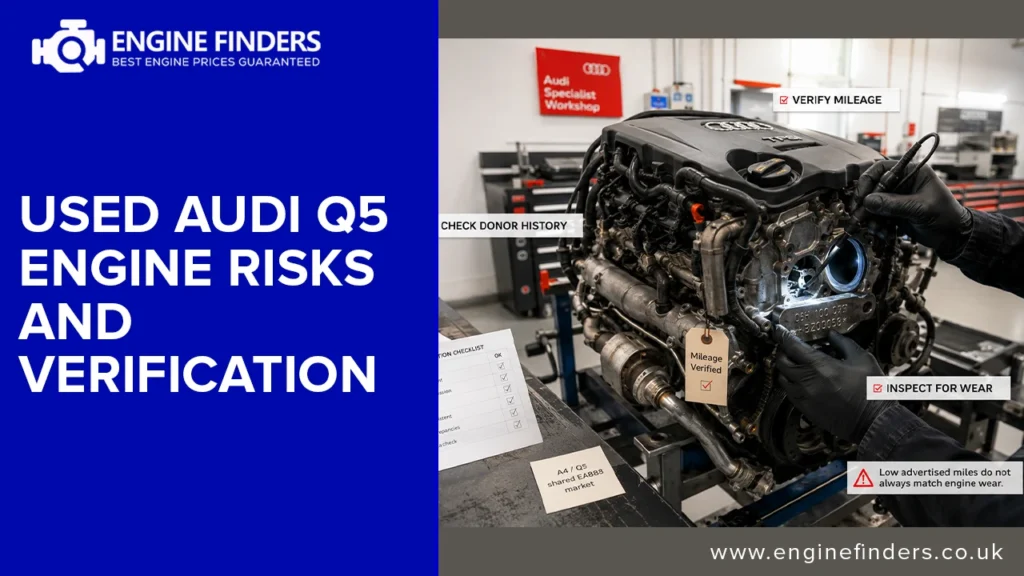
Opting for a used engine requires rigorous due diligence. Always request the donor vehicle’s V5C logbook to verify the mileage. A mismatch between the advertised mileage and the engine’s actual wear is a common pitfall.
For broader context on making cost-effective decisions, reviewing strategies for used Audi A4 engines can provide valuable negotiation leverage, as the powertrains are virtually identical and share the same market pricing dynamics.
DVLA and MOT Compliance for Audi Engine Swaps
Replacing an engine is a significant modification that carries legal obligations in the UK. If you replace the engine with one of a different size, fuel type, or cylinder configuration, you must update your vehicle’s details.
Even for a like-for-like replacement, it is prudent to review the DVLA vehicle registration guidelines to ensure your V5C logbook remains accurate, particularly if the new engine has a different serial number. Failure to keep records updated can complicate future sales or insurance claims.
Furthermore, always verify if the donor vehicle or the specific engine code you are installing is subject to any outstanding safety campaigns. You can perform a free check using the official DVSA vehicle recall checker to ensure your replacement unit does not carry unresolved manufacturer defects.
How to Prevent Premature Audi Q5 Engine Failure
Proactive maintenance is the most effective defence against the inherent weaknesses of the EA888 platform. Adhering to strict service intervals can extend the engine’s lifespan significantly.
First, reduce the oil change interval. While Audi may suggest 10,000-mile intervals, independent UK mechanics strongly recommend changing the oil and filter every 5,000 to 7,000 miles using a fully synthetic, VW 502.00/504.00 approved oil. This prevents sludge buildup and ensures the timing chain tensioner receives adequate hydraulic pressure.
Second, address carbon buildup proactively. Direct injection engines do not wash the intake valves with fuel, leading to heavy carbon deposits. Periodic walnut blasting, as discussed in this analysis of Audi A3 1.4 TFSI carbon buildup, is highly applicable to the Q5’s 2.0 TFSI and restores airflow and efficiency.
Finally, explore the broader range of Audi engines to understand the evolutionary improvements in Gen 3 and Gen 4 EA888 units, which feature revised piston rings and dual-injection systems that largely resolve these historical flaws.
If your Audi Q5 is displaying severe engine warning signs, comparing replacement options is your most cost-effective next step. You can request competitive, warranty-backed quotes for both used and reconditioned units directly through our get quotes portal to find the best fit for your budget and vehicle specifications.
Audi Q5 Engine Problems FAQ
How much does an Audi Q5 engine replacement cost in the UK?
A complete engine replacement for an Audi Q5 typically costs between £2,500 and £4,500 for a reconditioned unit, including VAT. Labour adds approximately £800 to £1,200. Used engines may cost 30% less but carry higher reliability risks without a comprehensive warranty.
What are the main symptoms of EA888 timing chain failure?
The primary warning sign is a metallic rattling or slapping noise from the engine bay during cold starts. This is often followed by an illuminated Check Engine Light, camshaft correlation fault codes, rough idling, and a noticeable loss of power before catastrophic failure occurs.
Will a DPF delete fail an MOT in the UK?
Yes. Removing or tampering with a Diesel Particulate Filter (DPF) is illegal for road use in the UK. MOT testers are required to visually inspect for the presence of a DPF, and its absence or evidence of tampering results in an immediate and severe MOT failure.
Do I need to notify the DVLA after an engine replacement?
If you replace the engine with an identical like-for-like unit, you generally do not need to notify the DVLA. However, if the new engine has a different capacity, fuel type, or cylinder configuration, you must update your V5C logbook immediately to remain legally compliant.
Is a reconditioned Audi Q5 engine reliable?
Yes, when sourced from a reputable supplier. A properly reconditioned engine is stripped, cleaned, and fitted with new OEM-spec components like piston rings, bearings, and timing chains. They typically include a 12-to-24-month warranty, making them highly reliable.
How often should I change the oil in an Audi EA888 engine?
While manufacturer intervals may suggest 10,000 miles, UK automotive experts strongly recommend changing the oil and filter every 5,000 to 7,000 miles. Using a high-quality, VW 502.00/504.00 approved fully synthetic oil is critical to prevent sludge and timing chain wear.