Over 60% of premature Land Rover Freelander 2 engine problems stem from timing chain degradation or EGR (Exhaust Gas Recirculation) cooler failures before the vehicle reaches 100,000 miles. If your dashboard warning lights are flashing or you hear a distinct rattling noise on cold starts, immediate diagnosis is critical to prevent catastrophic internal damage.
Understanding whether your vehicle houses the 2.2-litre diesel or the 2.0-litre petrol variant dictates the exact failure points you should anticipate. This guide breaks down the mechanical vulnerabilities of both powertrains, providing factual, OEM-aligned data to help you make informed repair decisions.
Quick Summary: Freelander 2 Engine Reliability Facts
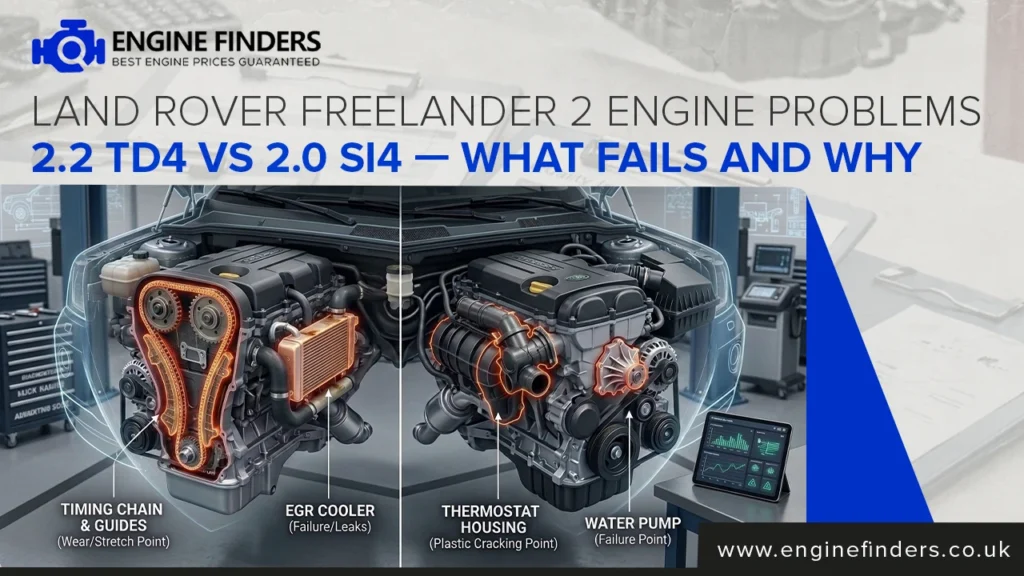
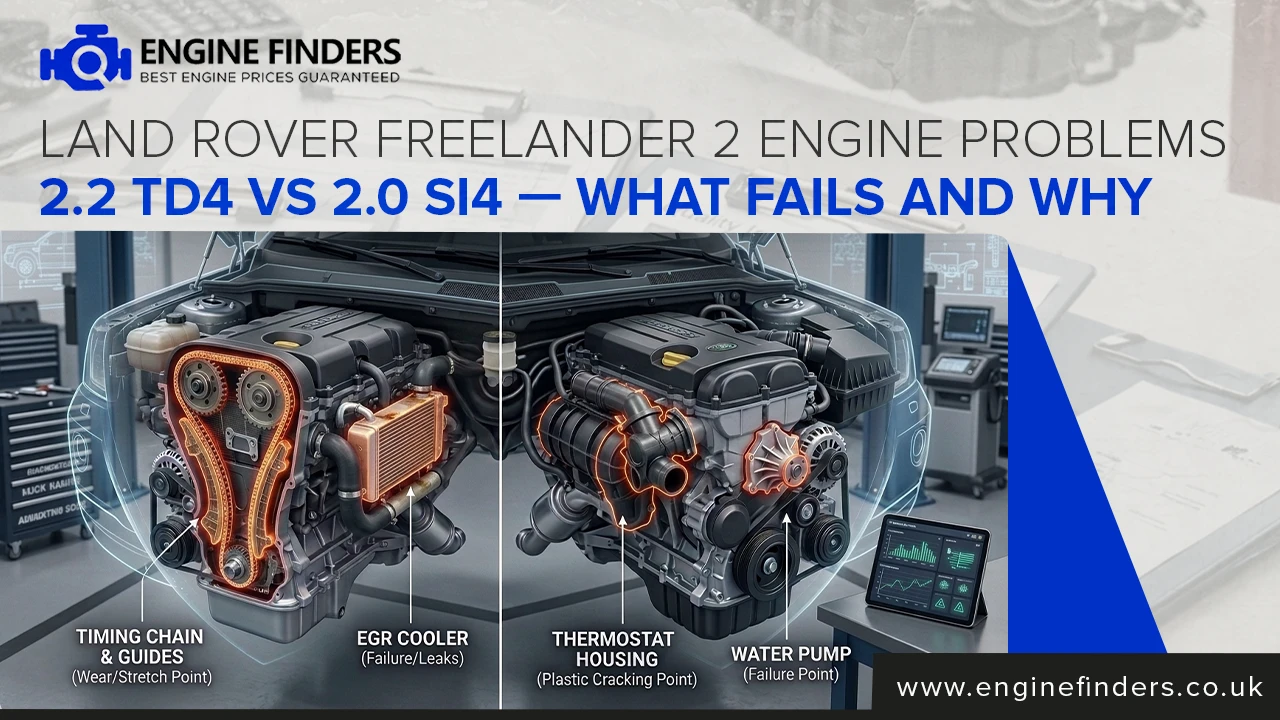
- Most Vulnerable Component (TD4): Timing chain tensioners and EGR coolers, often failing between 70,000 and 90,000 miles.
- Most Vulnerable Component (Si4): Plastic thermostat housing cracks and water pump impeller failures, leading to rapid overheating.
- Average Replacement Cost: £2,500 to £4,500 for a fully installed reconditioned unit, depending on labour rates and engine code.
- What to Avoid: Ignoring DPF (Diesel Particulate Filter) regeneration warnings on the TD4, which accelerates oil dilution and bearing wear.
Freelander 2 2.2 TD4 Engine Problems: The Most Common Failures
The 2.2-litre TD4 diesel engine, co-developed with Ford’s Duratorq programme, is widely used across the Land Rover engines lineup. While it offers strong low-end torque, it is susceptible to specific, well-documented mechanical weaknesses.
Timing Chain and Tensioner Wear in the TD4
The most severe Land Rover Freelander 2 engine problems in the diesel variant involve the timing chain assembly. OEM service bulletins have historically noted that the hydraulic tensioners can lose pressure over time.
When the tensioner fails, the timing chain slackens. This causes a metallic rattling sound during cold starts. If ignored, the chain can jump a tooth, leading to piston-to-valve contact and total engine seizure. Regular oil changes using the correct 5W-30 C2 specification oil are vital to maintain tensioner hydraulic pressure. For detailed specifications, review the 2.2 TD4 diesel unit technical breakdown.
EGR Cooler Leaks and DPF Blockages
The EGR system in the TD4 is prone to internal coolant leaks. When the EGR cooler matrix degrades, coolant enters the intake manifold and combustion chambers. This manifests as white smoke from the exhaust and unexplained coolant loss.
Furthermore, short urban journeys prevent the DPF from completing active regeneration cycles. Unburnt fuel then washes down the cylinder walls, diluting the engine oil. This oil dilution drastically reduces lubrication quality, accelerating wear on the turbocharger bearings and main crankshaft bearings. Understanding these diesel engine vulnerabilities in modern Land Rovers is essential for proactive maintenance.
Freelander 2 2.0 Si4 Petrol Engine Issues: What Owners Must Know
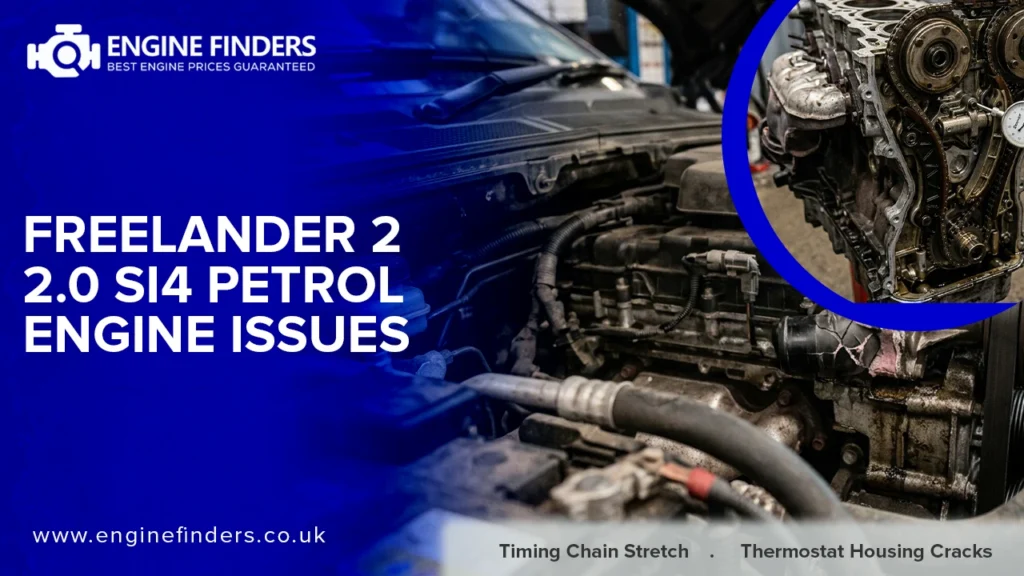
The 2.0-litre Si4 petrol engine, based on Ford’s EcoBoost architecture, was introduced to improve fuel economy and reduce CO2 emissions. However, it introduces a different set of thermal and mechanical challenges.
Water Pump and Thermostat Housing Cracks
A predominant failure point in the Si4 engine is the plastic composite thermostat housing and water pump assembly. Subjected to repeated heating and cooling cycles, this plastic becomes brittle and cracks.
A cracked housing leads to rapid coolant loss. Because the Si4 operates at high thermal loads, even a minor drop in coolant levels can cause the cylinder head to warp or the head gasket to blow. Upgrading to an aluminium aftermarket housing is a common preventative measure recommended by independent specialists.
Timing Chain Stretch in Early Si4 Models
Early iterations of the 2.0 Si4 (particularly pre-2014 models) are known for premature timing chain stretch. Unlike the diesel variant, the petrol engine’s chain stretch is often exacerbated by extended oil service intervals.
A stretched chain alters the engine’s valve timing, triggering the check engine light and causing rough idling, misfires, and a noticeable loss of power. If you own an early model, you should proactively check for outstanding manufacturer recalls or service campaigns related to timing components.
Land Rover Freelander 2 Engine Replacement Cost UK
When an engine fails beyond economical repair, understanding your financial options is the next critical step. The cost to replace a Freelander 2 engine varies significantly based on the source of the replacement unit and the complexity of the installation.
Used vs Reconditioned Engine Prices
Opting for a used engine from a breaker’s yard might seem cost-effective, typically ranging from £800 to £1,500 for the unit alone. However, used engines carry inherent risks regarding unknown maintenance histories and remaining lifespan.
Conversely, reconditioned engines undergo rigorous stripping, cleaning, and replacement of all wear-prone components (such as bearings, seals, and timing kits). While the initial outlay is higher, usually between £1,800 and £3,000 for the unit, they often come with a 12-to-24-month warranty, offering superior long-term value. For a precise estimate, you can review engine replacement costs based on vehicle mileage.
If you are facing unexpected engine failure, Engine Finders can help you compare verified suppliers across the UK. Simply enter your registration number to get a free, no-obligation quote for a replacement unit tailored to your exact model.
MOT and DVLA Compliance for Engine Swaps
Replacing an engine is not just a mechanical task; it carries legal and compliance obligations in the UK. Ensuring your vehicle remains road-legal requires adherence to specific DVLA and DVSA regulations.
Updating Your V5C Logbook
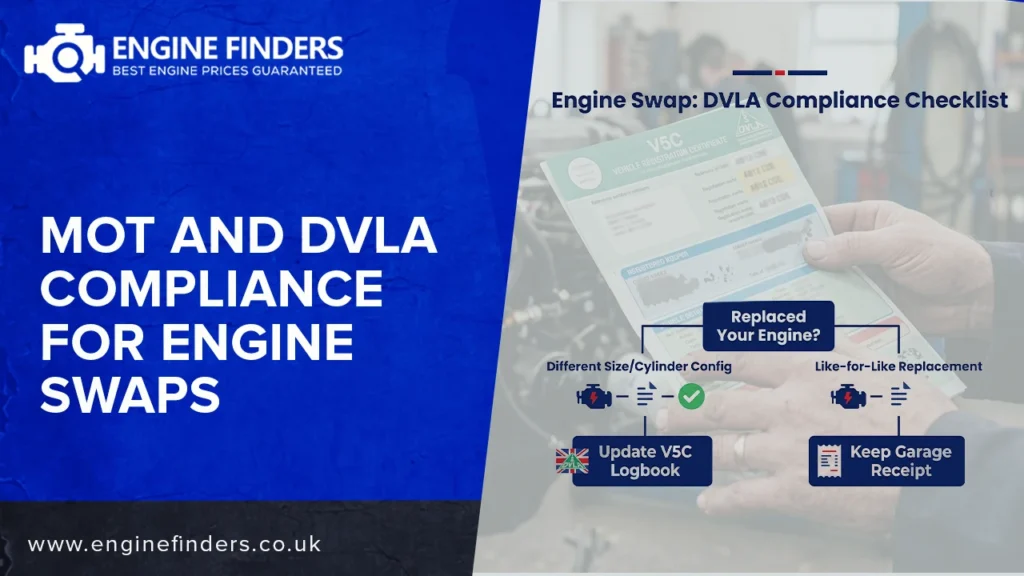
If you replace the engine with one of a different size or cylinder configuration, you are legally required to inform the DVLA. You must update your V5C logbook with the new engine number and capacity. Failure to do so can invalidate your vehicle tax and insurance policy. Like-for-like replacements generally do not require a V5C update, but keeping a receipt from the supplying garage is highly recommended.
Passing the MOT Emissions Test
Any replacement engine must meet the original emissions standards of the vehicle. The MOT tester will check for excessive smoke or abnormal emissions. For diesel models, the tester follows the official MOT emissions inspection manual to ensure the DPF is present and functioning. A missing or tampered DPF is an automatic MOT failure.
Is It Worth Fixing a Freelander 2 Engine?
Deciding whether to repair or replace depends on the vehicle’s overall condition and market value. The current market value of a Freelander 2 in good condition can still justify a major engine investment, especially for well-maintained examples.
When evaluating your options, consider the broader reliability context. Research into the most reliable Land Rover engines shows that a properly reconditioned unit, installed by a specialist, can restore the vehicle’s reliability to near-new standards. Furthermore, if you are considering an upgrade rather than a repair, comparing the Freelander 2 to the Range Rover Evoque might provide insight into whether investing in your current chassis is the most logical financial step.
Always ensure the replacement Freelander 2 engine matches your exact chassis code and transmission type to avoid ECU compatibility issues. For those with the higher-output diesel, verifying the SD4 variant specifics is equally crucial for correct turbo and ECU mapping.
Frequently Asked Questions (FAQ)
What is the most common Land Rover Freelander 2 engine problem?
The most frequent issue is timing chain tensioner failure in the 2.2 TD4 diesel, causing a rattling noise on cold starts. In the 2.0 Si4 petrol, plastic thermostat housing cracks leading to coolant loss are highly prevalent.
How much does a Freelander 2 engine replacement cost in the UK?
A fully installed reconditioned engine typically costs between £2,500 and £4,500. Used engines are cheaper (£1,500–£2,500 installed) but carry higher reliability risks and shorter or no warranties.
Can I drive my Freelander 2 with a faulty EGR cooler?
No. A leaking EGR cooler introduces coolant into the combustion chamber. Continuing to drive risks hydrolock, catastrophic engine failure, and severe damage to the DPF and turbocharger.
Does replacing the engine affect my Freelander 2’s MOT?
Yes, if the replacement engine alters the vehicle’s emissions output. The engine must match the original specifications, and the DPF must remain intact and functional to pass the diesel smoke emissions test.
How long does a reconditioned Freelander 2 engine last?
A professionally reconditioned engine, installed correctly and maintained with timely oil changes using the correct OEM-spec oil, can reliably last another 80,000 to 100,000 miles or more.
Do I need to tell the DVLA if I change my engine?
Only if the new engine has a different capacity or fuel type than the original. For a direct like-for-like replacement, you do not need to update the V5C, but you should retain all invoices for future proof of maintenance.
Why is my TD4 diesel losing coolant with no visible leaks?
Internal coolant loss in the TD4 is a classic symptom of a failing EGR cooler or a breached cylinder head gasket. A pressure test of the cooling system is required to confirm the exact source of the leak.
Is the 2.0 Si4 petrol engine more reliable than the 2.2 TD4?
Neither is flawless. The Si4 avoids DPF and EGR issues but suffers from plastic cooling component failures and timing chain stretch. The TD4 is robust if the timing chain and EGR systems are proactively maintained.