Executive Summary
Choosing the best Range Rover Sport engine depends entirely on your weekly mileage and typical use case. For high-mileage motorway drivers, the SDV6 (3.0L Diesel) remains the pragmatic choice for torque and fuel economy. However, for the modern urban driver or those wary of expanding UK Clean Air Zones (CAZ), the P510e Plug-in Hybrid (PHEV) offers an unrivalled blend of 70+ miles of electric range and immense power. The P400 (Mild Hybrid Petrol) serves as the “goldilocks” engine – refined, ULEZ-compliant, and free from the complexity of a large PHEV battery.
Disclaimer: Engine Finders is a price comparison platform, not a direct engine seller. Final pricing, warranty terms, and availability vary by vetted UK supplier. Professional diagnosis is recommended before purchasing any replacement engine.
Critical considerations include the transition from the L494 generation to the current L461, as well as the UK’s shifting emissions landscape. While older diesels face higher taxes and potential city bans, the latest Ingenium units have addressed many historical reliability concerns.
Range Rover Sport Engine Comparison: Technical Breakdown
1. The Diesel Benchmark: SDV6 (3.0L)
The Range Rover Sport SDV6 engine was the backbone of the L494 (2013–2022) generation. In its later Euro 6 configurations, it provides 306hp and a massive 700Nm of torque, making it the definitive choice for towing horseboxes or trailers.
- Engine Code: Ford-sourced Lion V6 / Ingenium D300/D350 (2020+)
- Known Failure Modes: Crankshaft failure (earlier V6 models), DPF blockage if used only for short city trips.
- UK Practicality: Excellent for long-range efficiency (35-40 mpg), but requires frequent motorway runs to maintain the exhaust filtration system.
2. The Modern Hybrid: P510e (3.0L PHEV)
Introduced with the L461 generation, the P510e combines a 3.0-litre straight-six Ingenium petrol engine with a 105kW electric motor. This is currently the most technologically advanced option in the UK market.
- Engine Code: AJ300 (Petrol) + Electric Motor
- Advantages: 0-60 mph in 5.2 seconds, significant tax benefits for business users (Benefit in Kind), and silence in city traffic.
- UK Practicality: Ideal for owners with home charging. It avoids all current UK daily emissions charges.

3. The Petrol Performance: P400 (3.0L MHEV)
The P400 uses an Ingenium straight-six featuring both a twin-scroll turbocharger and a 48V electric supercharger. It bridges the gap between traditional combustion and full electrification.
- Engine Code: AJ300
- Reliability: Generally high; avoids the complexities of the PHEV’s large battery while providing better refinement than the diesel.
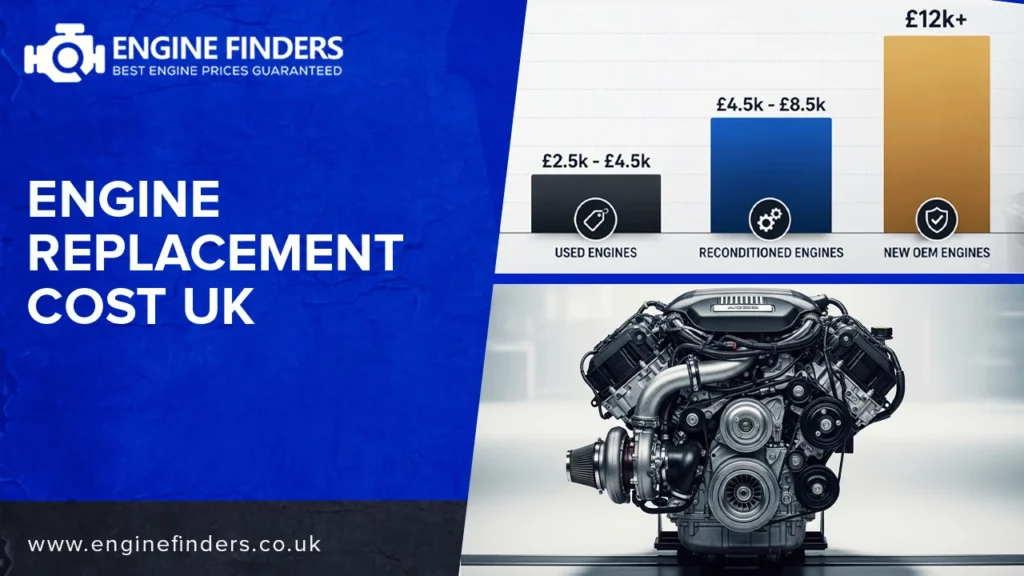
- Cost Consideration: Expect 22-28 mpg in real-world UK driving. If your engine suffers internal failure, a reconditioned Range Rover engine typically costs between £4,500 and £7,000.
Reliability and Replacement Considerations
Every Range Rover Sport owner should be aware of specific failure patterns identified by UK specialists and owner consensus.
| Engine Type | Primary Concern | Symptom |
| SDV6 (Lion) | Crankshaft Snap | Knocking sound from the bottom end |
| Ingenium (D/P) | Timing Chain Stretch | Rattling on cold start; restricted performance |
| PHEV Models | Software/Module Errors | Hybrid system failure warning on dash |
If you are facing a major mechanical failure, the cost of a full rebuild often rivals the price of a replacement unit from a vetted supplier. You should compare quotes from vetted UK suppliers on the EngineFinders to determine if a reconditioned engine with a warranty is more viable than a workshop repair.
Practical Takeaways: Which should you choose?
- The Commuter’s Choice: If you cover 15,000+ miles a year, stick with the SDV6/D300. The fuel savings outweigh the higher road tax.
- The Urban Professional: The P510e is the winner. Between the ULEZ exemption and the ability to drive in London or Birmingham on electric power alone, it is the most future-proof.
- The Enthusiast: The P400 offers the best sound and linear power delivery without the weight penalty of the hybrid batteries.
Before purchasing any replacement engine, ensure an engine compatibility guide is consulted to verify the exact variant for your VIN.

Enter Your REG to Get a Free Engine Quote

Frequently Asked Questions
Which Range Rover Sport engine is the most reliable?
The later 3.0L Ingenium straight-six (D300/P400) units are currently considered more reliable than the older Ford-sourced SDV6 V6 engines, which were prone to crankshaft issues. However, the Ingenium engines require strict adherence to 10,000-mile oil change intervals. Review our Range Rover Sport buyer’s checklist for more details.
Is the Range Rover Sport SDV6 ULEZ compliant?
Most Range Rover Sport SDV6 models manufactured from September 2015 onwards (Euro 6) are ULEZ compliant. Earlier L494 models (2013-2015) usually meet Euro 5 standards and will trigger daily charges.
How much does it cost to replace a Range Rover Sport engine?
A reconditioned Range Rover Sport engine typically costs between £4,500 and £8,500. Labour usually adds a further £1,200 to £2,000. You can compare Land Rover engine replacement quotes to find current market rates.
Should I buy a used or reconditioned Range Rover engine?
Used engines are cheaper (£2,500+) but carry higher risk. Reconditioned engines are stripped and rebuilt with new seals and bearings. For high-value vehicles like the Sport, a reconditioned vs new engine comparison usually shows reconditioned units offer the best balance of cost and longevity.