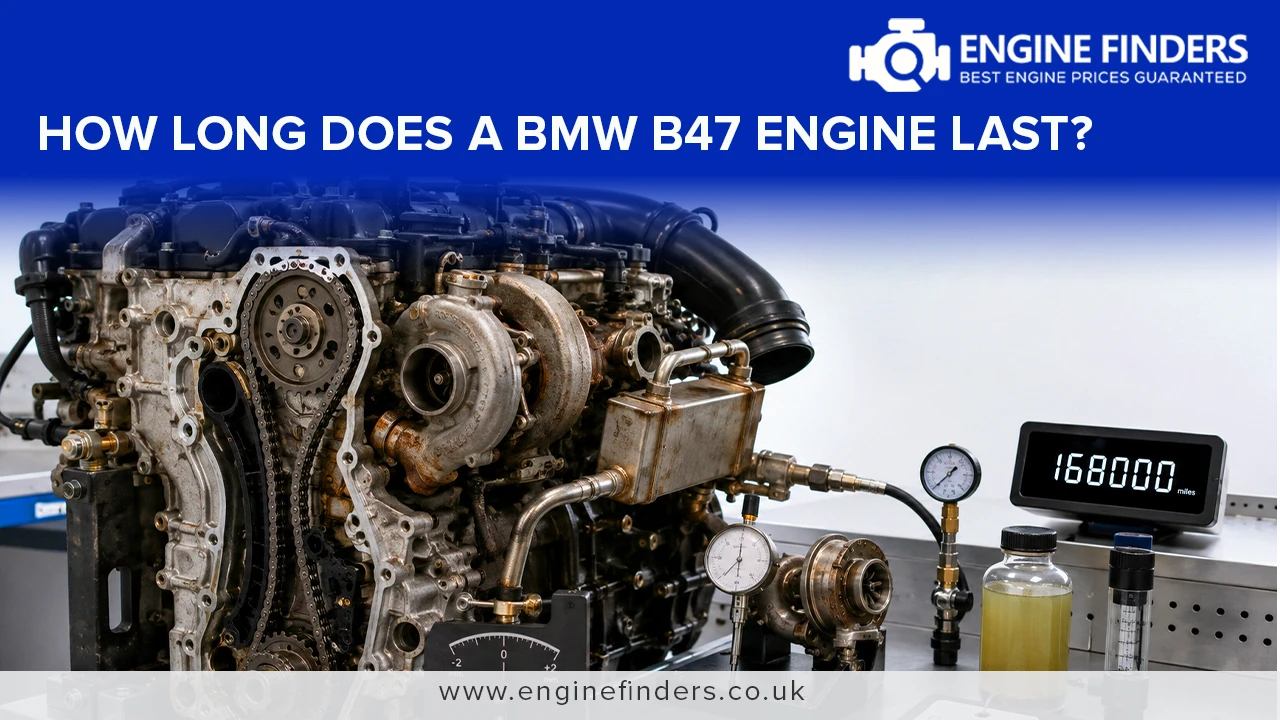
The BMW B47 diesel engine typically lasts between 150,000 and 200,000 miles in UK driving conditions, provided critical maintenance intervals are strictly met. However, real-world data shows premature failures frequently occur between 80,000 and 120,000 miles. This is primarily driven by timing chain stretch, EGR cooler leaks, and turbocharger wear. Understanding these failure points is essential for long-term ownership.
Quick Summary: BMW B47 Reliability Facts
- Average Lifespan: 150,000 – 200,000 miles with strict, low-mileage servicing.
- Critical Failure Point: 80,000 – 120,000 miles (timing chain tensioner and EGR cooler).
- Most Affected Models: 3 Series (F30/G20), 5 Series (G30), and X3 (G01).
- Replacement Cost: £2,500 – £4,500 for a reconditioned unit including labour.
BMW B47 Engine Lifespan and Reliability Data
The B47D20 2.0-litre four-cylinder diesel replaced the problematic N47 in 2014. OEM service data indicates a significant improvement in timing chain durability by moving the chain to the rear of the engine at the flywheel end. Despite this redesign, UK supplier data from 2026 shows that urban stop-start driving accelerates carbon buildup.
This contamination restricts oil flow to the timing chain tensioner, leading to premature stretch. When evaluating a BMW 3 Series 320d engine or a BMW 5 Series 520d engine, maintenance history is far more critical than the odometer reading.
For a deeper dive into the differences between the B47 and its petrol counterpart, review our analysis on BMW 2 Series B47 and B48 engine failure rates. You can also compare it against older generations in our guide on the best BMW diesel engines for 2026.
Technical Specifications of the BMW B47D20
Understanding the OEM engineering helps explain where the B47 succeeds and where it fails. The engine features a 1995cc displacement with an aluminium-silicon alloy crankcase. It utilizes a two-stage biturbo setup in higher output variants, though single turbo configurations remain most common in the UK.
The combustion chamber relies on piezo injectors operating at up to 2,000 bar pressure. This ensures precise fuel atomization, but it also makes the system highly sensitive to fuel quality and carbon accumulation. You can view the exact technical breakdown for the BMW B47D20A diesel engine to verify chassis compatibility.
The compression ratio sits at 16.0:1, optimized for thermal efficiency and low-end torque. However, this high compression generates immense cylinder pressures, placing additional stress on the head gasket and main bearings as the engine accumulates mileage.
Common BMW B47 Engine Problems at High Mileage
Understanding the specific failure points helps in predicting the true longevity of the engine.
B47 Timing Chain Stretch and Tensioner Failure

While the rear-mounted timing chain reduced cabin noise, it made visual inspection virtually impossible. OEM technical bulletins highlight that high soot levels contaminate the engine oil. This contamination wears down the timing chain tensioner and guide rails.
If you hear a distinct rattle during a cold start, the tensioner is failing. This specific failure pattern is heavily documented in models like the BMW X3 xDrive20d engine, where restricted oil flow is a primary culprit.
Ignoring this warning often leads to the chain snapping, which destroys the engine internals. This catastrophic failure necessitates a complete engine replacement rather than a simple component repair.
EGR Cooler Internal Leaks and DPF Blocking
The Exhaust Gas Recirculation (EGR) cooler is prone to internal coolant leaks. This mixture of glycol and soot creates a thick sludge that blocks the Diesel Particulate Filter (DPF). A blocked DPF increases exhaust backpressure, eventually cracking the turbocharger housing.
You can verify if your vehicle is failing emissions by using the GOV.UK check MOT history service to review past advisories. Regular servicing is mandatory to mitigate this sludge buildup.
When the DPF reaches its ash capacity, it requires professional attention. You can explore the costs and procedures for a DPF filter replacement to restore proper exhaust flow and prevent engine damage.
B47 Turbocharger and Swirl Flap Issues
The Variable Geometry Turbocharger (VGT) on the B47 suffers from wastegate rattle and carbon buildup. Furthermore, the intake manifold swirl flaps accumulate heavy carbon deposits over time. When these flaps seize, the engine enters limp mode to prevent runaway diesel scenarios.
Replacing the turbocharger and mechanically cleaning the intake is mandatory to restore performance. These components are critical for maintaining the engine’s efficiency and passing strict UK emissions tests.
AdBlue System and SCR Catalyst Failures
The Selective Catalytic Reduction (SCR) system relies on AdBlue fluid to reduce nitrogen oxide emissions. The B47 is susceptible to crystallization within the AdBlue injector and pump. This crystallization occurs when the vehicle is frequently used for short trips, preventing the exhaust system from reaching optimal temperatures.
When the SCR system fails, the vehicle will eventually refuse to start to comply with emissions regulations. Replacing the AdBlue pump and injector is a costly repair. Regularly using high-quality AdBlue fluid and ensuring the tank does not run completely dry can mitigate these issues.
Optimal Maintenance Schedule for Maximum B47 Lifespan
To reach the 200,000-mile mark, you must abandon the factory-recommended 18,000-mile service intervals. UK automotive data suggests that extended service intervals severely degrade oil quality. Instead, adopt a 10,000-mile or 12-month oil change cycle, whichever comes first.
Always use low-SAPS 5W-30 synthetic oil that meets the BMW Longlife-04 specification. This specific formulation is designed to protect the DPF and the timing chain tensioner from soot contamination. Using incorrect oil is the leading cause of premature B47 failures.
According to data published by the SMMT, urban stop-start driving significantly increases particulate matter accumulation in modern diesel engines. Additionally, performing an occasional high-speed motorway drive helps regenerate the DPF and burn off intake carbon. Short urban trips prevent the engine from reaching optimal operating temperature, accelerating sludge formation.
BMW B47 Engine Replacement Cost UK
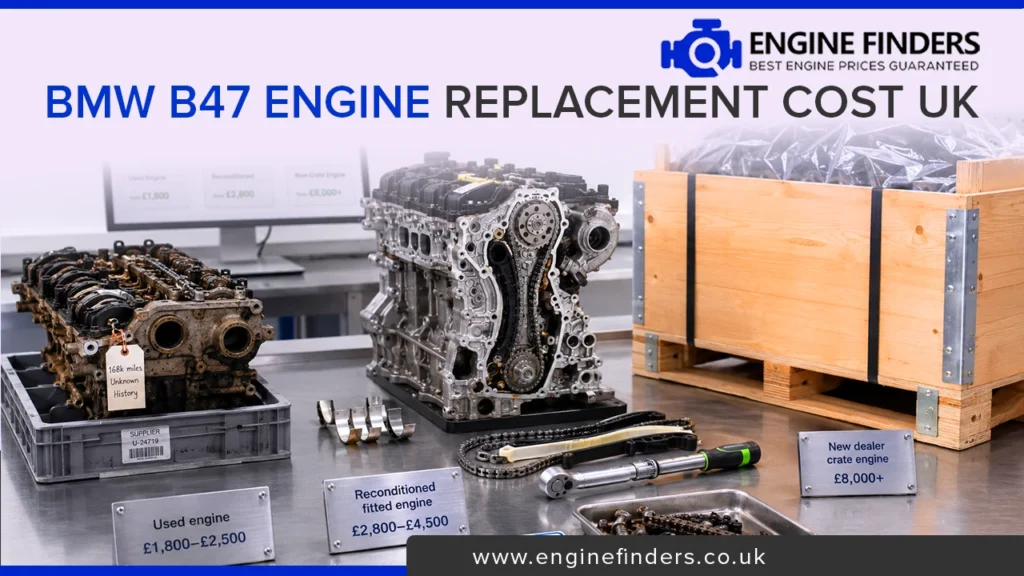
When the B47 fails beyond economical repair, sourcing a replacement is the next logical step. The cost varies heavily based on the unit’s condition, mileage, and supplier. A brand-new crate engine from the main dealer exceeds £8,000.
Most UK drivers opt for secondary market solutions to keep costs manageable. Purchasing used engines with verified low mileage typically costs between £1,800 and £2,500. However, these carry unknown maintenance histories and limited warranties.
Alternatively, reconditioned engines offer a reliable middle ground. These units are stripped, chemically cleaned, and fitted with new timing chains and bearings, costing between £2,800 and £4,500 fitted.
If you need an accurate figure for your specific chassis code, you can get quotes from verified UK suppliers instantly to compare your options.
If your B47 has suffered catastrophic timing chain failure, Engine Finders can help. We connect you with verified UK suppliers for reconditioned and used B47 units. Submit your registration to compare transparent quotes instantly.
Legal and Compliance Steps for Engine Swaps
Changing an engine alters the vehicle’s identity and emissions profile. UK law requires strict adherence to DVLA and MOT regulations to remain road-legal. When installing a like-for-like B47 replacement, you must update the V5C logbook.
The DVLA vehicle engine change rules state that the tax band remains unchanged if the engine code matches the original specification. However, the replacement engine must pass the MOT emissions test.
The tester will check for DPF integrity and AdBlue system functionality. Failing to declare an engine change or tampering with emissions equipment can result in an MOT failure and invalidated insurance. Always ensure the replacement BMW engines match your VIN’s original specifications.
Enter Your REG to Get a Free Engine Quote

Frequently Asked Questions
How many miles will a BMW B47 engine last?
With strict adherence to 10,000-mile oil service intervals using low-SAPS synthetic oil, the B47 typically reaches 150,000 to 200,000 miles. However, urban driving and neglected oil changes often cause timing chain failures between 80,000 and 120,000 miles.
What is the most common problem with the BMW B47?
The most prevalent issue is timing chain stretch caused by severe oil contamination from exhaust soot. This leads to a cold-start rattle and potential engine failure. EGR cooler leaks and turbocharger wastegate rattles are also highly common at higher mileages.
Is the BMW B47 engine reliable compared to the N47?
Yes, the B47 is significantly more reliable than the outgoing N47. BMW moved the timing chain to the flywheel end and upgraded the tensioner. While timing chain issues still occur, the overall failure rate is drastically lower than the notorious N47 generation.
How much does it cost to replace a BMW B47 engine in the UK?
A used B47 engine costs between £1,800 and £2,500, while a fully reconditioned unit ranges from £2,800 to £4,500 including labour. A brand-new OEM replacement from a main dealer exceeds £8,000, making reconditioned units the most cost-effective choice.
Do I need to inform the DVLA when replacing my BMW engine?
Yes, you must inform the DVLA if the engine code changes or if the vehicle’s technical specifications are altered. For a like-for-like B47 replacement, the vehicle tax band remains the same, but the V5C logbook must be updated to reflect the new engine number.
What oil specification does the BMW B47 engine require?
The B47 requires low-SAPS 5W-30 synthetic oil that meets the BMW Longlife-04 specification. This specific formulation is critical for protecting the Diesel Particulate Filter (DPF) and preventing soot-related timing chain tensioner failures. Using incorrect oil will drastically reduce engine lifespan.
Can a reconditioned BMW B47 engine pass an MOT emissions test?
Yes, provided the reconditioning process includes installing a new DPF or thoroughly cleaning the existing unit, and replacing the EGR cooler. UK MOT testers strictly measure exhaust emissions, so the engine must meet the original manufacturer’s output specifications for your vehicle’s age.
How often should the timing chain be replaced on a B47?
BMW does not list the timing chain as a scheduled replacement item. However, independent UK specialists recommend inspecting the chain and tensioner every 80,000 miles. Preventative replacement costs significantly less than repairing a snapped chain that has destroyed the engine internals.