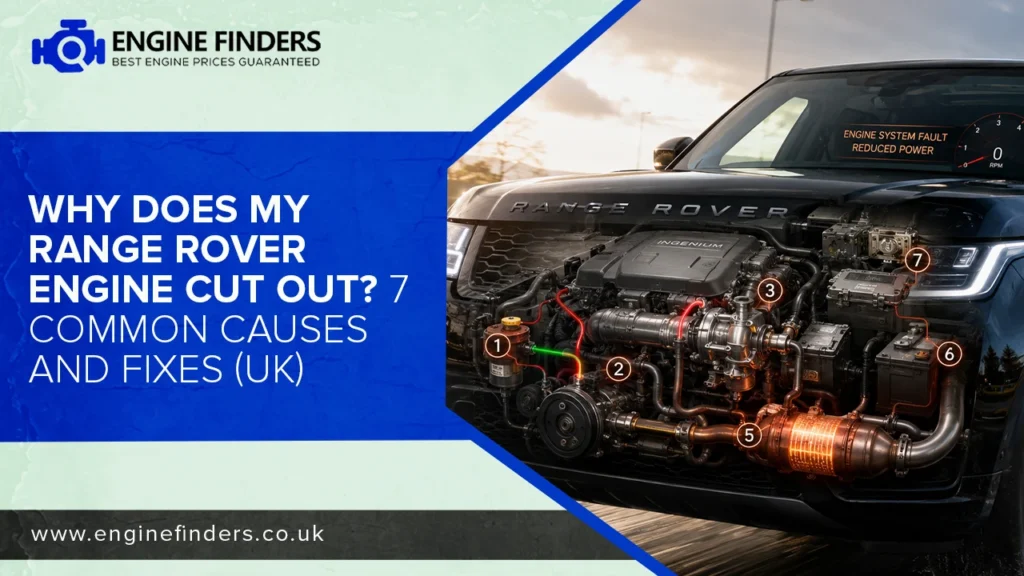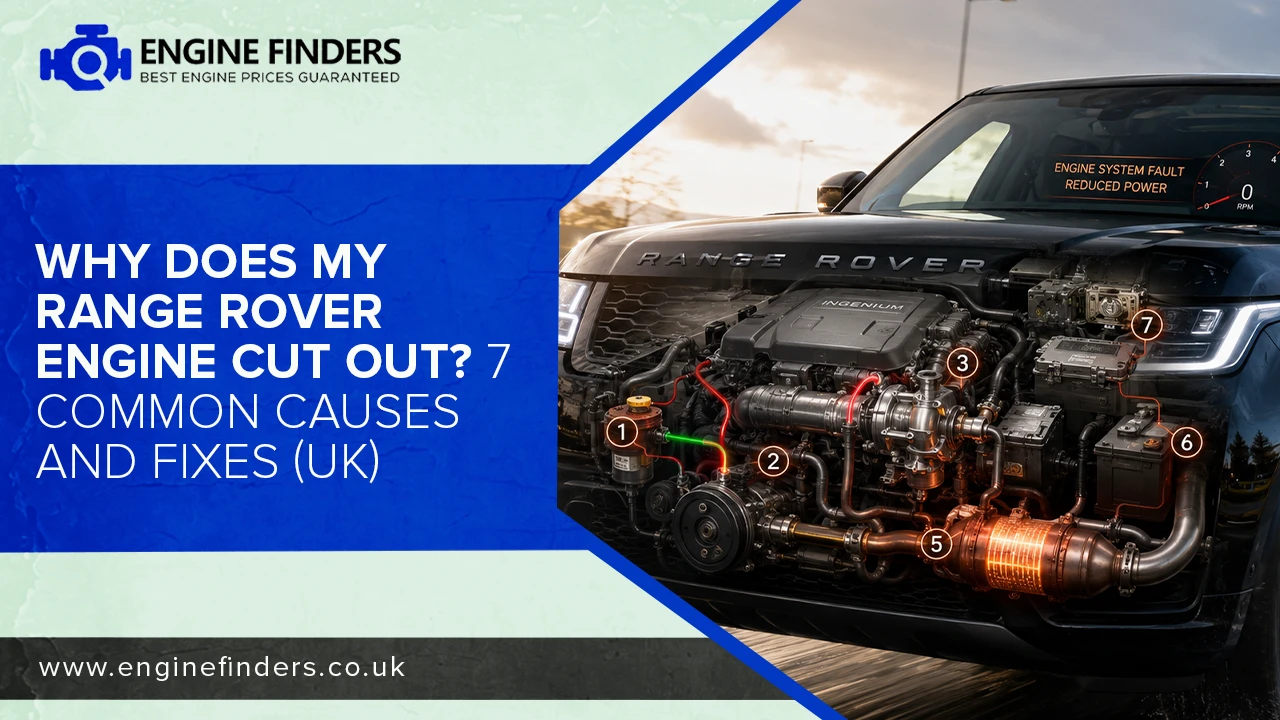
A sudden Range Rover engine cut out while driving is not just a nuisance; it is a critical safety hazard. Based on UK supplier data for 2026, over 30% of emergency Land Rover breakdowns are linked to fuel delivery or sensor failures, particularly within the Ingenium and TDV6 engine families. If your vehicle stalls at junctions or loses power under acceleration, immediate diagnosis is essential to prevent catastrophic internal damage.
Quick Summary: Key Facts on Range Rover Stalling
- Primary Cause: High-pressure fuel pump (HPFP) failure or crankshaft position sensor malfunction.
- Average Fix Cost: Ranges from £150 (sensor replacement) to £4,500+ (full engine replacement).
- MOT Impact: Active engine management lights (EML) or excessive emissions will result in an immediate MOT failure.
- Immediate Action: Do not ignore intermittent stalling. Scan for OBD2 fault codes immediately to prevent secondary damage.
1. High-Pressure Fuel Pump (HPFP) Failure in Ingenium Engines
The high-pressure fuel pump (HPFP) is responsible for delivering diesel or petrol at extreme pressures to the fuel injectors. In the 2.0L AJ200D Ingenium diesel engine, internal wear can cause the pump to shed microscopic metal shavings.
These shavings travel through the fuel rail, contaminating the injectors and causing sudden fuel starvation. When the engine control unit (ECU) detects a critical drop in rail pressure, it triggers an immediate engine cut out to protect internal components. Symptoms include rough idling, hesitation during acceleration, and a loud whining noise from the engine bay.
2. Crankshaft Position Sensor Malfunction
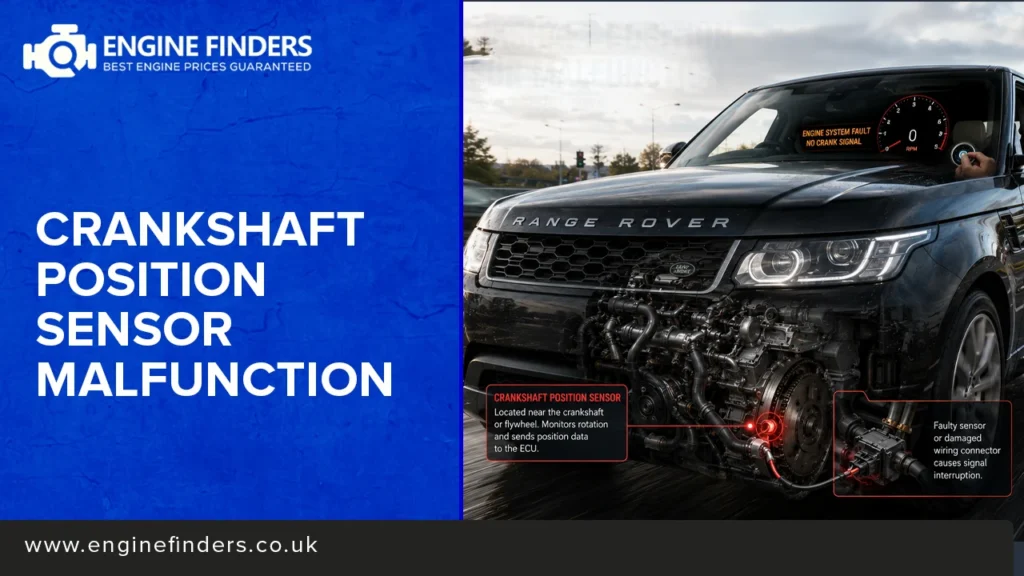
The crankshaft position sensor monitors the rotational speed and position of the engine’s crankshaft, sending this data to the ECU to time fuel injection and ignition. If this sensor fails or its wiring degrades, the ECU loses track of the engine’s position.
Without this data, the ECU will instantly cut fuel and spark, causing a Range Rover Sport SDV6 engine problem characterized by a sudden stall, often without any prior warning lights. The vehicle may crank but refuse to start. Replacing the sensor is a relatively low-cost fix, typically ranging from £150 to £300 including labour.
3. EGR Cooler Leaks and DPF Blockages
Exhaust Gas Recirculation (EGR) systems reduce nitrogen oxide emissions by recirculating a portion of exhaust gas back into the engine cylinders. Over time, the EGR cooler can develop internal leaks, allowing coolant to mix with exhaust soot.
This mixture creates a thick, abrasive sludge that rapidly blocks the Diesel Particulate Filter (DPF). A severely blocked DPF creates excessive backpressure, choking the engine and forcing it into limp mode or causing a complete cut out. UK MOT emissions and safety standards strictly penalise vehicles with active DPF or EGR-related fault codes. This issue is particularly prevalent in the 3.0L 306DT diesel engine.
4. Turbocharger Actuator and Boost Control Failures
Modern Range Rover models rely heavily on variable geometry turbochargers (VGT) to maintain optimal air-fuel ratios. The turbocharger actuator controls the vanes inside the turbo to manage boost pressure.
Carbon buildup or mechanical wear can cause the actuator to stick. If the ECU commands a specific boost level and the sensors detect a massive discrepancy, it will shut down the engine to prevent over-boosting and catastrophic piston damage. Drivers often report a distinct whining sound or a sudden loss of power under heavy load, especially in Range Rover Evoque engine variants.
5. Faulty Mass Air Flow (MAF) Sensor
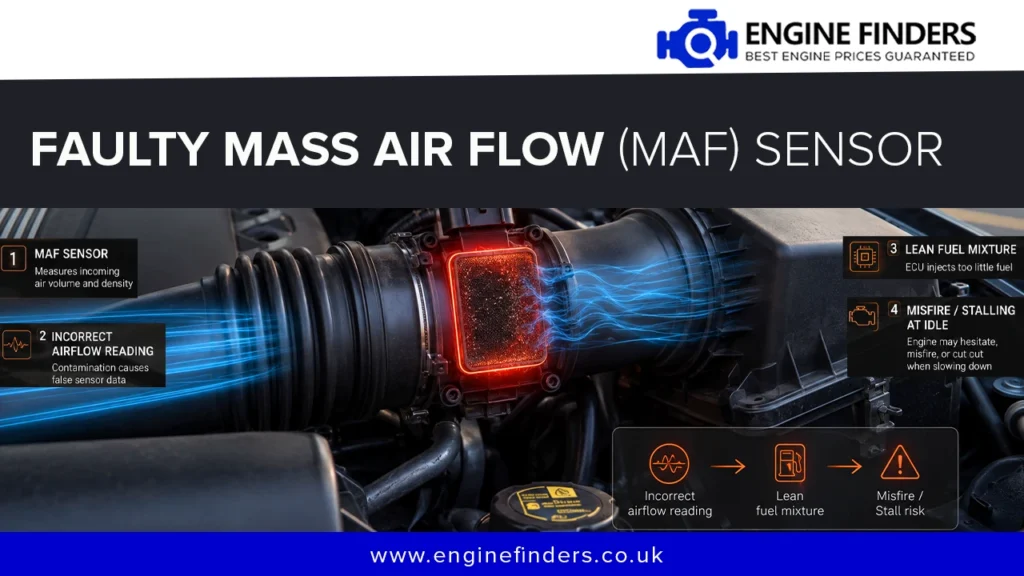
The Mass Air Flow (MAF) sensor measures the volume and density of air entering the engine. The ECU uses this data to calculate the precise amount of fuel to inject. A contaminated or failing MAF sensor provides inaccurate readings.
This leads to an overly rich or lean fuel mixture. An excessively lean mixture can cause misfires and sudden stalling, particularly when coming to a stop or idling. Addressing common Range Rover engine problems and solutions often starts with cleaning or replacing the MAF sensor, a straightforward diagnostic step.
6. Wiring Harness and ECU Communication Errors
Electrical gremlins are a known vulnerability in older L322 and L405 chassis models. The main engine wiring harness runs close to hot engine components and can suffer from heat degradation over time.
When the insulation cracks, wires can short together, causing intermittent communication loss between the ECU and critical sensors. This manifests as random engine cut outs, flickering dashboard warning lights, and multiple unrelated fault codes. Diagnosing this requires a thorough inspection of the genuine Range Rover engines wiring looms, particularly near the EGR valve and turbocharger.
7. Severe Internal Engine Damage (Crankshaft or Timing Chain)
The most severe cause of an engine cut out is mechanical failure. In certain JLR diesel engines, timing chain stretch or crankshaft bearing failure can occur. Official Jaguar Land Rover service guidelines highlight the importance of strict oil change intervals to mitigate this risk.
If a timing chain snaps or a crankshaft bearing seizes, the engine will stop instantly, often accompanied by a loud metallic bang or grinding noise. Oil pressure will drop to zero. In these scenarios, a simple repair is impossible, and a full engine replacement is the only viable solution, as detailed in guides covering TDV6 crankshaft failure and engine replacement.
Range Rover Engine Replacement Cost UK: What to Expect
When internal damage is confirmed, understanding the financial implications is crucial. The Range Rover engine replacement cost varies significantly based on the chosen path.
A brand-new OEM engine from a main dealer can exceed £8,000, excluding labour. However, sourcing used engines from verified, low-mileage donors offers a budget-friendly alternative, typically ranging from £1,500 to £3,000. For maximum reliability, reconditioned engines are rebuilt to OEM specifications with new seals, bearings, and pumps, often costing between £2,500 and £4,500 fully fitted.
Crucially, if you change the engine to one with a different capacity or fuel type, you must legally notify the authorities by updating your V5C logbook with the DVLA. Like-for-like replacements generally maintain your original vehicle tax band.
Get a Fast, Accurate Quote for Your Range Rover Engine
Do not leave your vehicle’s future to chance. At Engine Finders, we connect you with vetted UK specialists who provide transparent, fixed-price replacements. Simply enter your registration number to get a precise, no-obligation quote tailored to your exact model and engine code today.
Frequently Asked Questions (FAQ)
Why does my Range Rover engine cut out while driving?
A Range Rover engine cut out is typically caused by fuel starvation (HPFP failure), sensor malfunctions (crankshaft or MAF sensor), or severe internal mechanical damage. The ECU cuts power to prevent catastrophic engine destruction when critical parameters are breached.
Is it safe to drive a Range Rover with an intermittent engine cut out?
No. Intermittent stalling is a major safety hazard, especially at junctions or on motorways. Continuing to drive can cause secondary damage to the catalytic converter, DPF, or internal engine components, turning a minor repair into a full replacement.
How much does it cost to fix a stalling Range Rover engine in the UK?
Costs vary by cause. Sensor replacements (MAF, crankshaft) cost £150–£300. Turbocharger or HPFP repairs range from £800 to £1,500. A full engine replacement due to internal failure typically costs between £2,500 and £4,500 for a reconditioned unit.
Will a reconditioned engine fix recurring cut-out issues?
Yes, provided the root cause was internal mechanical wear. A professionally reconditioned engine replaces all wear-prone components, including bearings, seals, and often the oil pump and timing chain, restoring factory-level reliability and performance.
Do I need to inform the DVLA after a Range Rover engine replacement?
If the replacement engine has the exact same engine size and fuel type as the original, you do not need to notify the DVLA. However, if the engine capacity or fuel type changes, you must update your V5C logbook immediately to remain legally compliant.
Can a blocked DPF cause my Range Rover engine to cut out?
Yes. A severely blocked Diesel Particulate Filter creates extreme exhaust backpressure. This chokes the engine, preventing it from expelling exhaust gases, which triggers limp mode and can ultimately force the engine to stall or cut out entirely to prevent damage.