Introduction
Engine failure is one of the most stressful situations a driver can face, especially in a city like London, where repair costs are already higher than the national average. Whether the issue is caused by overheating, oil starvation, timing belt failure, or long-term wear, replacing an engine is rarely a decision taken lightly. Many drivers feel overwhelmed by unclear pricing, confusing options, and a wide gap between quotes from different garages.
Understanding engine replacement cost in London is essential before committing to such a major repair. Prices vary significantly depending on the type of engine used, labour rates, vehicle make, and the condition of surrounding components. Some drivers assume replacement is always cheaper than buying another car, while others fear it will never be worth it.
This guide by EngineFinders breaks down what London drivers should realistically expect, including costs, options, hidden extras, and how to avoid expensive mistakes.
Key Takeaways
- Engine replacement cost in London typically ranges from £1,500 to over £8,000, depending on engine type and car model
- Labour rates in London are higher thanin most UK regions and can significantly affect the final bill
- Used, reconditioned, and brand-new engines all have different costs, risks, and warranty implications
- Hidden extras like fluids, belts, clutches, and ECU programming often increase the total price
- Getting clear written quotes and understanding warranty terms is essential before approving work
Understanding Engine Replacement Costs in London
Replacing an engine is not a single fixed-price service. It is a combination of parts, labour, and additional work that depends heavily on your vehicle and the workshop you choose.
Why London Engine Replacement Costs Are Higher
London garages generally face higher overheads, including rent, staffing, and insurance. These costs are reflected in hourly labour rates, which are often higher than elsewhere in the UK.
Average Labour Rates in London
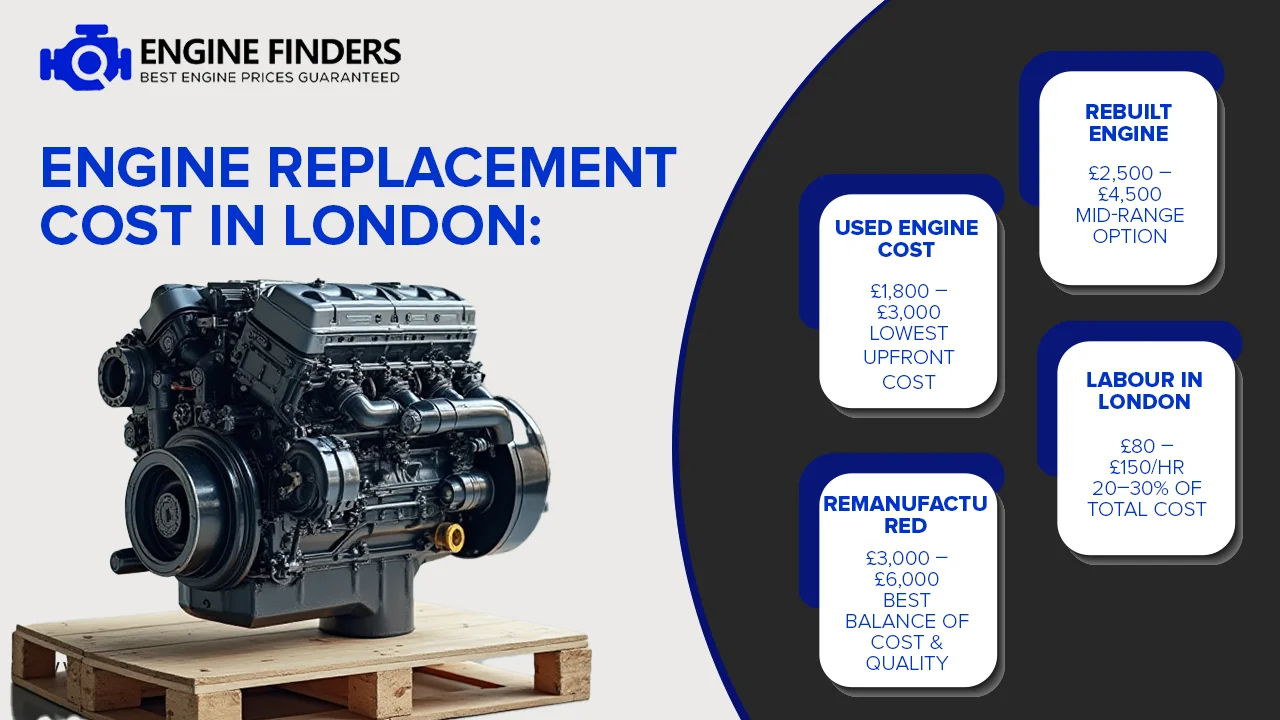
Most independent garages in London charge between £90 and £120 per hour. Specialist or dealer-level workshops may charge more. Engine replacement can take anywhere from 10 to 25 hours, depending on the vehicle.
Time Required for Engine Replacement
Small petrol cars often require less time, while modern diesel vehicles, SUVs, and premium models take much longer due to complexity and electronics.
Supply vs Supply and Fit Pricing
Some quotes only cover the engine itself, while others include fitting. Always confirm whether labour, fluids, and VAT are included.
Types of Engine Replacement Options
The type of engine you choose has the biggest impact on overall cost and long-term reliability.
Used Engine Replacement
A used engine is removed from a donor vehicle and installed into your car.
Pros of Used Engines
- Lowest upfront cost
- Faster availability for common models
Cons of Used Engines
- Unknown wear history
- Short warranties
- Higher long-term risk
Typical cost in London: £1,500 to £3,500 fitted.
Reconditioned Engine Replacement
Reconditioned engines are stripped, inspected, and rebuilt with new or refurbished components.
Pros of Reconditioned Engines
- Better reliability than used engines
- Longer warranties
- Balanced cost and quality
Cons of Reconditioned Engines
- More expensive than used
- Availability varies
Typical cost in London: £2,500 to £6,000 fitted.
Brand-New Engine Replacement
A factory-new engine is the most expensive option.
Pros of New Engines
- Maximum lifespan
- Manufacturer-backed quality
Cons of New Engines
- Very high cost
- Often exceeds vehicle value
Typical cost in London: £4,000 to £8,000 or more.
Engine Replacement Cost by Vehicle Type

Different vehicles come with very different expectations.
Small Petrol Cars
Cars like Ford Fiesta, Vauxhall Corsa, or Toyota Yaris are generally cheaper to repair.
Estimated cost range: £1,800 to £3,500.
Diesel Cars
Diesel engines are heavier and more complex.
Estimated cost range: £2,500 to £5,500.
SUVs and 4x4s
Larger engines and tight engine bays increase labour time.
Estimated cost range: £3,500 to £7,000.
Premium and Luxury Cars
BMW, Mercedes, Audi, and Land Rover models often require specialist tools and coding.
Estimated cost range: £5,000 to £10,000+.
Hidden Costs Drivers Often Overlook
Many drivers are surprised when the final bill exceeds the initial quote.
Fluids and Consumables
Oil, coolant, filters, and seals are rarely included in basic engine prices.
Timing Belt or Chain Work
Garages often recommend replacing timing components while the engine is out.
Clutch and Flywheel Replacement
Manual cars may need clutch work during engine replacement.
ECU Coding and Software Updates
Modern vehicles often require reprogramming after engine installation.
Recovery and Storage Fees
If your car is immobile, recovery costs can add up quickly.
Is Engine Replacement Worth It?
This depends on several key factors.
Vehicle Value vs Repair Cost
If the replacement cost exceeds 60–70% of the car’s market value, it may not be financially sensible.
Age and Condition of the Vehicle
A well-maintained car with a new engine can last many more years.
Availability of Warranty
Longer warranties reduce financial risk.
Future Running Costs
Replacing the engine does not reset wear on suspension, gearbox, or electronics.
Comparing Engine Replacement vs Buying Another Car

| Factor | Engine Replacement | Buying Used Car |
| Upfront cost | High but controlled | Variable |
| Reliability | Known vehicle history | Unknown |
| Warranty | Often included | Sometimes limited |
| Long-term value | Can extend lifespan | Depends on the condition |
How to Choose the Right Engine Supplier
Choosing the right supplier is just as important as choosing the engine type.
Transparency in Quotes
A reliable supplier provides clear, itemised pricing.
Warranty Coverage
Look for warranties that cover parts and labour.
Proven Track Record
Experience matters, especially for modern engines.
Customer Support
Clear communication before and after installation is essential.
Common Mistakes to Avoid
- Choosing the cheapest quote without checking inclusions
- Ignoring warranty terms
- Failing to replace worn components during installation
- Not comparing multiple suppliers
- Assuming all engines are tested equally
Legal Rights for London Drivers
UK consumer law protects drivers when services are not carried out properly.
Reasonable Care and Skill
Work must meet professional standards.
Fair Pricing
If no price is agreed, it must be reasonable.
Right to Remedies
You may be entitled to a repair or refund if the work is faulty.
Final Thoughts
Engine replacement is one of the biggest automotive expenses a London driver can face, but it does not have to be a gamble. Understanding engine replacement cost in London allows you to make informed decisions, compare options realistically, and avoid unnecessary stress. While the upfront cost can feel overwhelming, the right engine choice and supplier can restore your vehicle’s reliability and value for years to come.
At EngineFinders, the focus is on clarity, transparency, and helping drivers understand what they are paying for. Whether you are considering a used engine to keep costs low or a reconditioned unit for peace of mind, the key is preparation. Ask the right questions, understand what is included, and never rush a decision. A well-planned engine replacement can be a smart investment rather than a financial setback.
Frequently Asked Questions
How much does engine replacement cost in London on average?
Most drivers pay between £2,500 and £5,000, depending on the vehicle and engine type.
Is a reconditioned engine better than a used engine?
Yes, reconditioned engines usually offer better reliability and longer warranties.
How long does engine replacement take?
Anywhere from 2 to 7 days, depending on complexity and parts availability.
Does engine replacement increase car value?
It can improve reliability but rarely increases resale value beyond market norms.
Can I drive with a failing engine?
Driving with severe engine issues can cause further damage and higher repair costs.
Is engine replacement cheaper than buying a new car?
In many cases, yes, especially if the rest of the vehicle is in good condition.