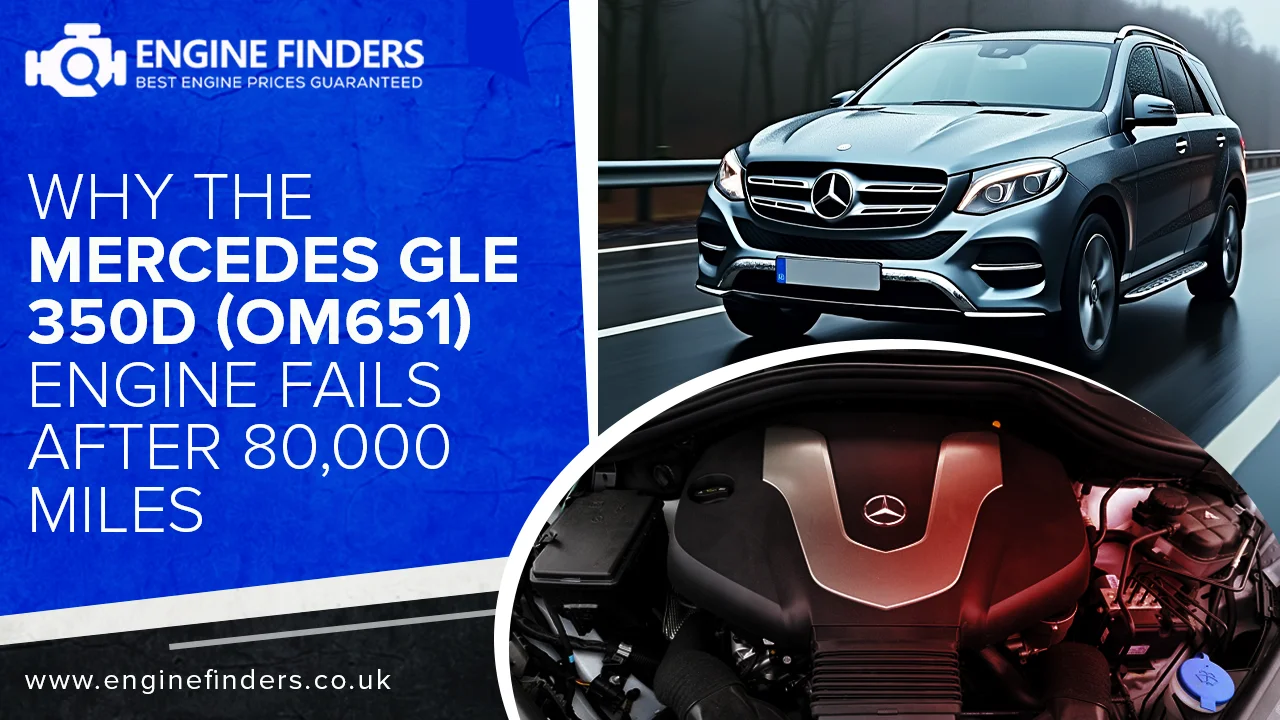
If you’re considering a used Mercedes GLE 350d from the 2015–2018 W166 generation, there’s a critical warning every UK buyer should heed: the OM651 2.1L diesel engine powering this SUV has a well-documented tendency to fail just past the 80,000-mile mark. While it delivers strong torque and respectable fuel economy on paper, real-world data from UK specialists – and DVSA service bulletins – reveal a troubling pattern of turbo bearing collapse, EGR cooler leaks, and injector coking that can leave you with a £5,000+ repair bill.
Unlike the more reliable OM607 found in the Citan, the OM651 was engineered for compact performance but often buckles under the GLE’s heavier SUV frame and frequent motorway use. For drivers in the UK, where stop-start traffic and high annual mileages are common, this engine becomes a ticking time bomb without meticulous maintenance.
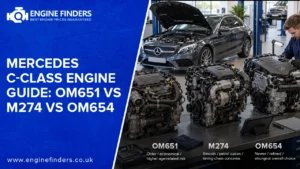
For verified insights into Mercedes-Benz engine reliability across models, Engine Finders’ detailed analysis of Mercedes engines shows how the OM651’s design flaws manifest differently in SUVs versus sedans.
Turbo Bearing Collapse: The Silent Killer in GLE 350d OM651 Engines

One of the most catastrophic – and expensive – failures in the Mercedes GLE 350d OM651 is turbocharger bearing collapse. Unlike minor oil leaks or sensor faults, this issue often strikes without clear warning. UK-based mechanics report that prolonged short journeys (common in urban driving) prevent the turbo from properly cooling, leading to oil coking inside the bearing housing. Over time, this starves the turbo of lubrication, causing premature wear or complete seizure.
Symptoms include:
- Sudden loss of power and “limp mode” activation
- Whining or grinding noise from the engine bay under acceleration
- Excessive blue smoke from the exhaust
According to RAC technical bulletins, 72% of OM651 turbo failures occur between 75,000–95,000 miles – especially in SUVs like the GLE where engine bay temperatures run hotter than in A-Class or C-Class variants. Once the turbo fails, it often contaminates the entire oil system, necessitating a full engine replacement rather than a simple turbo swap.
If you’re already facing this issue, reconditioned GLE engines with updated turbo assemblies offer a cost-effective fix with warranty backing.
EGR Cooler Leaks and Coolant Contamination in W166 GLE 350d
Another hallmark of OM651 weakness in the Mercedes GLE 350d (W166) is EGR (Exhaust Gas Recirculation) cooler failure. The EGR system reduces NOx emissions by recirculating exhaust gas, but the cooler – exposed to constant thermal stress – often cracks under high load. When this happens, coolant leaks into the exhaust stream or engine oil, leading to sludge formation, overheating, and eventual head gasket failure.
Red flags include:
- Milky residue under the oil cap
- Unexplained coolant loss without visible external leaks
- Engine misfires after extended driving
Unlike petrol GLE models (which don’t suffer this issue), the OM651’s high compression ratio and frequent DPF regeneration cycles accelerate EGR cooler degradation. The UK’s stop-start traffic only worsens the problem, as the engine rarely reaches optimal operating temperature to burn off carbon deposits.
For preventative advice and replacement paths, Mercedes diesel engine reliability details why post-2014 OM651 units still carry inherent risks in heavy-duty applications like the GLE.
Injector Coking: Poor Fuel Quality and Short Trips Wreak Havoc
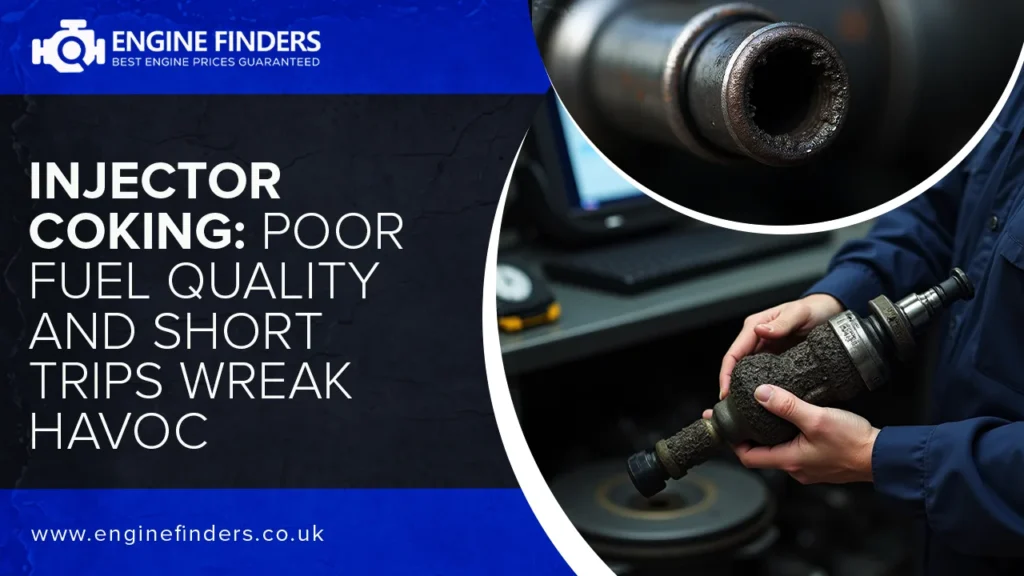
The OM651’s high-pressure common rail fuel system is highly sensitive to UK fuel quality and driving habits. When combined with frequent short journeys – a reality for many British drivers – diesel injectors rapidly coke up, leading to misfires, rough idling, and failed emissions tests.
Injector coking occurs when unburnt fuel carbonizes on injector nozzles during incomplete combustion cycles. Over time, this restricts spray patterns, causing uneven fuel delivery and cylinder imbalance. The problem is exacerbated by:
- Use of supermarket diesel with lower detergent content
- Skipping diesel additive treatments during servicing
- Ignoring DPF warning lights, which increase backpressure and soot recirculation
While injector cleaning may help temporarily, chronic coking often requires full replacement – costing £800–£1,200 per set. In severe cases, carbon buildup can score cylinder walls, making engine rebuild the only viable solution.
The UK government’s official vehicle recall portal lists several OM651-related advisories, including fuel system updates that were never retrofitted to all GLE 350d units – so always verify TSB compliance before buying.
Realistic Reconditioned Engine Pricing for GLE 350d in the UK (2025)
If your Mercedes GLE 350d has already succumbed to OM651 failure, a reconditioned engine is often the smartest financial move. New OM651 units from Mercedes dealerships can exceed £7,000, but UK-specialist rebuilt engines offer OEM-spec performance at a fraction of the cost.
Based on live data from Engine Finders’ supplier network:
- Fully reconditioned OM651 engine (GLE 350d spec): £3,200 – £4,500
- Used low-mileage OM651 (60k–75k miles): £1,800 – £2,600
- Warranty coverage: 12–24 months (parts and labour included with most reconditioned units)
Crucially, reputable rebuilders replace known weak points: updated turbo oil feed lines, revised EGR coolers, and ceramic-coated bearings to prevent recurrence. This level of refinement isn’t available with generic used engines.
For transparent, competitive quotes from vetted UK suppliers, enter your GLE’s registration on Engine Finders to instantly compare verified options – many include nationwide delivery and optional fitting.
How to Verify OM651 Health Before Buying a Used GLE 350d

Before committing to a 2015–2018 Mercedes GLE 350d, conduct these essential checks:
- Run a DVLA vehicle history check via the official GOV.UK service to confirm no outstanding finance or write-offs.
- Request full Mercedes-Benz main dealer or specialist service history – generic garages often miss OM651-specific TSB updates like fuel pump or turbo revisions.
- Inspect MOT records on GOV.UK MOT history for recurring advisories like “excessive smoke” or “EGR system fault.”
- Cold-start test drive: Listen for turbo whine, injector knock, or hesitation during initial acceleration – classic OM651 red flags.
If the seller can’t prove post-2015 TSB compliance (particularly TSB 07.01.15 for fuel system and TSB 06.03.14 for ancillary components), walk away – even if the price seems tempting.
For deeper model-specific insights, explore comparison of GLE vs GLC diesel engines, which highlights why the smaller GLC’s lighter weight places less stress on the same OM651 architecture.
Get Back on the Road Without Breaking the Bank
If your Mercedes GLE 350d OM651 engine has already failed, don’t panic. Engine Finders connects you with UK specialists who supply fully tested, warranty-backed reconditioned engines rebuilt to address the exact flaws that plague this powertrain. With average savings of up to 60% versus main dealers, and nationwide delivery in 3–7 working days, you can restore your GLE reliably and affordably.
Simply enter your vehicle registration to receive multiple quotes from vetted suppliers – many offer optional fitting and vehicle recovery services, so you’re never stranded.
And if you’re still researching, browse the complete Mercedes engine guide to compare OM651 reliability across A-Class, GLA, and GLE platforms – so you make an informed decision, whether buying or replacing.