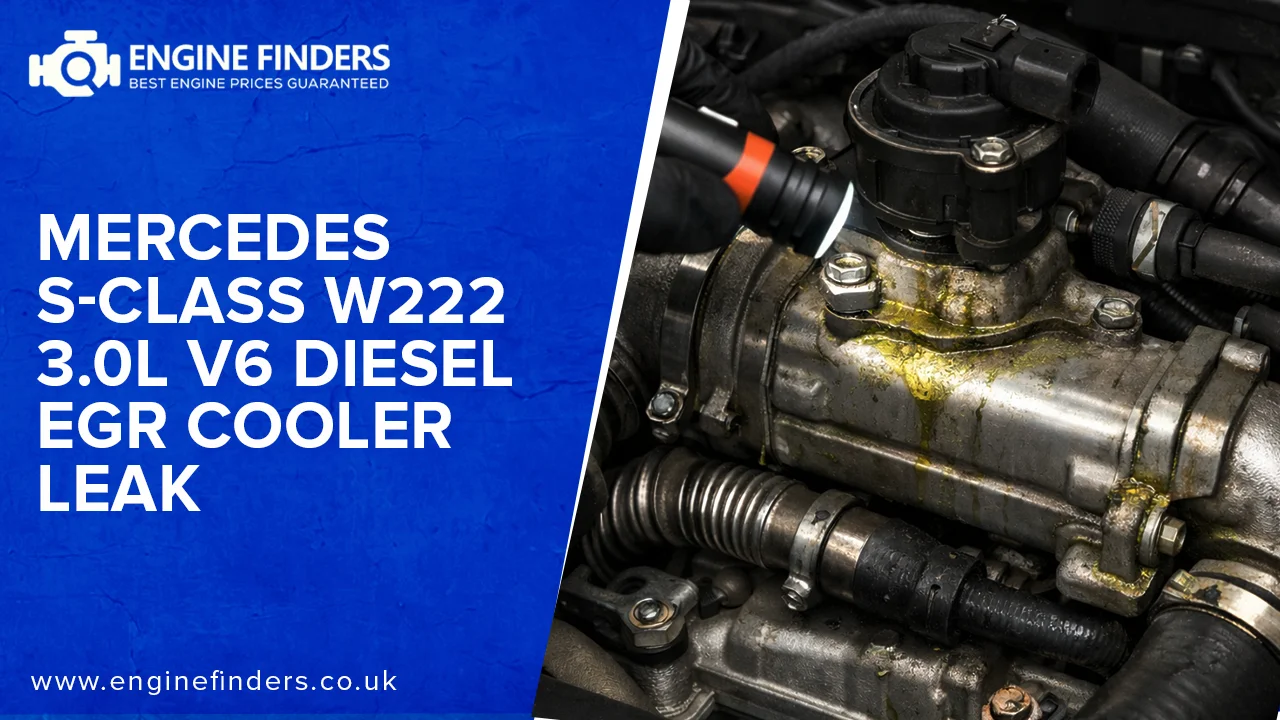
Owning a Mercedes-Benz S-Class W222 is often seen as the pinnacle of automotive luxury, combining supreme comfort with advanced engineering. However, beneath the polished exterior of the S350 BlueTEC lies a potential vulnerability that could ground your vehicle in 2025: the 3.0L V6 diesel EGR cooler leak. As UK emissions regulations tighten and MOT testing becomes more rigorous regarding fluid leaks and exhaust integrity, this specific failure point poses a significant risk to compliance and value. At Engine Finders, we analyze thousands of engine failures annually, and the OM642 engine platform remains a frequent subject of inquiry. Understanding the technical implications of this leak is not just about repair costs; it is about ensuring your flagship sedan remains legal on British roads.
Mercedes W222 3.0L V6 Diesel EGR Cooler Leak Symptoms
Identifying an Exhaust Gas Recirculation (EGR) cooler failure early is critical for preventing catastrophic engine damage. The OM642 engine, found in the W222 S350 BlueTEC, utilizes a complex cooling system to manage exhaust temperatures. When the EGR cooler develops a breach, coolant mixes with exhaust soot or leaks externally, triggering specific warning signs.
OM642 Engine Coolant Loss Signs
The most immediate indicator is unexplained coolant depletion without visible external puddles. In the OM642 configuration, internal leaks allow coolant to enter the exhaust stream, where it is burned off silently. Owners should monitor the coolant expansion tank levels weekly. If the level drops consistently despite topping up, the EGR cooler is a primary suspect. This issue is not unique to the S-Class; the underlying engine architecture is shared across the brand. For those comparing fault patterns, you might find similar coolant consumption issues documented in databases for Mercedes-Benz engines across different chassis codes.
Exhaust Smoke and Performance Issues
When coolant enters the combustion chamber or exhaust tract, it often manifests as white or blueish smoke during acceleration. Additionally, the engine management system may detect irregularities in the mass airflow or exhaust temperature sensors, leading to reduced power modes. If the leak is severe, hydro-locking can occur, causing bent connecting rods. It is vital to address smoke emissions immediately, as excessive visible smoke is a direct cause for MOT refusal. You can verify your vehicle’s current emission status by checking its history on the GOV.UK check MOT status service before booking a test.
2026 MOT Emissions Testing Rules for Diesel Cars
The MOT testing manual undergoes periodic updates to align with environmental goals. In 2025, inspectors will be particularly vigilant regarding diesel emission control systems, including the EGR and AdBlue components.
Visible Smoke and Fluid Leak Criteria
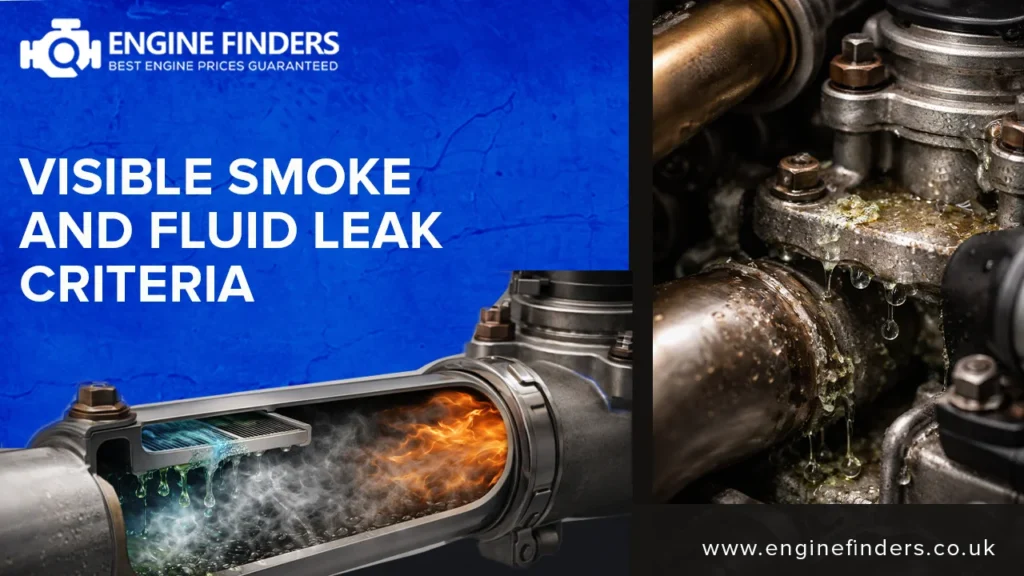
According to the DVSA testing standards, any visible leak of coolant that poses a risk to the environment or safety can result in a failure. Furthermore, excessive smoke emissions during the emissions test will result in an immediate fail. The EGR cooler leak directly impacts both criteria. If coolant is burning in the exhaust, smoke levels rise. If coolant is leaking externally onto hot engine components, it creates a safety hazard. Understanding these thresholds is essential for W222 owners preparing for their annual test.
AdBlue System and EGR Compliance
The W222 diesel relies on the AdBlue system to reduce NOx emissions. A compromised EGR cooler can disrupt the exhaust gas temperature readings required for efficient AdBlue dosing. This can trigger fault codes related to the SCR system, leading to a “Start Limit in 2000km” warning. Ensuring the EGR system is sealed is therefore integral to the entire emissions control chain. For vehicles with modified or faulty emissions systems, tax bands may also be affected. You can review current vehicle tax rate tables to understand how emissions compliance impacts your annual costs.
Cost of Mercedes S-Class EGR Cooler Replacement UK
Financial planning for this repair is essential, as main dealer prices can be prohibitive. The cost involves not just the part, but significant labor hours due to the engine’s layout in the W222 chassis.
Dealer vs Independent Garage Pricing
Main dealers typically charge premium rates for OEM parts and labor, often exceeding £1,500 for the repair. Independent specialists offer a more competitive rate, but the parts cost remains significant. Many owners opt for engine replacements if the leak has caused secondary damage like turbocharger failure. In these cases, sourcing a used engines unit can be more cost-effective than repairing the original block. Alternatively, a reconditioned engines option provides a refurbished unit with a warranty, balancing cost and reliability.
Used vs Reconditioned Engine Options
When the EGR leak leads to hydro-lock or severe corrosion, replacing the entire engine assembly is sometimes the only viable solution. The OM642 engine is robust, but coolant contamination ruins oil integrity. Choosing between used and reconditioned depends on mileage and budget. A used engine offers OEM originality, while a reconditioned unit offers renewed internal components. Both options require careful vetting to ensure compatibility with the W222’s specific engine management software.
Get a Quote for Your Mercedes Engine Unsure about the best replacement option? Submit your vehicle details today to receive competitive quotes from trusted UK suppliers for your Mercedes-Benz engine needs.
Preventing Major Engine Damage from EGR Failures
Proactive maintenance can mitigate the risk of total engine failure due to EGR cooler leaks. Regular inspection of the cooling system is the first line of defense.
Cooling System Pressure Tests

A professional cooling system pressure test can identify leaks before they become visible. This involves pressurizing the system to check for drops that indicate a breach in the EGR cooler or associated hoses. For W222 owners, this should be part of every major service interval. Early detection preserves the engine’s integrity and maintains the vehicle’s value. For specific parts compatibility, reviewing the Mercedes-Benz S-Class engines inventory can help identify upgraded cooler versions that may be less prone to failure.
Software Updates and Recalls
Mercedes-Benz has issued various recalls and software updates regarding emissions systems over the years. Ensuring your vehicle’s ECU software is up to date can improve monitoring of the EGR system. You should regularly check vehicle recall status using your VIN to see if any manufacturer campaigns apply to your specific W222 production date. Ignoring recalls can void warranties and leave you liable for repair costs that might otherwise be covered.
Where to Buy Replacement Mercedes Diesel Engines
If engine replacement is necessary, sourcing the correct unit is paramount. The OM642 engine was utilized across a wide range of Mercedes models, increasing the availability of spare units.
Compatibility with SL and SLC Models
The 3.0L V6 diesel engine found in the W222 S-Class shares architecture with the R231 SL-Class and the C217 S-Class Coupe. This cross-compatibility means parts and replacement engines are often interchangeable between these luxury models. When searching for replacements, you may find suitable units listed under Mercedes-Benz SL engines or Mercedes-Benz SLC engines. Verifying the engine code and transmission compatibility is essential before purchase.
Compatibility with SLK and SLS AMG Variants
While less common, some diesel powertrains share components with other lines, though the SLS AMG is primarily petrol. However, understanding the broader engine family helps in sourcing peripheral components. For example, mounting points and ancillary drives may align with units found in the Mercedes-Benz SLK engines catalog. Even high-performance variants like the Mercedes-Benz SLS AMG engines share certain engineering philosophies regarding engine bay layout, though the powertrains differ. Focusing on the OM642 code is the safest route for diesel replacements.
Registration and Documentation Requirements
When swapping an engine, you must update the V5C logbook with the DVLA. This ensures the engine number matches the vehicle record, which is crucial for resale and insurance. Failure to update this information can lead to legal complications. The process is simple and ensures your vehicle remains compliant with UK registration laws. Always retain invoices from the supplier, such as Engine Finders, to prove the origin and specification of the replacement unit during any future inspections.
Final Verdict on W222 Diesel Ownership in 2025
The Mercedes S-Class W222 remains a formidable luxury vehicle, but the 3.0L V6 diesel EGR cooler leak is a known weakness that requires vigilance. With 2025 MOT rules likely to tighten on emissions and leaks, proactive management of this component is essential. Whether you choose to repair the cooler or replace the engine entirely, ensuring compliance with UK regulations is key. By leveraging specialist knowledge and verified suppliers, you can extend the life of your S-Class and maintain its status as a road-legal flagship.
Summary of Action Steps for Owners
- Monitor coolant levels weekly for unexplained drops.
- Check for white smoke during acceleration.
- Verify MOT history and recall status online.
- Source replacement engines from verified specialists to ensure compatibility.
Taking these steps ensures your W222 remains a symbol of engineering excellence rather than a source of regulatory stress.