Executive Summary
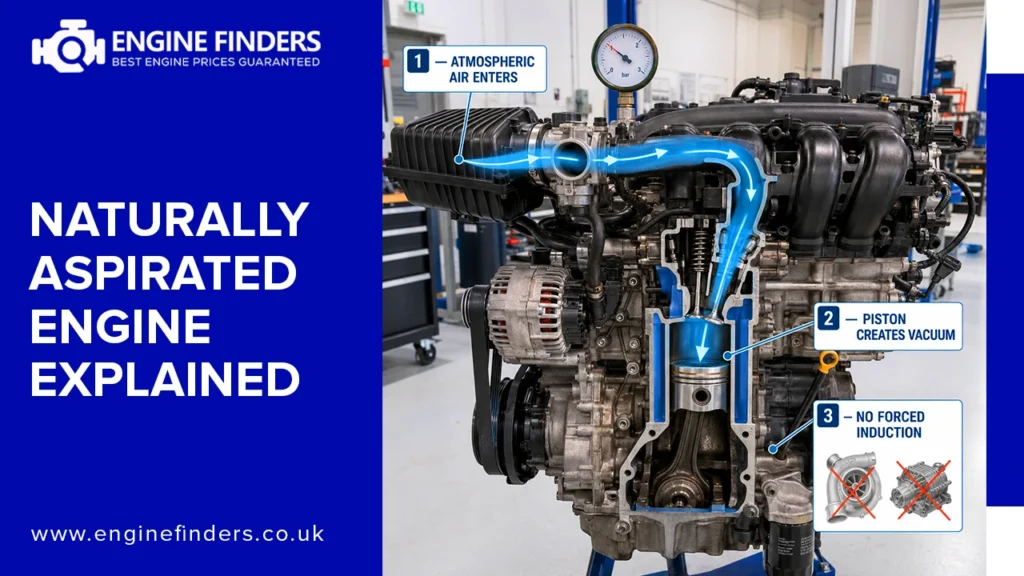
A naturally aspirated (NA) engine is an internal combustion engine that draws air into the cylinders using only the vacuum created by the pistons’ downward movement, without forced induction from turbochargers or superchargers. These engines are valued for their linear power delivery, mechanical simplicity, and typically lower maintenance costs compared to turbocharged alternatives.
For UK drivers, naturally aspirated engines remain popular in entry-level vehicles and performance cars alike, though they’re increasingly rare in modern diesel offerings due to stricter emissions standards. While NA engines generally offer better reliability and lower repair costs, they may struggle to meet Euro 6 emissions requirements without advanced technology, potentially affecting ULEZ compliance in older models.
Engine Finders is a price comparison platform, not a direct engine seller. Final pricing, warranty terms, and availability vary by vetted UK supplier. Professional diagnosis is recommended before purchasing any replacement engine.
This guide explains how naturally aspirated engines work, their advantages and disadvantages compared to turbocharged units, and what UK car owners should know about maintenance, emissions compliance, and replacement options.
What Does “Naturally Aspirated” Mean?
Plain English Definition
“Naturally aspirated” simply means the engine breathes on its own. When the pistons move down inside the cylinders, they create a vacuum that pulls air in through the intake manifold – much like how you breathe in naturally without any mechanical assistance.
In contrast, turbocharged or supercharged engines use additional equipment to force more air into the cylinders under pressure, which allows them to burn more fuel and produce more power from the same engine size.
The Technical Breakdown

How NA Engines Work
A naturally aspirated engine operates on a straightforward principle:
- Intake stroke: The piston moves downward, creating negative pressure (vacuum) in the cylinder
- Air intake: The intake valve opens, allowing atmospheric pressure to push air into the cylinder
- Compression: The piston moves back up, compressing the air-fuel mixture
- Combustion: The spark plug (petrol) or compression heat (diesel) ignites the mixture
- Exhaust: The exhaust valve opens, and the piston pushes out the burnt gases
The amount of air an NA engine can ingest is limited by atmospheric pressure and engine displacement. At sea level, atmospheric pressure is approximately 14.7 psi (1 bar), which represents the maximum theoretical pressure difference available to fill the cylinders.
Key Components
Unlike forced induction engines, naturally aspirated engines have:
- No turbocharger: No exhaust-driven turbine forcing air into the intake
- No supercharger: No belt-driven compressor pressurising the intake charge
- No intercooler: No need to cool compressed air before it enters the cylinders
- Simpler intake manifold: Designed for smooth, unrestricted airflow at atmospheric pressure
- Standard exhaust system: Lower backpressure requirements compared to turbocharged engines
However, modern NA engines often feature:
- Variable valve timing (VVT): Optimises airflow at different engine speeds
- Variable intake runners: Adjusts intake path length for better performance across the rev range
- Direct fuel injection: Improves efficiency and power output
- High compression ratios: Typically 10:1 to 13:1 for petrol engines, maximising efficiency
Common Engine Codes and Examples
Petrol NA engines still found in the UK market:
- BMW: N52 (3.0L inline-6, 2004-2015), B48 (2.0L turbocharged but naturally aspirated variants exist in some markets)
- Honda: K20 (2.0L), K24 (2.4L) – renowned for reliability and VTEC technology
- Mazda: SkyActiv-G series (1.5L, 2.0L, 2.5L) – modern high-compression NA engines
- Toyota: 1NZ-FE (1.5L), 2ZR-FE (1.8L), 2GR-FE (3.5L V6)
- Volkswagen: 1.4L and 1.6L MPI engines (pre-TSI era)
Diesel NA engines (now largely obsolete in passenger cars):
- Older Mercedes OM617, OM603 series
- Classic Land Rover 200TDi, 300TDi
- Most modern diesel engines use turbocharging to meet emissions standards
Use our Engine Compatibility Checker if you’re unsure whether your vehicle has a naturally aspirated or turbocharged engine.
Naturally Aspirated vs Turbocharged: Key Differences
Performance Characteristics
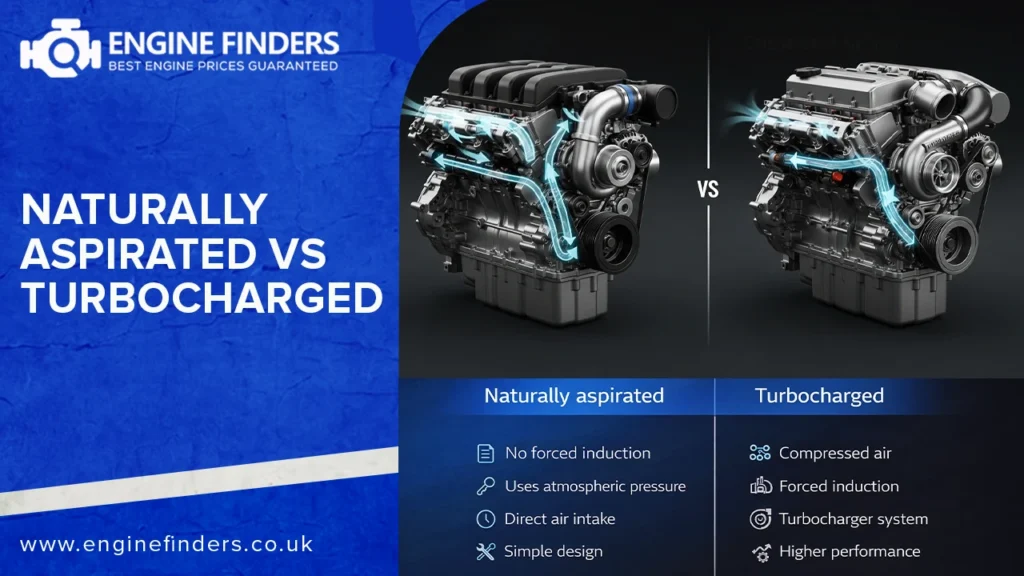
| Feature | Naturally Aspirated | Turbocharged |
| Power delivery | Linear, predictable | Sudden “boost” effect |
| Low-end torque | Generally lower | Superior torque from low RPM |
| Peak power | Lower per litre of displacement | Higher specific output |
| Throttle response | Immediate | Slight lag (turbo lag) |
| High-altitude performance | Power decreases with altitude | Better altitude compensation |
Efficiency and Emissions
Naturally aspirated engines face increasing challenges meeting modern emissions standards:
Euro 6 compliance: Most modern NA petrol engines can meet Euro 6 standards with direct injection and variable valve timing. However, NA diesel engines struggle significantly without turbocharging, which is why virtually all modern diesel cars are turbocharged.
Fuel economy: Historically, NA engines were less fuel-efficient than smaller turbocharged engines producing equivalent power. However, modern NA engines with advanced technologies like Mazda’s SkyActiv or Toyota’s Dynamic Force engines have narrowed this gap considerably.
Real-world consumption: NA engines often deliver more consistent real-world fuel economy because they’re less sensitive to driving style. Turbocharged engines can suffer significant economy penalties under hard acceleration when the turbo is producing boost.
Reliability and Maintenance
Naturally aspirated advantages:
- Fewer components: No turbocharger, intercooler, or associated piping to fail
- Lower operating temperatures: No hot exhaust gases driving a turbine at 100,000+ RPM
- Simpler oil requirements: Less stress on engine oil; turbocharged engines often need more frequent oil changes
- Lower repair costs: Turbocharger replacement typically costs £800-£2,500 including labour, depending on the engine
Common failure points in NA engines:
- Timing chain/belt wear: Still requires attention at manufacturer intervals
- Carbon buildup: Direct injection NA engines can develop intake valve deposits
- Cooling system issues: Water pump, thermostat, radiator failures
- Oil consumption: Some high-mileage NA engines burn oil as seals wear
For detailed reliability information on specific engines, see our BMW Engine Reliability Guide or Mercedes Engine Guide.
Advantages of Naturally Aspirated Engines
1. Predictable Power Delivery
NA engines produce power in a smooth, linear fashion. When you press the accelerator, you get immediate response proportional to pedal input. There’s no waiting for boost to build, making them easier to control in slippery conditions or when towing.
2. Mechanical Simplicity
Fewer components mean:
- Lower initial purchase cost
- Reduced complexity for DIY maintenance
- Fewer potential failure points
- Easier diagnosis of problems
- Generally lower insurance costs
3. Better Sound Characteristics
Enthusiasts often prefer NA engines for their acoustic qualities:
- Clearer engine note without turbo muffling
- Better throttle-blip response for performance driving
- More engaging driving experience at high RPM
4. Lower Maintenance Costs
Typical maintenance savings:
- No turbocharger oil feed lines to leak
- No intercooler to clean or replace
- Simpler exhaust system (no downpipe constraints)
- Standard spark plugs (turbo engines often need colder plugs)
5. Consistent Performance
NA engines aren’t affected by:
- Heat soak (turbo efficiency drops when intake air gets hot)
- Boost creep or overboost conditions
- Wastegate failures
- Variable geometry turbo sticking
Disadvantages of Naturally Aspirated Engines
1. Lower Specific Output
To produce the same power as a turbocharged engine, an NA engine typically needs:
- Larger displacement (more cylinders or bigger capacity)
- Higher compression ratios
- Higher revving capability
For example, a modern 2.0L turbocharged engine might produce 250-300 hp, while a naturally aspirated 2.0L typically produces 150-180 hp.
2. Emissions Challenges
UK-specific concerns:
- ULEZ compliance: Older NA engines, particularly diesels, may not meet Euro 4 (diesel) or Euro 6 (petrol) standards required for London’s Ultra Low Emission Zone without expensive modifications
- Road tax: Larger displacement NA engines often fall into higher VED bands
- Company car tax: Higher CO₂ emissions compared to equivalent-power turbocharged engines
3. Reduced Low-End Torque
NA engines typically need to be revved higher to access peak torque, which can make them feel less responsive in everyday driving, particularly:
- Overtaking on motorways
- Hill climbing with a loaded vehicle
- Towing trailers or caravans
4. Declining Availability
Most manufacturers have shifted to downsized turbocharged engines:
- Ford discontinued most NA engines in favour of EcoBoost
- Volkswagen’s TSI and TDI engines dominate the range
- Even performance brands like BMW and Mercedes use turbocharging across most models
Finding a new car with a naturally aspirated engine is increasingly difficult in the UK market.
UK-Specific Considerations
Emissions Regulations and MOT Testing
MOT emissions testing: Naturally aspirated engines generally pass MOT emissions tests more easily than poorly maintained turbocharged engines, as they:
- Produce fewer particulates (especially petrol NA engines)
- Have simpler emissions control systems
- Are less prone to catastrophic turbo-related smoke issues
However, any engine with a faulty catalytic converter or lambda sensor will fail regardless of aspiration type.
Clean Air Zones (CAZ):
- London ULEZ: Requires Euro 4 for petrol (most NA petrol engines from 2005+ comply) and Euro 6 for diesel (virtually no NA diesels qualify)
- Birmingham CAZ: Similar standards apply
- Other cities: Check local requirements at gov.uk
For detailed information on whether your engine meets current standards.
Insurance and Taxation
VED (Road Tax):
- Pre-2017: Based purely on CO₂ emissions
- Post-2017: First year based on CO₂, then flat rate (£180/year for petrol/diesel as of 2024)
- Larger NA engines often emit more CO₂ than smaller turbocharged equivalents
Insurance groups: NA engines typically sit in lower insurance groups due to:
- Lower performance (generally)
- Cheaper repair costs
- Better reliability records
Resale Value
Market trends:
- Positive: NA engines are gaining favour among used car buyers concerned about turbocharger repair costs
- Negative: Larger displacement NA engines face higher running costs
- Enthusiast market: High-revving NA performance engines (e.g., Honda K-series, BMW S54) hold value well
Maintenance and Longevity
Recommended Service Intervals
For naturally aspirated engines, follow these guidelines:
Oil changes:
- Conventional oil: Every 6,000-8,000 miles
- Fully synthetic: Every 10,000-12,000 miles
- Don’t rely on manufacturer “LongLife” intervals (often 18,000-20,000 miles) for optimal longevity
Key maintenance items:
- Timing belt/chain: Replace belts at 60,000-100,000 miles (varies by engine); inspect chains for stretch
- Cooling system: Replace coolant every 5 years; inspect hoses and water pump
- Spark plugs: Every 30,000-60,000 miles for NA petrol engines
- Air filter: Inspect annually; replace every 20,000-30,000 miles
- Fuel filter: Every 40,000-60,000 miles (diesel) or as specified
Common Problems to Watch For
High-mileage NA engines:
- Oil consumption: Worn piston rings or valve seals
- Compression loss: Cylinder wear, particularly in aluminium-block engines
- Coolant leaks: Intake manifold gaskets, water pump, thermostat housing
- Carbon buildup: Direct injection engines need walnut blasting every 60,000-80,000 miles
When these issues become severe, engine replacement may be more economical than repair. Compare quotes from vetted UK suppliers for no-obligation pricing on used or reconditioned engines.
When to Choose a Naturally Aspirated Engine
Best Use Cases
Choose NA if you:
- Prioritise reliability and simplicity over maximum power
- Do mostly city or suburban driving
- Want lower maintenance and repair costs
- Plan to keep the car long-term (100,000+ miles)
- Prefer predictable, linear performance
- Are buying a used performance car and want to avoid turbo-related issues
Avoid NA if you:
- Need maximum torque for towing or heavy loads
- Want the best possible fuel economy from a performance car
- Live in an area with strict emissions zones (and looking at diesel)
- Prioritise cutting-edge technology and efficiency
Engine Replacement Considerations
If your naturally aspirated engine has failed or needs major repair:
Used engines:
- Cost: £400-£1,200 depending on engine and mileage
- Risk: Unknown history, potential hidden wear
- Best for: Budget repairs, older vehicles
Reconditioned engines:
- Cost: £1,200-£3,000 including VAT
- Benefit: Rebuilt to specification with warranty (typically 6-12 months)
- Best for: Long-term ownership, valuable vehicles
New engines:
- Cost: £2,500-£6,000+ (OEM)
- Benefit: Factory warranty, zero miles
- Best for: Under-warranty vehicles, classic car restorations
Read our full guide on Used vs Reconditioned Engines for a detailed comparison of your options.
Practical Takeaways
Key Recommendations
For buyers:
- Naturally aspirated engines offer excellent reliability and lower running costs
- Modern NA engines with direct injection and VVT can be both efficient and refined
- Verify emissions compliance (Euro 4/6) before buying if you live near a Clean Air Zone
- Check service history carefully; NA engines can still fail from neglect
For owners:
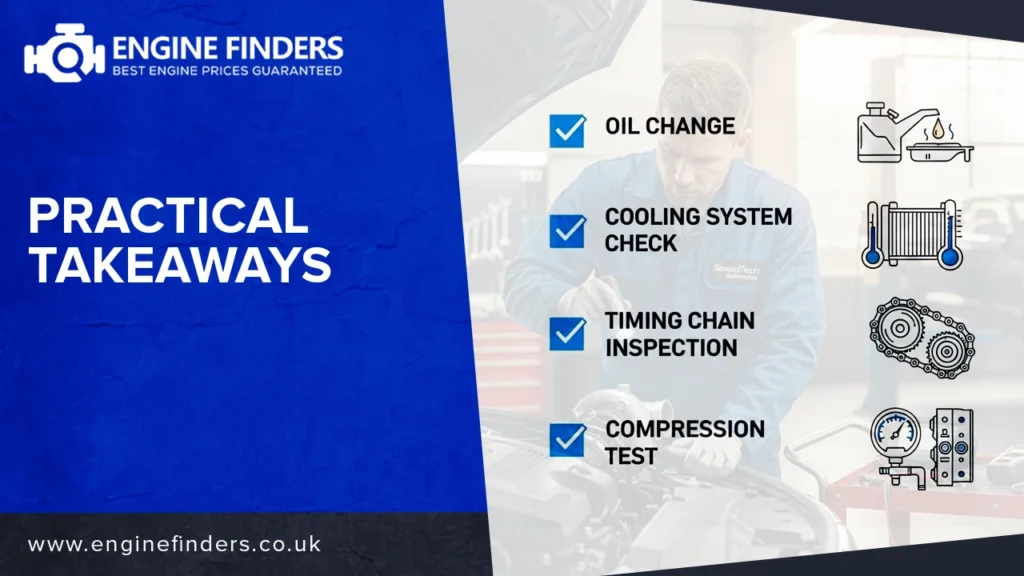
- Stick to regular oil changes using correct specification oil
- Address cooling system issues immediately; overheating kills NA engines
- Listen for timing chain rattle on startup (common on BMW N52, Ford Duratec)
- Consider a compression test before purchasing high-mileage examples
When replacement is needed:
- Get multiple quotes from vetted suppliers
- Verify engine code compatibility (not just make/model/year)
- Factor in labour costs (£600-£1,200 typically)
- Ask about warranty terms and what’s covered
Engines to Approach with Caution
While most NA engines are reliable, some have known issues:
- BMW N52: Valvetronic and VANOS system failures (expensive to repair)
- Ford 1.6L Ti-VCT: Timing chain tensioner failures on early examples
- Volkswagen 2.0L FSI: High-pressure fuel pump and carbon buildup issues
- Nissan VQ35DE: Oil consumption on 2002-2006 models
Always research your specific engine code before purchasing.
Frequently Asked Questions
What is the main difference between naturally aspirated and turbocharged engines?
The main difference is how air enters the engine. Naturally aspirated engines rely on atmospheric pressure and piston vacuum to draw in air, while turbocharged engines use an exhaust-driven turbine to force air into the cylinders under pressure. This allows turbocharged engines to produce significantly more power from the same displacement but adds complexity, cost, and potential failure points.
Are naturally aspirated engines more reliable than turbocharged engines?
Generally yes, naturally aspirated engines are more reliable due to fewer components and lower operating stresses. Without a turbocharger running at 100,000+ RPM and extreme temperatures, there are fewer parts to fail. However, modern turbocharged engines have improved significantly, and reliability ultimately depends more on maintenance and specific engine design than aspiration type alone.
Do naturally aspirated engines use more fuel than turbocharged engines?
Historically yes, but the gap has narrowed. A naturally aspirated engine needs larger displacement to match turbocharged power, which typically means higher fuel consumption. However, modern NA engines with direct injection, variable valve timing, and high compression ratios (like Mazda SkyActiv) can achieve excellent economy. Real-world driving style significantly impacts actual consumption for both types.
Can a naturally aspirated engine be converted to turbocharged?
Yes, but it’s rarely cost-effective for everyday vehicles. A proper turbo conversion requires custom fabrication, engine management remapping, fuel system upgrades, and often internal engine modifications to handle boost pressure. Costs typically exceed £3,000-£5,000 for a professional installation. For most UK drivers, buying a factory turbocharged vehicle is more practical and reliable.
How much does it cost to replace a naturally aspirated engine in the UK?
A used naturally aspirated engine typically costs £400-£1,200, while reconditioned units range from £1,200-£3,000 including VAT. Labour adds £600-£1,200 depending on the vehicle. Compare quotes from vetted UK suppliers at Engine Finders for accurate pricing on your specific engine code and vehicle.
Are naturally aspirated engines better for ULEZ compliance?
For petrol engines, most naturally aspirated models from 2005 onwards meet Euro 4 standards required for ULEZ. However, virtually no naturally aspirated diesel engines meet the Euro 6 standard required for diesel ULEZ compliance. If you’re buying a diesel for use in London or other Clean Air Zones, you’ll need a modern turbocharged diesel or face daily charges.