Executive Summary
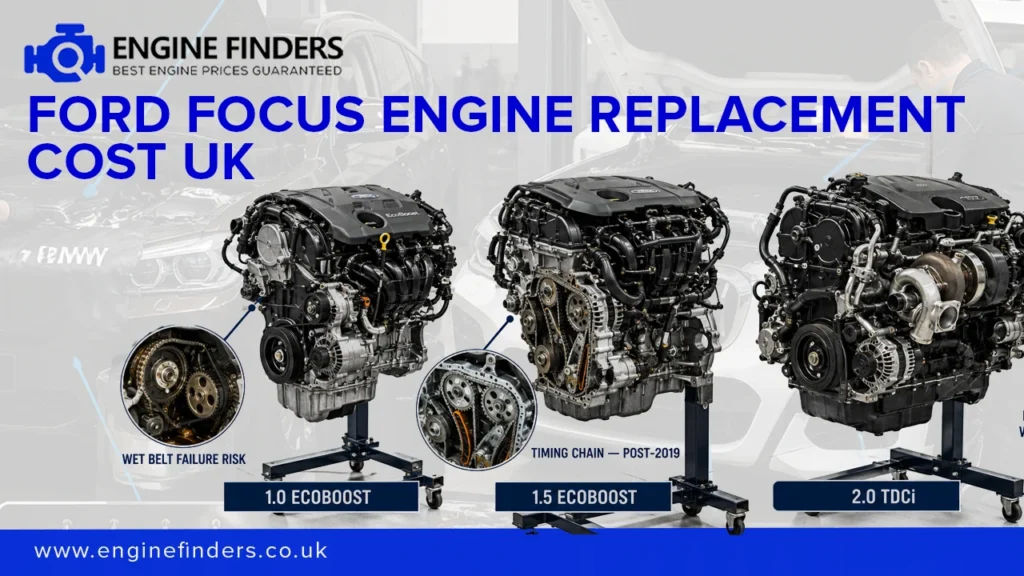
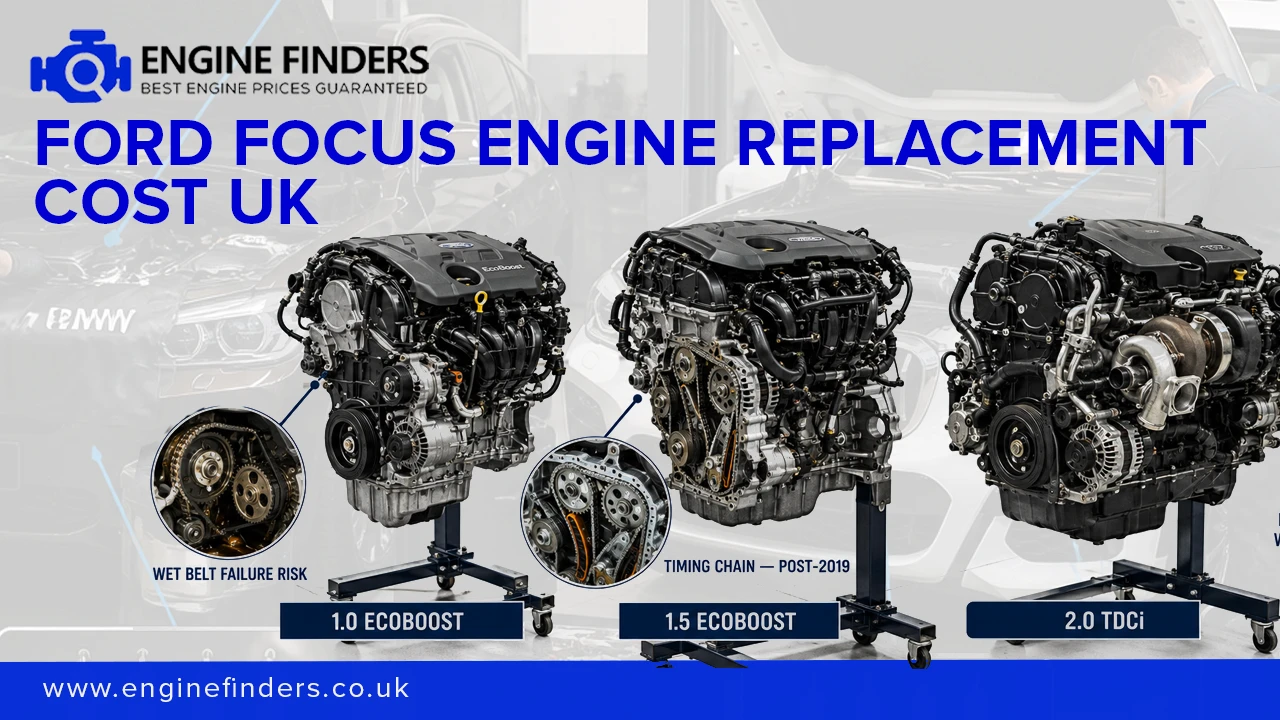
A Ford Focus engine replacement in the UK typically costs between £2,500 and £4,500 for a reconditioned unit including supply and professional fitment, depending on engine type, condition, and warranty terms. The 1.0 EcoBoost three-cylinder is the most common failure candidate due to its wet timing belt design, while the 1.5 EcoBoost four-cylinder and 2.0 TDCi diesel are generally more durable when properly maintained.
The most critical factor determining replacement cost is whether you choose a used engine (cheapest but highest risk), a reconditioned unit (best value with warranty), or a new engine (most expensive). For most UK Focus owners facing engine failure, a reconditioned engine with a 12 to 24 month warranty offers the optimal balance of cost and peace of mind.
Engine Finders is a price comparison platform, not a direct engine seller. Final pricing, warranty terms, and availability vary by vetted UK supplier. Professional diagnosis is recommended before purchasing any replacement engine.
Ford Focus Engine Options at a Glance
| Engine | Type | Years | Power | Replacement Cost (Supply & Fit) |
|---|---|---|---|---|
| 1.0 EcoBoost | 3-cyl petrol | 2012–present | 85–155 PS | £2,500–£4,500 |
| 1.5 EcoBoost | 4-cyl petrol | 2014–present | 150–182 PS | £3,000–£5,000 |
| 2.0 TDCi | 4-cyl diesel | 2005–2018 | 115–185 PS | £2,500–£4,000 |
| 1.5 EcoBlue | 4-cyl diesel | 2018–present | 120 PS | £3,000–£4,500 |
Note: Prices are indicative UK market ranges based on supplier data. Exact quotes vary by supplier, location, and engine condition. For the full Ford Focus engine range with current availability, see our dedicated model page.
1.0 EcoBoost (Petrol): The Most Common Failure
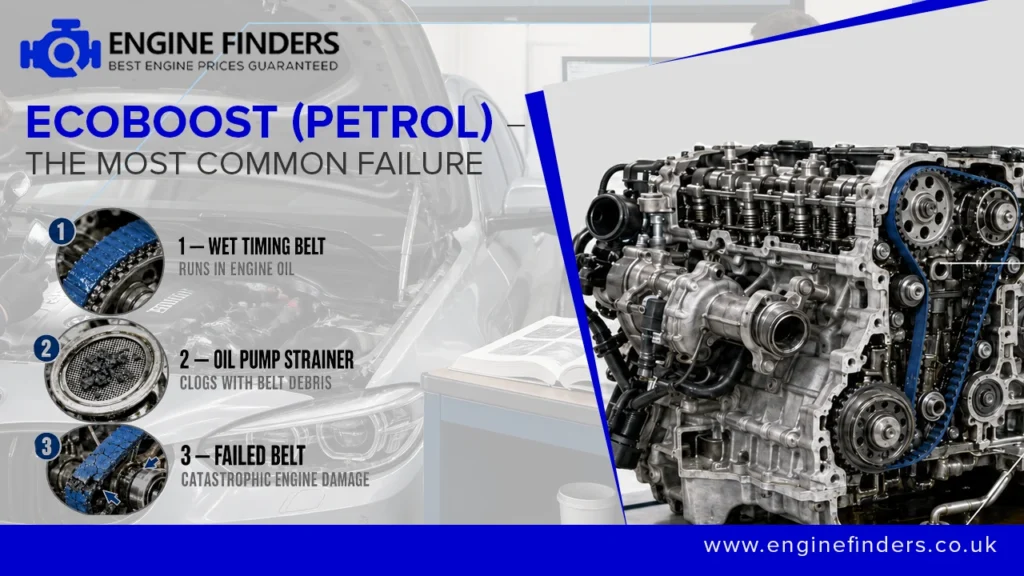
The 1.0-litre EcoBoost is Ford’s three-cylinder turbocharged petrol engine, found in millions of Focus, Fiesta, and EcoSport models across the UK. While praised for its blend of performance and economy, it has become notorious for premature failure due to its wet timing belt design. Our dedicated guide to Ford 1.0 EcoBoost engine problems and reliability covers the full history of this issue.
The Wet Belt Problem: Unlike conventional timing belts that run dry, the 1.0 EcoBoost’s timing belt runs submerged in engine oil. Over time, the belt material degrades and sheds microscopic rubber particles into the oil system. These particles clog the oil pump strainer, causing oil starvation and sudden, catastrophic engine seizure.
NHTSA Investigation (2026): The US National Highway Traffic Safety Administration escalated its investigation into 1.0 EcoBoost failures in August 2026, upgrading to a formal Engineering Analysis covering approximately 135,551 vehicles including 2015 to 2018 Ford Focus models. Key findings:
- Average failure mileage: 70,000 miles
- 98% of failures occurred before Ford’s original 150,000-mile service interval
- Failures occurred even on well-maintained engines with documented oil changes
Symptoms of Impending Failure:
- Red oil pressure warning light (often appears seconds before total failure)
- Distinct “ticking” noise from the top end on cold start
- Loss of power or engine cutting out while driving
- Complete seizure with no prior warning
Replacement Cost Breakdown (1.0 EcoBoost):
- Used engine (supply only): from £1,320 inc. VAT
- Used engine (supply & fit): from £1,980 inc. VAT
- Reconditioned engine (supply & fit): £2,640 to £3,500 inc. VAT
- New engine (supply & fit): £4,000 to £4,500+
Warranty Note: Reconditioned 1.0 EcoBoost engines typically come with 12 to 24 month warranties, compared to 3-month warranties on used units. Always verify that the replacement engine has had the timing belt and oil pump strainer updated to the revised specification.
1.5 EcoBoost (Petrol): The More Reliable Choice

The 1.5-litre EcoBoost is a four-cylinder turbocharged petrol engine available in 150 PS and 182 PS outputs. It is widely regarded as the most reliable petrol option in the Focus range.
Key Reliability Differences:
- Post-2019 models use a timing chain, not a wet belt, eliminating the catastrophic failure risk of the 1.0 EcoBoost
- Pre-2019 models (2018 to 2020) have reported head gasket issues between 80,000 to 150,000 miles, allowing coolant to leak internally into cylinders
- All 1.5 EcoBoost engines retain a small wet belt driving the oil pump, which requires replacement at 10 years or 150,000 miles
Symptoms of 1.5 EcoBoost Head Gasket Failure:
- Coolant loss without visible external leaks
- White smoke from exhaust
- Misfire on cold start (coolant entering cylinder)
- Engine overheating
Replacement Cost Breakdown (1.5 EcoBoost):
- Reconditioned engine (supply & fit): £3,000 to £4,500
- Used engine: £2,500 to £3,500
- Average replacement motor cost (supply only): approximately £3,563
Which 1.5 EcoBoost to Choose: If replacing a failed unit, prioritise a post-2019 specification engine with the revised timing chain design. Ensure the oil pump belt has been replaced or verify its remaining service life.
2.0 TDCi / 2.0 EcoBlue (Diesel): The Motorway Workhorse
The 2.0 TDCi (Duratorq) diesel engine is the Focus’s most durable powertrain, favoured by high-mileage drivers and fleet operators. The newer 2.0 EcoBlue (2018 to present) replaced the TDCi with a cleaner Euro 6d-compliant design but introduced additional complexity with AdBlue systems.
2.0 TDCi Reliability:
- Robust cast-iron block design
- Well-documented 150,000+ mile capability with proper maintenance
- Common issues: injector seal leaks, DPF clogging on short journeys, turbocharger wear
- Critical MOT risk: Diesel models will instantly fail MOT if the DPF has been removed or tampered with
2.0 EcoBlue Considerations:
- AdBlue system can crystallise if not maintained, leading to expensive repairs
- More complex emissions equipment than the older TDCi
- All Mk4 Focus diesel models meet Euro 6 standards and are ULEZ-compliant. Verify any specific vehicle using the GOV.UK clean air zones checker
Replacement Cost Breakdown (2.0 TDCi / EcoBlue):
- Reconditioned engine (supply & fit): £2,500 to £4,000
- Used engine (supply only): from £2,000
- Average replacement motor cost: approximately £2,625
Labour Costs and Additional Expenses
Labour typically adds £800 to £1,500 to the engine replacement cost, depending on:
- Garage location (London and South East command premium rates)
- Engine type (1.0 EcoBoost is quicker to remove than diesel variants)
- Whether ancillary components (turbo, injectors, cooling system) require replacement
Our engine replacement labour cost guide breaks down regional rates in detail.
Hidden Costs to Consider:
- Coolant and oil replacement, which is essential with any engine swap
- Timing belt/chain kit, which should be replaced on the new engine before fitment
- DPF and EGR cleaning, recommended for diesel replacements
- ECU reprogramming, which may be required for immobiliser and emissions compatibility
- Surcharge, as many suppliers charge a refundable deposit (£200 to £300) until your old engine is returned
- Delivery, as pallet delivery of an engine typically costs £150 to £200
VAT: All prices quoted should include VAT at 20%. Always confirm whether quoted prices are inclusive or exclusive.
Used vs Reconditioned vs New: Which Should You Choose?
| Option | Cost Range | Warranty | Risk Level | Best For |
|---|---|---|---|---|
| Used | £1,300–£2,500 | 3–6 months | High | Budget-conscious, low-mileage needs |
| Reconditioned | £2,500–£4,500 | 12–24 months | Medium | Most owners – best value |
| New | £4,000–£8,000+ | 2–3 years | Low | Concours restoration, long-term ownership |
Recommendation: For most Focus owners, a reconditioned engine with a 12-month or longer warranty offers the best balance. The additional cost over a used engine is justified by the warranty protection and the fact that wearable components (timing belt, head gasket, pistons, bearings) have been replaced to OEM specification.
Practical Takeaways
Recommendations by Use Case
For 1.0 EcoBoost owners:
- If your engine has exceeded 70,000 miles without a timing belt replacement, urgent inspection is recommended
- Compare quotes for replacement before failure, as a seized engine often damages ancillary components, increasing costs
- Browse reconditioned 1.0 EcoBoost engines with the updated belt specification
For 1.5 EcoBoost owners:
- Check whether your engine is pre-2019 (head gasket risk) or post-2019 (timing chain)
- Verify the oil pump wet belt replacement status on higher-mileage examples
- For pricing across all variants, visit our Ford Focus engine page
For diesel owners:
- The 2.0 TDCi remains the most reliable choice for high-mileage drivers
- Avoid short journeys in diesel models, as DPF regeneration requires sustained motorway speeds
- For a wider view of which Ford units hold up best, see our guide to the most reliable Ford engines
Engines to Avoid
- Pre-2018 1.0 EcoBoost, which carries the highest wet belt failure risk. Only consider if the timing belt has been replaced with the revised specification and documented evidence is available
- High-mileage 2.0 EcoBlue, where AdBlue system repairs can be prohibitively expensive. Check service history for AdBlue top-ups and DPF maintenance
Our best used Ford engines reliability guide identifies which units are the safest second-hand purchases.
When to Use EngineFinders
If you are facing a Ford Focus engine replacement, compare quotes from vetted UK suppliers to find the best price for your specific engine code. Always:
- Confirm the exact engine code (e.g., M1DA, B7DA, Y1DA) from your VIN plate
- Request written warranty terms before committing
- Have your vehicle professionally diagnosed to confirm engine replacement is the correct solution
Frequently Asked Questions
How much does a Ford Focus 1.0 EcoBoost engine replacement cost in the UK?
A reconditioned 1.0 EcoBoost engine typically costs £2,500 to £4,500 including supply and professional fitment. Used engines start from £1,320 supply-only. Labour adds £800 to £1,500. Prices vary by supplier and location, so compare quotes for the best deal.
What is the most reliable Ford Focus engine?
The 2.0 TDCi diesel is widely regarded as the most reliable Focus engine, with many examples exceeding 150,000 miles with proper maintenance. Among petrol options, the post-2019 1.5 EcoBoost with a timing chain is the safest choice.
Why do Ford 1.0 EcoBoost engines fail?
The 1.0 EcoBoost uses a wet timing belt that runs in engine oil. Belt material degrades over time, shedding debris that clogs the oil pump strainer, causing oil starvation and sudden engine seizure. Failures average 70,000 miles, with 98% occurring before Ford’s original 150,000-mile service interval.
Can I replace a Ford Focus engine myself?
DIY engine replacement is not recommended unless you have professional mechanical experience and specialist tools. The job requires engine hoists, timing tools, and diagnostic equipment. Professional fitment also provides warranty cover on both parts and labour.
How do I find the correct replacement engine for my Ford Focus?
Locate your engine code from the VIN plate (usually found on the driver’s door pillar or under the bonnet). Match this to supplier listings. Use our engine compatibility guide to verify compatibility before purchasing.
Is a used or reconditioned Ford Focus engine better value?
Reconditioned engines offer better value for most owners. They cost more but include new wearable components and typically carry 12 to 24 month warranties. Used engines are cheaper but higher risk, with only 3 to 6 month warranties. Our reconditioned versus new engine guide explains the full trade-offs.