Executive Summary
Replacing a Vauxhall Mokka engine in the UK typically costs between £1,800 and £5,000 depending on engine type, source (used vs reconditioned), and labour rates. The most common engine requiring replacement is the 1.4-litre turbo petrol (A14NET/B14NET), which has well-documented head gasket and cooling system vulnerabilities. For diesel owners, the 1.6 CDTi is generally more reliable but still suffers from EGR and turbo-related issues.
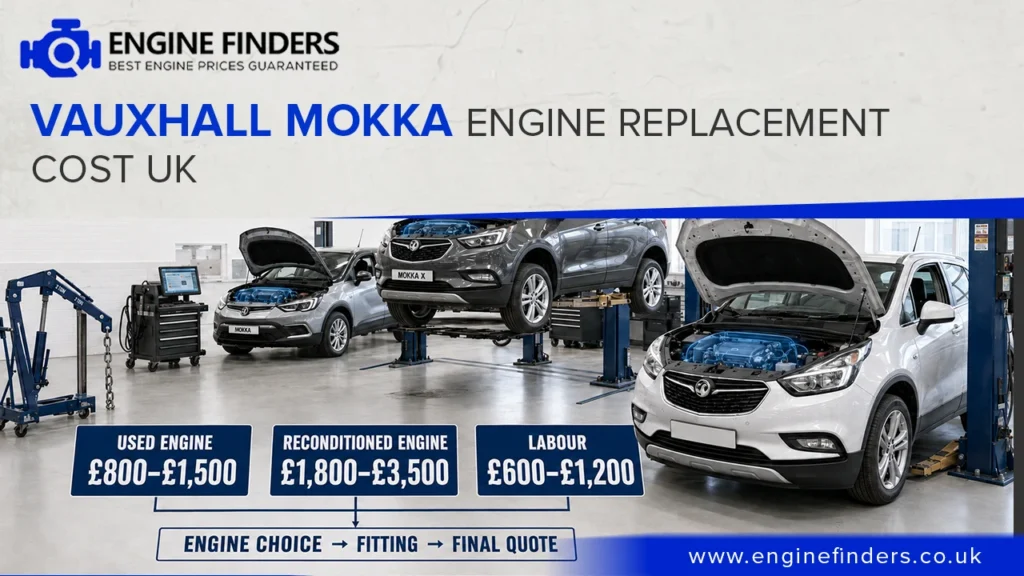
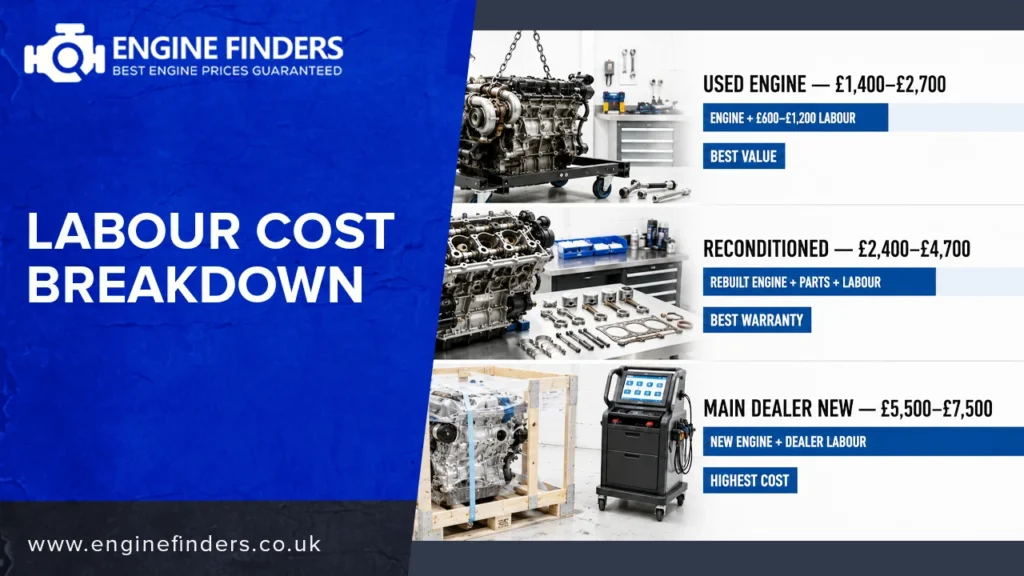
The most cost-effective approach for most Mokka owners is a used low-mileage engine (£800 to £1,500) plus labour (£600 to £1,200), totalling £1,400 to £2,700. A reconditioned engine (£1,800 to £3,500) offers greater peace of mind with a warranty but pushes the total to £2,400 to £4,700. Main dealer new engine replacement can exceed £6,500.
Engine Finders is a price comparison platform, not a direct engine seller. Final pricing, warranty terms, and availability vary by vetted UK supplier. Professional diagnosis is recommended before purchasing any replacement engine.
Vauxhall Mokka Engine Overview
The Vauxhall Mokka has been sold in the UK across three generations:
| Generation | Years | Key Petrol Engines | Key Diesel Engines |
|---|---|---|---|
| Mk1 (J13) | 2012–2016 | 1.4 Turbo (A14NET) – 140 PS | 1.7 CDTi, 1.6 CDTi |
| Mokka X | 2016–2019 | 1.4 Turbo (B14NET) – 140 PS | 1.6 CDTi |
| Mk2 | 2020–present | 1.2 Turbo, 1.2 Hybrid | – |
The 1.4-litre turbo petrol (engine codes A14NET and B14NET) is by far the most common engine in UK Mokkas and accounts for the majority of replacement enquiries. It is a 1,364 cc four-cylinder turbocharged unit producing 140 PS (103 kW) and 200 Nm of torque, with a 9.5:1 compression ratio. The same engine is fitted to the Vauxhall Astra, so its failure patterns are well documented across both models.
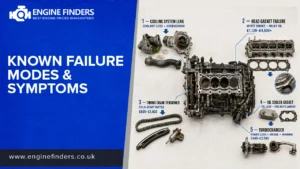
Known Failure Modes & Symptoms
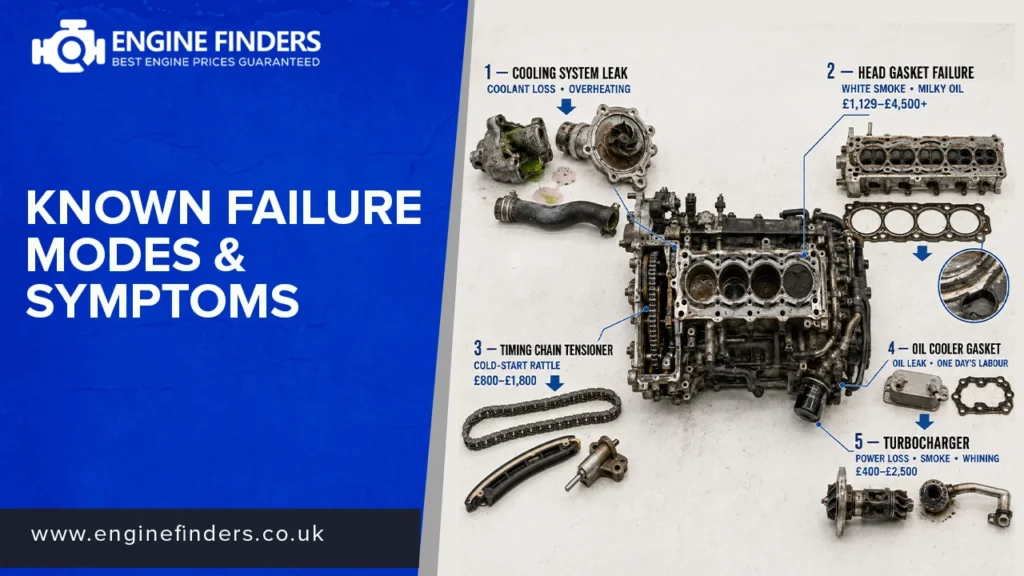
1. Head Gasket Failure (1.4 Turbo)
The most significant and costly issue affecting the Mokka 1.4 Turbo.
Symptoms: Engine overheating, coolant loss, white smoke from exhaust, milky substance on oil cap or dipstick, poor engine performance, and in severe cases, complete engine seizure.
Cause: The 1.4 Turbo engine has several cooling system weak points. Water pump failure, thermostat housing cracks, and deteriorating coolant hoses can cause gradual coolant loss. If not caught early, the engine overheats and the head gasket fails. A known issue is airlocks forming in the cooling system, which causes localised overheating and “cooks” the head gasket.
UK workshop consensus: This typically occurs between 80,000 and 130,000 km (50,000 to 80,000 miles). Head gasket replacement alone costs approximately £1,129. However, if the cylinder head is warped or cylinder bores are scored, total repair costs can reach £3,500 to £4,500. Some owners have been quoted £6,500+ for a complete engine replacement.
Owner-reported example: A Mokka owner reported their 2017 Mokka X 1.4 with just 60,000 miles was diagnosed with head gasket failure. Another reported an RAC diagnosis confirming head gasket failure requiring a new engine at approximately £6,500.
2. Timing Chain Tensioner Wear
Symptoms: Rattling noise from the engine on cold start lasting a few seconds, poor engine performance, and in severe cases, engine management lights.
Cause: The hydraulic timing chain tensioner allows oil to drain back into the oil pan when the engine is off. On cold start, it takes time for oil pressure to build and tension the chain properly, causing a distinctive rattle. Extended oil change intervals or incorrect oil specification accelerate wear.
Repair cost: A full timing chain, guides, tensioner, and sprocket replacement costs £800 to £1,200 at an independent garage or £1,200 to £1,800 at a Vauxhall dealer. Some owners have been quoted over £2,000.
Prevention: Use only Dexos1 Generation 2 5W-30 oil and change it every 10,000 miles or annually.
3. Oil Cooler Gasket Failure
Symptoms: Oil leaks visible between the engine and oil cooler, oil loss, and potential engine overheating.
Cause: The oil cooler (heat exchanger) gaskets on 1.4-litre petrol engines fail over time, causing oil or coolant leaks at the cooler mounting face.
Repair cost: This is an expensive fix because the turbo and approximately 30% of the engine components need dismantling to access the oil cooler, roughly a day’s work. The OEM gasket part costs nearly £200 on top of labour.
4. Turbocharger Failure
Symptoms: Loss of power, increased exhaust smoke (often blue/white), whining noise from the turbo, and delayed turbo response.
Cause: Oil starvation (blocked or restricted oil feed pipe) or general bearing wear. The turbo actuator can also stick from carbon buildup.
Repair cost: Turbo replacement typically costs £400 to £700, though a full turbocharger failure can reach £1,000 to £2,500.
5. EGR Valve Issues
Symptoms: Reduced engine performance, increased emissions, engine management light illumination, rough idle, and stalling.
Cause: Carbon buildup in the EGR valve, particularly in diesel models. Common fault code P0402 (EGR excessive flow) is frequently reported.
Repair cost: EGR valve replacement or refresh costs £180 to £250.
Engine Replacement Costs (UK Market, 2026)
Cost Breakdown by Engine Type
| Engine | Used (£) | Reconditioned (£) | Labour (£) | Total Estimate (£) |
|---|---|---|---|---|
| 1.4 Turbo (A14NET/B14NET) | 800–1,500 | 1,800–3,500 | 600–1,200 | 1,400–4,700 |
| 1.6 CDTi Diesel | 700–1,200 | 1,500–2,800 | 600–1,200 | 1,300–4,000 |
| 1.2 Turbo (Mk2) | 1,000–1,800 | 2,000–3,800 | 700–1,400 | 1,700–5,200 |
Notes:
- A replacement A14NET engine averages £3,353 in good condition, with new or reconditioned units up to £5,000.
- General engine replacement for Vauxhall models ranges £4,500 to £6,000 for a blown engine. See our full engine replacement cost guide for how the Mokka compares to other UK models.
- Main dealer replacement costs are significantly higher. One Mokka owner reported a £7,000 bill for a 1.4 Turbo engine replacement.
Browse used Vauxhall engines and reconditioned Vauxhall engines from vetted UK suppliers with verified mileage and warranty terms.
Labour Cost Breakdown
| Component | Estimated Cost | Notes |
|---|---|---|
| Engine removal & refitting | £600–£1,200 | 10–15 hours at £50–£80/hour |
| Main dealer labour | £100+ / hour | Significantly higher rates |
| Independent specialist | £50–£80 / hour | More cost-effective |
| Mobile mechanic | £40–£60 / hour | Limited to simpler replacements |
Regional Variations
Labour rates vary significantly across the UK:
- London & South East: £70 to £100+ per hour
- Midlands & North West: £50 to £75 per hour
- Scotland & Wales: £45 to £70 per hour
- Main dealers nationwide: £100+ per hour
Our engine replacement labour cost guide breaks down regional rates and garage types in detail.
VAT: All costs should be assumed exclusive of VAT (20%) unless stated otherwise. Always confirm whether quoted prices include VAT.
Engine Rebuild vs. Replacement
| Factor | Rebuild | Replacement |
|---|---|---|
| Cost | £1,500–£3,500+ | £1,400–£5,000+ |
| Time | 2–4 weeks | 2–5 days |
| Warranty | Limited (typically 6–12 months) | Varies (12 months typical for reconditioned) |
| Best for | Minor damage, good core engine | Catastrophic failure, scored bores, warped head |
| Risk | Hidden damage may emerge | Known condition of replacement engine |
When to choose rebuild:
- Head gasket failure caught early (no bore scoring or head warping)
- Timing chain tensioner wear only (no valve damage)
- Isolated oil cooler gasket failure
When to choose replacement:
- Engine seized or catastrophic bottom-end failure
- Scored cylinder bores from overheating
- Warped cylinder head
- Repair costs exceed 60 to 70% of replacement cost
Our engine repair versus replacement guide walks through this financial decision in full.
UK-Specific Considerations
MOT & Emissions
- 1.4 Turbo (Euro 5): Generally passes MOT emissions tests if EGR and catalytic converter are functioning
- 1.6 CDTi (Euro 6): Must pass diesel particulate filter (DPF) and NOx tests
- 1.2 Turbo (Euro 6d): Compliant with latest emissions standards
ULEZ & Clean Air Zones
- Euro 5 petrol (1.4 Turbo): Compliant with London ULEZ
- Euro 6 diesel (1.6 CDTi, 2016-on): Compliant with London ULEZ
- Euro 5 diesel (pre-2016 1.7 CDTi): NOT compliant, so the daily charge applies
Check the GOV.UK clean air zones service for current ULEZ boundaries and charges.
Recalls
Stellantis issued a recall in 2026 affecting 44,000 UK vehicles including the Vauxhall Mokka (2023 to 2026 models with the 1.2-litre 48V mild-hybrid engine) due to a potential fire risk. Check the DVSA recall database for your specific vehicle before purchase.
Practical Takeaways
Which Mokka Engine Should You Choose?
| Use Case | Recommendation |
|---|---|
| Short journeys / city driving | 1.2 Turbo (Mk2) – Euro 6d compliant, lower running costs |
| Mixed use / family car | 1.4 Turbo – if well-maintained with documented cooling system service |
| High mileage / motorway | 1.6 CDTi diesel – better fuel economy, generally more reliable |
| ULEZ daily driver | 1.2 Turbo (petrol) or Euro 6 diesel (2016+) |
Engines to Approach with Caution
- 1.4 Turbo (A14NET/B14NET) pre-2016: Higher risk of cooling system issues and head gasket failure
- High-mileage 1.4 Turbo without service history: Timing chain tensioner wear likely
- Any Mokka with unexplained coolant loss: Red flag for impending head gasket failure
Red Flags When Buying a Used Mokka
- Coolant loss: check expansion tank levels and for oil contamination
- Cold-start rattle lasting more than a few seconds: timing chain tensioner wear
- Mayonnaise-like substance on oil cap: head gasket failure
- No documented service history, especially oil changes
- Check engine light with EGR or turbo-related codes
Our guide to buying a used engine safely covers every check to make before committing.
When to Use EngineFinders
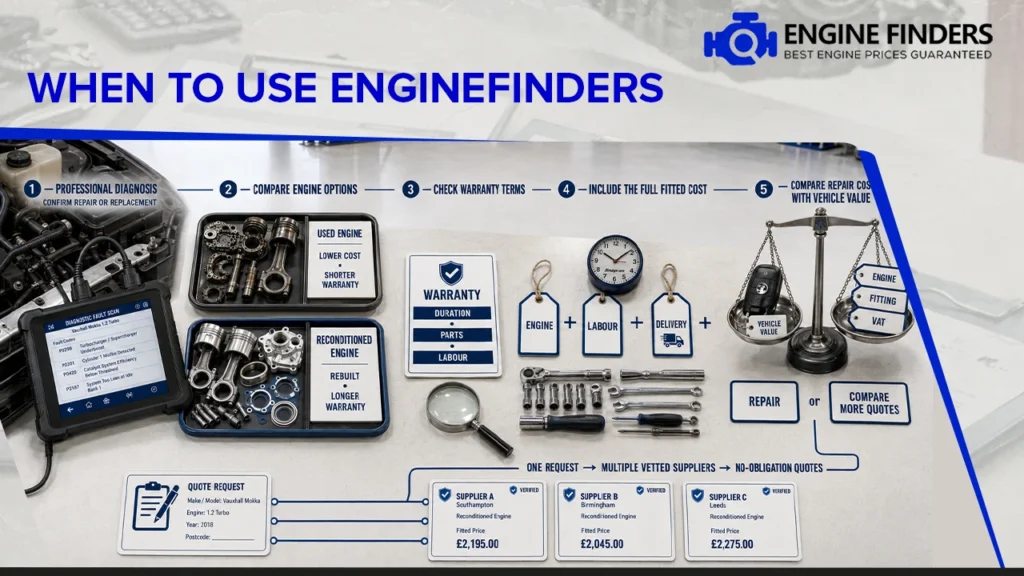
If you are facing a Mokka engine replacement, Engine Finders connects you with vetted UK suppliers for no-obligation quotes. Compare prices on used and reconditioned Mokka engines from trusted suppliers across the UK.
For those weighing up used vs reconditioned options, our reconditioned versus new engine guide provides detailed advice on warranty terms and supplier selection.
Frequently Asked Questions
How much does a Vauxhall Mokka engine replacement cost in the UK?
A Vauxhall Mokka engine replacement typically costs £1,400 to £5,000 in the UK. Used engines range £700 to £1,500, reconditioned units £1,500 to £3,500, with labour adding £600 to £1,200. The 1.4 Turbo is the most common and most expensive to replace. Compare quotes from vetted UK suppliers for no-obligation pricing.
What are the signs of head gasket failure on a Vauxhall Mokka 1.4 Turbo?
Symptoms include engine overheating, coolant loss, white smoke from the exhaust, and a milky substance on the oil cap or dipstick. The 1.4 Turbo is prone to cooling system airlocks that cause localised overheating and head gasket failure. Prompt diagnosis is essential to avoid costly engine replacement.
Is the Vauxhall Mokka 1.4 Turbo engine reliable?
The 1.4 Turbo has a mixed reputation. It is a responsive and economical engine but has well-documented cooling system weaknesses that can lead to head gasket failure. With regular maintenance, including annual coolant system checks and oil changes every 10,000 miles, many examples exceed 100,000 miles.
Should I rebuild or replace my Mokka engine?
Rebuild if the damage is isolated (e.g., head gasket caught early, timing chain tensioner) and costs £1,500 to £3,500. Replace if there is catastrophic failure, scored cylinder bores, or a warped head. Replacement with a used engine (£1,400 to £2,700 total) is often more cost-effective than a major rebuild.
How long does a Vauxhall Mokka engine replacement take?
A professional engine replacement typically takes 2 to 5 days, depending on the garage’s workload and parts availability. Main dealers may take longer due to booking lead times. Independent specialists often complete the job within 3 days. Always confirm timescales before committing.
Which Mokka engine is most reliable?
The 1.6 CDTi diesel is generally considered more reliable than the 1.4 Turbo, particularly for high-mileage use. However, it has its own issues including EGR valve problems and turbocharger wear. The newer 1.2 Turbo in Mk2 models has fewer reported issues but is still relatively new to the market.