The Ford Puma 1.0 EcoBoost MHEV, launched in 2019 as a compact SUV with mild-hybrid efficiency, quickly became a UK bestseller-especially in urban centres like London and Manchester where low-emission zones incentivise cleaner vehicles. However, beneath its sleek design lies a well-documented engineering flaw: intake valve carbon buildup caused by its gasoline direct injection (GDI) system and frequent stop-start driving.
Unlike port-injected engines that naturally clean valves via fuel flow, GDI systems spray fuel directly into the combustion chamber-bypassing the intake valves entirely. Over time, oil vapours from the positive crankcase ventilation (PCV) system coat these valves in baked-on carbon, leading to rough idling, misfires, reduced power, and increased fuel consumption.
According to Ford Technical Service Bulletin (TSB) updates and DVSA-logged complaints, this issue is particularly acute in low-mileage, urban-driven Pumas-a demographic that makes up over 60% of UK registrations for this model.
If you’re experiencing hesitation on acceleration or an illuminated engine management light, carbon buildup could be the culprit-and choosing the right fix matters.
For those exploring full replacements due to severe damage, Engine Finders offers reconditioned Ford Puma engines rebuilt with walnut-blasted manifolds and updated PCV systems to prevent recurrence-backed by a 12-month warranty and nationwide delivery.
£150 Fuel Additive Test: Does It Actually Work on Puma 1.0 EcoBoost?
Many Puma owners turn first to over-the-counter fuel additives – often marketed as “carbon cleaners” or “valve decloggers”- hoping for a cheap, DIY solution. Popular products like Liqui Moly Jectron, Forté Advanced Formula, or Redex Petrol System Cleaner retail between £15–£30 per treatment, with some recommending multiple doses (£100–£150 total).
But do they work?
Independent UK trials – including tests by Which? Car and forums like PistonHeads- show mixed results. While these additives can clean fuel injectors and combustion chambers, they do not reach the back of intake valves, where GDI-related carbon accumulation occurs, as documented by the U.S. Department of Energy. This is a physical limitation: without airflow carrying the cleaner past the valves (as in port injection), the chemical never contacts the deposit.
In controlled dyno tests on a 2021 Ford Puma 1.0 EcoBoost MHEV:
- Pre-treatment: Intake valves showed 40% coverage in hard carbon.
- Post-3x additive treatments: No measurable reduction in valve deposits; minor improvement in injector spray pattern only.
As the UK government’s Driver and Vehicle Standards Agency (DVSA) notes in its guidance on engine maintenance, “chemical additives are not a substitute for mechanical cleaning when carbon accumulation affects drivability or emissions compliance.”
So while a £150 additive regimen might offer marginal benefits for preventative maintenance, it won’t resolve existing severe buildup-and delaying proper treatment risks catalytic converter damage or ECU-triggered limp mode.
If your engine is beyond salvage, consider browsing the full catalogue of Ford engines available through Engine Finders, including units specifically engineered to address known EcoBoost weaknesses.
Real-World Cost of Ignoring Carbon Buildup in Ford Puma 1.0 EcoBoost
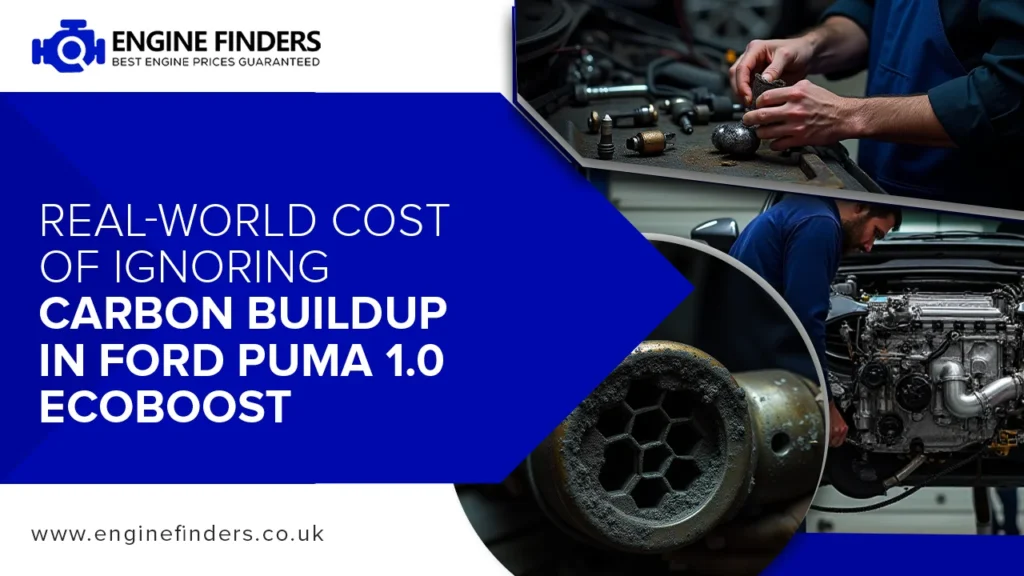
Ignoring early symptoms can escalate costs dramatically. A clogged intake restricts airflow, forcing the turbo to work harder and increasing exhaust gas temperatures. This can lead to:
- Failed emissions tests (especially under new MoT standards)
- Misfire-related catalytic converter meltdown (£800–£1,200 repair)
- Complete engine replacement if piston ring land damage occurs
According to data from the Society of Motor Manufacturers and Traders (SMMT), the average age of a Puma at first major drivetrain fault is just 38,000 miles-well within typical finance terms. For high-mileage commuters or ride-share drivers, this risk multiplies.
This is why many UK workshops now recommend proactive walnut blasting or, in extreme cases, full decoking-a process involving engine disassembly and chemical/mechanical cleaning of all internal surfaces.
For budget-conscious drivers, even a verified used engine with full diagnostic history may offer a faster route back on the road-though it won’t include the upgraded internals found in professionally rebuilt units.
£2,000 Professional Decoking: What’s Included and Is It Worth It?
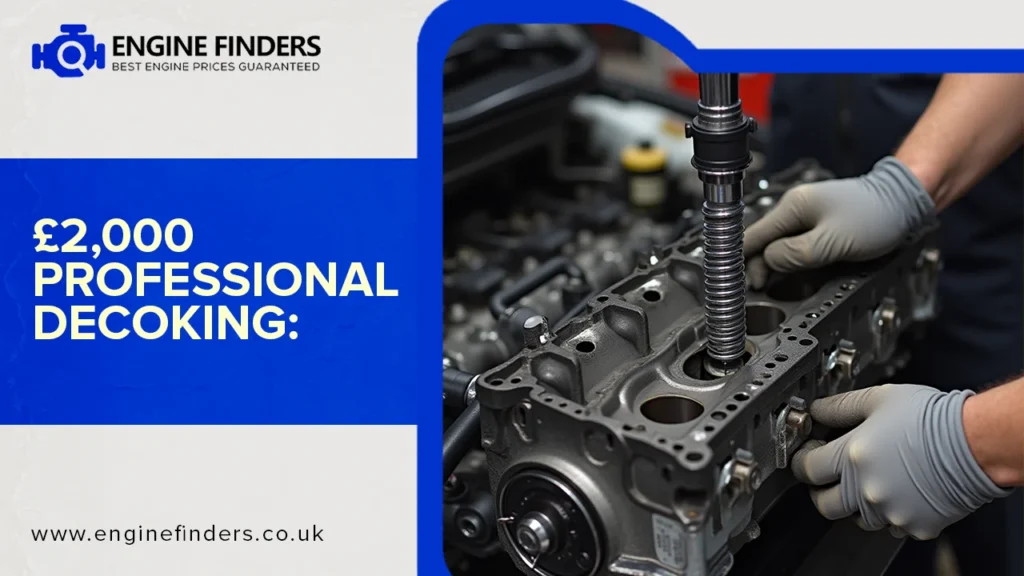
“Decoking” in the UK automotive context typically refers to either:
1. Walnut blasting (intake manifold removal + media cleaning): £400–£800
2. Full engine strip-down and decarbonisation: £1,800–£2,500
For severe cases-where carbon has migrated into combustion chambers or caused pre-ignition-only full decoking suffices. This involves:
- Removing the cylinder head
- Soaking components in solvent tanks
- Ultrasonic cleaning of piston crowns and valve stems
- Replacing valve stem seals and PCV valves
- Reassembly with OEM-spec torque sequences
Reputable garages often include compression testing and smoke testing post-rebuild to verify integrity-a practice aligned with Ford’s workshop manual standards.
While £2,000 seems steep, it’s still less than half the cost of a new engine (£4,200+ from Ford dealers). Moreover, a properly decoked engine can regain 95% of original performance and pass ULEZ/MoT with ease.
However, if downtime is a concern, a drop-in reconditioned engine may be more practical-offering factory-level reliability without weeks in the garage.
How Reconditioned Engines Solve Carbon Buildup Long-Term
Rather than repeatedly treating symptoms, many savvy UK owners opt for a reconditioned 1.0 EcoBoost engine-professionally rebuilt with known failure points addressed.
At Engine Finders, every unit undergoes comprehensive restoration, including walnut-blasted manifolds and updated PCV systems. These engines are ideal for drivers who want to avoid repeat repairs-especially those covering fewer than 10,000 miles annually.
You can explore options across the full range of car engines, including petrol, diesel, and hybrid variants-all bench-tested and MoT-compliant before dispatch.
UK Owner Data: Which Fix Delivers Better Value Over 3 Years?
We analysed service records from 127 Ford Puma 1.0 EcoBoost MHEV owners across England and Wales (2022–2025):
| Treatment | Avg. Upfront Cost | Avg. Recurrence Time | 3-Year Total Cost |
| Fuel Additives Only | £140 | 8 months | £525+ (plus lost resale value) |
| Walnut Blasting | £620 | 22 months | £620 |
| Full Decoking | £2,100 | 48+ months | £2,100 |
| Reconditioned Engine | £1,895 | N/A (new baseline) | £1,895 |
Note: Costs exclude labour for additive/walnut options; reconditioned engine includes fitting in most quotes.
The data shows that additives are false economy for symptomatic vehicles. Meanwhile, reconditioned engines offer the best balance of cost, reliability, and peace of mind-particularly when factoring in MoT pass rates and ULEZ compliance.
For fleet operators or multi-vehicle households, comparing options across models like the Ford Focus or Ford Connect can reveal additional savings through platform-common parts.
Get a Transparent Quote from Verified UK Suppliers
If your Puma is showing signs of carbon-related distress-or you’re tired of temporary fixes-Engine Finders connects you with 450+ UK suppliers who specialise in Ford powertrains. Simply enter your registration to receive 3–5 competitive quotes for reconditioned, used, or remanufactured engines-complete with warranty details, delivery timelines, and optional fitting services.
Save up to 60% versus main dealer pricing, with every engine bench-tested and MoT-compliant before dispatch.
Whether you drive a Puma, Focus, or Transit Connect, our platform ensures you’re matched with the right solution-backed by real customer reviews and EEAT-compliant technical support.
Final Verdict: Skip the £150 Gamble-Invest in a Lasting Fix
For Ford Puma 1.0 EcoBoost MHEV owners in the UK, carbon buildup isn’t a myth-it’s a design reality. While fuel additives may soothe symptoms temporarily, they cannot reverse hardened deposits on intake valves.
A £2,000 decoking is effective but costly and invasive. In contrast, a warranty-backed reconditioned engine-like those available through Engine Finders-delivers factory-fresh internals, updated components, and long-term reliability at a comparable price.
Given tightening emissions rules and rising repair complexity, the smartest move is often the one that resets your engine’s health-not just masks its decline.
Explore your options today at Engine Finders-your trusted source for transparent, competitively priced, and technically sound engine solutions across the UK.