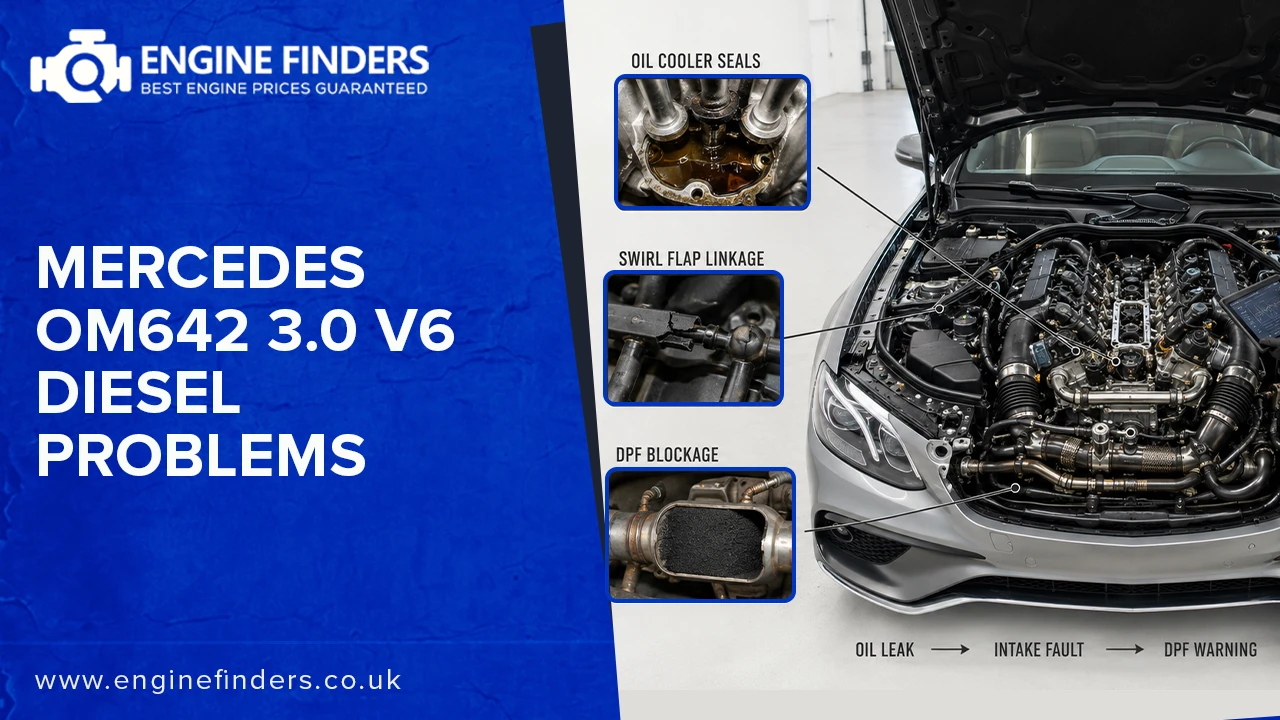
The Mercedes-Benz OM642 3.0L V6 diesel is widely respected for its smooth power delivery and widespread use across the brand’s premium lineup. However, UK owners must be aware of three well-documented vulnerabilities: degrading oil cooler seals, brittle swirl flap linkages, and Diesel Particulate Filter (DPF) clogging. If ignored, these specific faults can escalate from minor maintenance items into catastrophic engine failures or MOT rejections. Understanding the symptoms and indicative repair costs is essential for protecting your vehicle’s value and longevity.
Quick Summary: OM642 3.0 V6 Diesel at a Glance
- Reliability: Generally robust core mechanics, but prone to specific, predictable peripheral component failures.
- Most Common Faults: Oil cooler seal leaks, swirl flap actuator/linkage breakage, and DPF/EGR carbon buildup.
- Indicative UK Repair Costs: £350–£600 for oil cooler seals; £250–£500 for swirl flap repairs; £800–£1,500 for DPF replacement.
- Replacement Cost: A fully fitted reconditioned or low-mileage used OM642 typically ranges from £3,500 to £5,500, depending on the vehicle model.
- Key Advice: Address oil cooler seals preventatively around 80,000–100,000 miles to avoid coolant contamination and severe internal damage.
Understanding the Mercedes OM642 3.0 V6 Diesel
The OM642 is a 3.0-litre, 60-degree V6 turbocharged diesel engine featuring a cast-iron block and aluminium cylinder heads. Introduced in the mid-2000s, it was designed to replace the older five-cylinder OM612 and OM647 units, offering improved refinement, lower emissions, and better fuel economy. For official technical specifications, owners can refer to the Mercedes-Benz UK owner resources.
It is crucial to note that not all OM642 engines are identical. The engine family includes numerous variants distinguished by their specific engine codes, power outputs, and emissions hardware. For a broader look at Mercedes diesel longevity, reviewing the Mercedes engine longevity: OM651 vs OM642 guide provides valuable context on how this V6 compares to its four-cylinder successor.
Engine Codes and Typical Applications
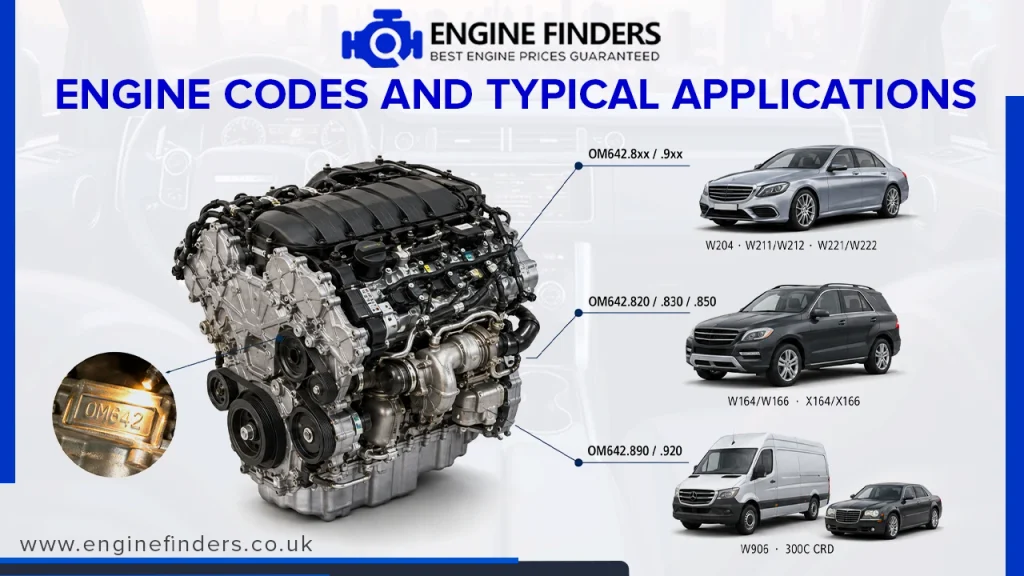
The OM642 was fitted to a vast array of Mercedes-Benz vehicles, as well as select Chrysler and Jeep models. Common engine codes include:
- OM642.8xx / .9xx series: Found in the C-Class (W204), E-Class (W211, W212), and S-Class (W221, W222).
- OM642.820 / .830 / .850: Commonly installed in the M-Class (W164, W166) and GL-Class (X164, X166).
- OM642.890 / .920: Utilised in commercial applications like the Sprinter (W906) and the Chrysler 300C CRD.
If you are researching a specific model, exploring dedicated Mercedes-Benz engine pages can help you identify the exact variant fitted to your chassis.
The Big Three: Common OM642 Failures Explained
While the core mechanical design of the OM642 is sturdy, its peripheral components are susceptible to wear, particularly under UK driving conditions characterized by frequent short journeys and stop-start traffic.
1. Oil Cooler Seal Degradation (The Silent Killer)
The most notorious weakness of the OM642 is the failure of the rubber seals on the engine oil cooler. Over time, heat cycles cause these seals to harden and perish. When they fail, engine oil and coolant begin to mix.
Symptoms include a milky residue on the oil filler cap, unexplained coolant loss, or white smoke from the exhaust. If left unaddressed, coolant can enter the oil galleries, leading to inadequate lubrication, spun bearings, and catastrophic engine seizure. Proactive replacement of the seal kit is a highly recommended preventative maintenance step.
2. Swirl Flap Linkage and Actuator Failure
The OM642 intake manifold features swirl flaps designed to improve low-end torque and reduce emissions by controlling airflow. These flaps are connected by plastic linkage rods and controlled by an electronic actuator.
The plastic rods are prone to becoming brittle and snapping, while the actuator motor can fail. This triggers a check engine light, puts the vehicle into limp mode, and causes a noticeable loss of power. While some owners consider a “swirl flap delete,” this modification can have adverse effects on MOT emissions testing and should be approached with caution.
3. DPF and EGR System Clogging
The Diesel Particulate Filter (DPF) traps soot to meet strict Euro emissions standards. The Exhaust Gas Recirculation (EGR) system redirects exhaust gas to lower combustion temperatures. Both systems are highly susceptible to clogging if the vehicle is predominantly used for short, urban trips where the DPF cannot reach the high temperatures required for active regeneration.
Symptoms include an illuminated DPF warning light, reduced engine performance, and excessive black smoke. In severe cases, restricted exhaust flow can cause excessive backpressure, damaging the turbocharger. For more insights on modern diesel failures, our guide on Mercedes GLE 350d OM651 engine failure highlights similar DPF vulnerabilities in newer models.
Indicative UK Repair and Replacement Costs (2026)
Understanding the financial implications of these faults is critical for budgeting. The following figures represent indicative UK market averages based on current specialist garage and supplier pricing for 2026.
- Oil Cooler Seal Replacement: Parts cost approximately £30–£60. However, labour is intensive, often requiring the removal of the intake manifold and turbocharger. Total indicative cost: £350–£600.
- Swirl Flap Repair: A replacement linkage rod set and actuator typically costs £40–£100 in parts. With labour, the total indicative cost ranges from £250–£500.
- DPF Replacement: A new OEM-spec DPF, including labour, diagnostics, and forced regeneration, typically costs between £800 and £1,500.
- Full Engine Replacement: If catastrophic failure occurs, sourcing a used Mercedes OM642 engine or a reconditioned unit is often more economical than a top-end rebuild. Fully fitted replacement costs generally range from £3,500 to £5,500, depending on the vehicle’s chassis complexity and the supplier’s warranty terms.
For a detailed breakdown of overall expenses, refer to our comprehensive Mercedes engine replacement cost UK guide.
Repair vs. Replacement: Making the Right Decision
Deciding whether to repair or replace a failing OM642 depends on several factors beyond the immediate repair bill. You must evaluate the vehicle’s current market value, its overall mechanical condition (including the gearbox and suspension), and its MOT history.
A useful rule of thumb is to compare the total repair cost against the vehicle’s private-sale value. If the repair bill exceeds 50% of the car’s value, or if the engine has already suffered secondary damage, investing in a replacement engine often provides better long-term reliability and financial sense. You can explore this decision further in our engine replacement vs rebuild comparison.
OM642 Engine Variants Comparison Table
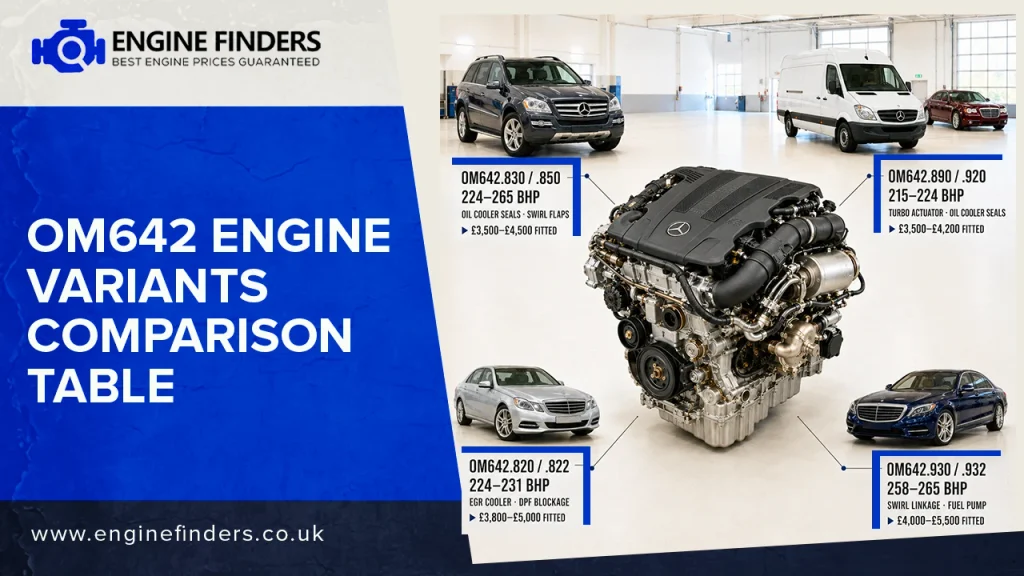
To help you identify your specific engine and its common traits, refer to the table below.
| Engine Code | Typical Applications | Power Output | Common Vulnerabilities | Indicative UK Replacement Cost (Fully Fitted) |
| OM642.830 / .850 | M-Class (W164), GL-Class (X164) | 224–265 bhp | Oil cooler seals, Swirl flaps | £3,500 – £4,500 |
| OM642.820 / .822 | E-Class (W211, W212), C-Class (W204) | 224–231 bhp | EGR cooler leaks, DPF clogging | £3,800 – £5,000 |
| OM642.890 / .920 | Sprinter (W906), Chrysler 300C CRD | 215–224 bhp | Turbo actuator, Oil cooler seals | £3,500 – £4,200 |
| OM642.930 / .932 | S-Class (W221), E-Class (W212) | 258–265 bhp | Swirl flap linkage, High-pressure fuel pump | £4,000 – £5,500 |
Note: Prices are indicative for a supply-and-fit service using a quality reconditioned or low-mileage used engine, inclusive of VAT, but excluding ancillary repairs like clutch or flywheel replacement.
How to Extend the Life of Your OM642 Engine
Proactive maintenance is the most effective strategy for mitigating OM642 problems.
- Preventative Seal Replacement: Consider replacing the oil cooler seals as a preventative measure between 80,000 and 100,000 miles, regardless of visible leaks.
- Active Regeneration: Ensure the vehicle regularly completes motorway journeys of at least 20–30 minutes to allow the DPF to reach optimal temperatures and burn off accumulated soot.
- Quality Fluids: Always use Mercedes-Benz approved low-SAPS (Sulphated Ash, Phosphorus, and Sulphur) engine oil, such as 5W-30 or 0W-30, to protect the DPF and EGR systems.
- Regular Inspections: Have a specialist check the swirl flap linkage and actuator during routine servicing to catch early signs of plastic degradation.
For owners seeking the most dependable options across the brand, our analysis of the most reliable Mercedes-Benz engines offers further strategic buying advice.
When to Consider a Used or Reconditioned Replacement
If your OM642 has suffered catastrophic failure, sourcing a replacement is often the most practical solution. A professionally reconditioned engine undergoes a rigorous teardown, cleaning, and replacement of all wearable components, including the notorious oil cooler seals and swirl flap linkages, effectively resetting the engine’s reliability clock.
Alternatively, a low-mileage used engine can be a cost-effective choice, provided it comes with a verifiable service history and a robust warranty.
If you are ready to explore your options, you can get a quote from our vetted network of UK engine specialists. We connect you with suppliers who offer transparent pricing, comprehensive warranties, and nationwide delivery or fitting services, ensuring you receive an engine replacement cost UK guide tailored to your specific vehicle.
Enter Your REG to Get a Free Engine Quote

Frequently Asked Questions
Is the Mercedes OM642 3.0 V6 diesel reliable?
Yes, the core mechanical design of the OM642 is robust and capable of high mileage. However, its peripheral components, specifically the oil cooler seals and swirl flap linkages, are known weak points that require proactive maintenance to prevent severe engine damage.
What are the symptoms of a failing OM642 oil cooler?
The primary symptoms include a milky, mayonnaise-like substance on the oil filler cap or dipstick, unexplained drops in coolant levels, and potentially white smoke from the exhaust. Immediate inspection is required to prevent coolant from contaminating the engine oil.
How much does it cost to replace an OM642 engine in the UK?
Based on 2026 UK market data, a fully fitted replacement using a quality reconditioned or low-mileage used OM642 engine typically costs between £3,500 and £5,500. This range includes the engine unit, VAT, and standard fitting labour.
Can I delete the swirl flaps on my OM642 to prevent failure?
While physical deletion or resistor tricks are sometimes attempted to bypass swirl flap faults, this can negatively impact engine performance, increase emissions, and potentially result in an MOT failure. Repairing the linkage with updated parts is the recommended, legal approach.
Will a new OM642 engine affect my vehicle’s ULEZ compliance?
Generally, no. ULEZ compliance is tied to the vehicle’s original registration date and emissions certification. Replacing the engine with an identical, compliant unit does not alter the vehicle’s legal emissions classification. Always verify your specific vehicle via the official GOV.UK ULEZ checker.
How can I check the history of a used OM642 engine before buying?
Always request the engine’s mileage verification, a copy of the donor vehicle’s MOT history, and a detailed breakdown of the reconditioning process or warranty terms from the supplier. Avoid suppliers who cannot provide transparent, verifiable documentation.