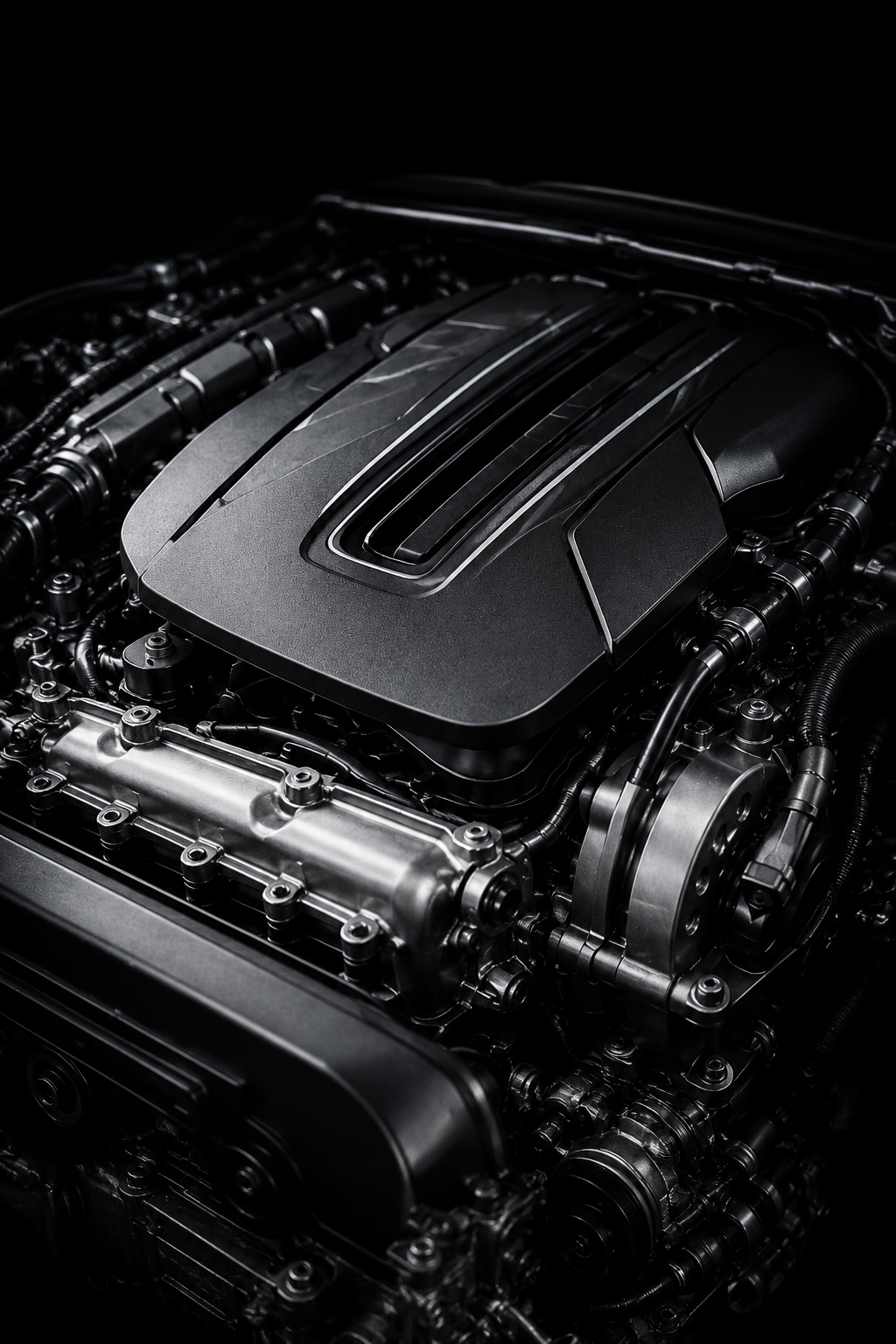
Used Engines UK- The Definitive Guide & Price Comparison

Used engines from 450+ verified UK suppliers. Every unit is mileage-verified, compression tested, and backed by a warranty. Enter your registration to see in-stock availability, pricing, and donor vehicle history - side by side.

Mileage-Verified Compression Tested Leak-Down Tested Ships 24-48h 3-12 Month Warranty ATF Licensed Suppliers

Based on anonymised data from 450+ UK suppliers. Most receive 3-5 quotes within 30-60 minutes. Free, no-obligation service.

Used engine on pallet in ATF facility

Example: Palletised used engine ready for dispatch

What Is a Used Engine? (And How It Differs from Reconditioned & New)

A used engine is a functioning unit removed from a donor vehicle at an Authorised Treatment Facility (ATF) or professional dismantler. It undergoes compression testing, oil pressure verification, and mileage cross-referencing - but is not dismantled or rebuilt. This makes it the fastest, most budget-friendly option for keeping an older vehicle on the road.

Feature Used Engine Reconditioned Engine New OEM Engine
Disassembly × Not performed ✓ Full teardown & clean N/A
Worn parts replaced × As-is (tested functional) ✓ Critical components replaced new N/A
Testing Compression, leak-down, oil pressure Bench test 24-72 hours Factory test
Warranty 3-12 months (network standard) 12-24 months Manufacturer warranty
Typical cost (engine only) £500 - £1,800 £1,200 - £4,800 £6,000 - £18,000
Lead time Ships 24-48h, delivery 1-3 days 5-10 working days Weeks to months

When a Used Engine Makes Strong Sense

  • Vehicle value: Volume brand (Ford, Vauxhall, VW, Peugeot) worth under £4,000-£5,000
  • Vehicle age: 10-18 years old and not a future classic
  • Urgency: You need the fastest possible solution (in stock now, not built to order)
  • Budget: Primary constraint - you accept a shorter warranty (3-6 months)
  • Ownership horizon: You plan to keep the car for under 2 years
  • Donor availability: The engine is common (e.g., Ford 1.6 Ti-VCT, Toyota 1.33 VVT-i)

Where Our Suppliers' Used Engines Come From - and How They're Verified

Legitimate used engines come from regulated sources. Every supplier in our network operates within UK environmental and automotive regulations.

Legitimate Sources

  • Authorised Treatment Facilities (ATFs) - Licensed by the Environment Agency under the End-of-Life Vehicles Regulations. [Gov.uk reference]
  • Insurance write-offs - Category S or N where the engine bay was untouched (side/rear impact, theft recovery with undamaged engine)
  • Fleet vehicles - Retired on schedule due to age/mileage, not mechanical failure
  • Private vehicles - Scrapped due to corrosion, body damage, or non-engine mechanical failure

Testing You Can Expect

  • Manual compression test - Each cylinder measured individually. Readings should be within 10-15% across all cylinders.
  • Leak-down test - Measures combustion chamber sealing (increasingly common among quality suppliers)
  • Oil pressure verification - Confirms bearing health and oil pump function
  • Cold start video - Many suppliers provide running footage on request
  • Mileage cross-check - Against DVLA records and service history where available

Questions to Ask Before You Buy

  • What was the donor vehicle and why was it scrapped?
  • Can I see the compression figures?
  • Are ancillaries (turbo, alternator, starter, injectors) included?
  • Is there a video of the engine running?
  • What warranty is included and what exactly does it cover?
  • What is the engine number - does it match the donor V5C?

Regulatory note: Under the End-of-Life Vehicles Regulations 2003 (SI 2003/2635), ATFs must hold an environmental permit, maintain depollution records, and issue Certificates of Destruction (CoD) for vehicles they process. Engine numbers are recorded and traceable. Suppliers outside this framework may be operating illegally.

View legislation →

Used Engines for Every Major UK Brand - from Fiesta to X5

Based on actual enquiry data from our network. Volume brands listed first - this is where used engines make the most financial sense.

Also Covered

Common UK Engine Failures That Drive Used Engine Demand

Understanding why engines fail helps you ask the right questions and avoid inheriting the same problems. Each entry below is based on real failure patterns observed across our network of 450+ UK suppliers.

Real workshop data UK-wide supplier patterns Used vs recon context
Ford 1.0 EcoBoost

Wet Belt Degradation

One of the most searched used engines in the UK. Demand has increased approximately 23% year-on-year according to network data.

M1DA / M1DD / M2DA Demand +23% YoY

What Fails

The 1.0 EcoBoost uses a wet belt, a rubber timing belt that runs inside the engine oil. Over time, typically 60,000 to 100,000 miles or 6 to 10 years, the belt degrades and sheds rubber particles into the oil. Those particles block the oil pickup strainer, leading to oil starvation, turbo failure, and eventually engine seizure.

Why It Matters

Many used 1.0 EcoBoost engines are sold because the original owner saw oil pressure warnings or heard early signs of trouble. Without proper testing, including oil pressure checks and sump inspection, you can buy an engine that fails within weeks.

What to Check

  • Oil service history and whether the correct Ford 5W-20 oil was used.
  • Oil pressure test results, especially anything below 1.5 bar at hot idle.
  • Sump inspection for belt debris, which remains the gold standard check.
  • Timing belt replacement evidence within the last 20,000 miles.

Demand Impact

Donor mileage typically sits between 40,000 and 90,000 miles. Demand exceeds supply for low-mileage units, average dispatch is 24 to 36 hours, and common donor vehicles include Fiesta, Focus, B-Max, EcoSport, and Transit Courier.

BMW N47 2.0 Diesel

Timing Chain Failure

The most discussed diesel engine failure in BMW history. It affects 1, 3, and 5 Series as well as X1 and X3 models from roughly 2007 to 2014.

Rear-mounted chain Recon often wins

What Fails

The N47 timing chain sits at the rear of the engine between engine and gearbox. Chain guide wear causes stretch, and the early warning is usually a rattling noise on cold start that fades as oil pressure builds. If ignored, the chain can jump or snap and cause catastrophic valve and cylinder head damage.

Why It Matters

A significant proportion of used N47 engines come to market because the previous owner heard the rattle and chose to replace the car instead of repairing it. That means buyers can inherit an engine that is already near the end of its chain life.

What to Check

  • Cold start video for the first 2 to 3 seconds of chain noise.
  • Oil change history every 8,000 to 10,000 miles rather than BMW extended intervals.
  • Chain and guide replacement evidence within the last 40,000 miles.
  • Compression figures that are even across all four cylinders.

Demand Impact

Donor mileage usually runs from 70,000 to 130,000 miles. Supply is moderate, but good units sell fast. Average dispatch is around 48 hours, with common donors including the 320d, 520d, and X3 xDrive20d.

PSA 1.2 PureTech

Wet Belt and Brake Vacuum Failure

Affects millions of Peugeot, Citroen, Vauxhall, and DS models from roughly 2014 onward and is widely known across the trade as a problematic design.

EB2 family Safety-critical risk

What Fails

Like the Ford EcoBoost, the 1.2 PureTech uses a wet belt. Belt degradation blocks the oil pickup, and debris can also contaminate the brake vacuum pump, leading to loss of brake servo assistance. Many engines fail between 50,000 and 80,000 miles.

Why It Matters

Demand for used 1.2 PureTech engines has risen sharply, but many used units come from scrapped cars that failed because of belt issues. That means the replacement engine can already be compromised when it reaches the market.

What to Check

  • Belt replacement evidence, despite many engines failing before the official interval.
  • Oil pressure test results that rule out pickup blockage.
  • Sump inspection for belt debris.
  • Brake vacuum test in case the vacuum pump was contaminated.

Demand Impact

Donor mileage usually falls between 40,000 and 80,000 miles. Supply is tight, average dispatch is around 36 hours, and common donor vehicles include Peugeot 208, 308, and 2008, Citroen C3 and C4, and Vauxhall Corsa and Grandland.

Jaguar Land Rover Ingenium

Timing Chain and Oil Dilution

Affects Discovery Sport, Evoque, XE, XF, and F-Pace models from roughly 2015 to 2019 and remains one of the higher-risk premium diesel families.

204DTD / 204DTA Used scarce

What Fails

Ingenium diesels suffer from two linked issues: timing chain stretch, often requiring replacement as early as 60,000 to 80,000 miles, and oil dilution caused by incomplete DPF regenerations. Fuel entering the oil thins it, accelerates chain wear, and can lead to bearing failure.

Why It Matters

Used Ingenium engines are scarce and expensive relative to vehicle age because so many have failed. Good used units often command prices close to reconditioned examples, which compresses the value gap.

What to Check

  • Oil analysis, with fuel dilution ideally under 2%.
  • Timing chain replacement history before 80,000 miles.
  • Oil consumption that may point to ring or turbo wear.
  • DPF regeneration frequency, since excessive regens drive dilution.

Demand Impact

Typical donor mileage is 50,000 to 90,000 miles. Supply difficulty is very high, average dispatch is usually 72+ hours, and common donor vehicles are Evoque, Discovery Sport, XE, and XF.

Vauxhall 1.6 CDTI

Timing Chain and Oil Pickup Seal

One of the more value-sensitive replacement cases in the market, where used engines can still make sense if you verify the right evidence.

B16DTH Budget-led decision

What Fails

Chain stretch is common between 60,000 and 100,000 miles, often alongside the notorious oil pickup seal failure. That small seal can fail, cause loss of oil pressure, and quickly lead to major engine damage.

Why It Matters

Used engines are widely available, which keeps the category attractive for lower-value vehicles, but buyers still need to confirm whether the chain issue has already been addressed.

What to Check

  • Timing chain replacement history.
  • Any record of oil pressure concerns or pickup seal work.
  • Basic compression and running checks before purchase.
  • Warranty coverage that reflects the engine's age and mileage.

Demand Impact

Used units remain fairly accessible, which is why the engine stays relevant for sub-£3,000 Astras and Corsas where a recon bill may not stack up.

VW 2.0 TDI EA288

Injector Failure, DPF, and EGR Cooler

This family still appears in failure-driven searches, but compared with the engines above it remains one of the stronger used-engine cases because supply is healthy.

EA288 Healthy used market

What Fails

Injector failure can cause piston damage, while DPF problems and EGR cooler leaks are also common. Even so, EA288 units are widely available used and generally more dependable than the higher-risk engines in this library.

Why It Matters

Because supply is strong, buyers usually have more choice and less pressure to jump straight into reconditioned territory. That makes condition, mileage, and warranty the main decision points.

What to Check

  • Injector condition and any history of rough running.
  • DPF state and regeneration history where available.
  • EGR cooler leaks or contamination signs.
  • General mileage and warranty balance across multiple available units.

Demand Impact

Good used units are abundant across Golf, Passat, A3, Leon, and Octavia donors. That deeper market usually keeps pricing more stable than the Ford or JLR families.

Data sources: Anonymised enquiry data from Engine Finders network (450+ UK suppliers), SMMT registration data, and publicly available MOT failure statistics (DVSA). Failure pattern descriptions are based on aggregated industry knowledge; individual vehicles may vary.

What the UK Used Engine Market Looks Like - Proprietary Intelligence from the Engine Finders Network

Based on anonymised, aggregated data from over 450 UK suppliers. This is not publicly available elsewhere - it's the intelligence we use to help you understand real market conditions.

Supply vs Demand - Where Prices Are Rising

Ford 1.0 EcoBoost (sub-£50k miles)
Demand 123% Supply 112%

Prices increased approx 15% in last 12 months.

Land Rover Ingenium (any mileage)
Demand 131% Supply 119%

Scarcity is driving prices toward reconditioned territory.

VW 2.0 TDI EA288
Demand 112% Supply 104%

Healthy market with good used availability.

PSA 1.6 HDi DV6
Demand Stable Supply Healthy

Abundant - still one of the most available used diesels in the UK.

Average Dispatch Speeds by Engine Family (from order to dispatch)

Ford 1.0 EcoBoost24-36h
VW 2.0 TDI24-48h
BMW N4748-72h
Vauxhall 1.6 CDTI24-48h
PSA 1.6 HDi24h
Land Rover Ingenium72-96h
Ford 2.0 TDCI24-48h
Toyota D-4D24-48h

Data aggregated from confirmed orders across the Engine Finders network. Actual times vary by supplier and location.

Market Pricing Intelligence

Used Engine Pricing - Real Network Data

The figures below are derived from anonymised quote data across our network of 450+ UK suppliers for the period Q1-Q2 2026. Prices are for engine-only supply (excluding fitting) and represent the range within which 80% of quotes fall.

Engine Family Typical Mileage Warranty Network Price Range (80% of Quotes) Notes
Ford 1.0 EcoBoost 50-80k 3-6 months £750 - £1,300 Lower mileage (<50k) can exceed £1,500
Ford 2.0 TDCI 70-120k 3 months £600 - £1,000 Abundant, pricing stable
Vauxhall 1.6 CDTI 60-100k 3-6 months £650 - £1,100 Verify chain history
VW 2.0 TDI (EA288) 60-90k 3-6 months £900 - £1,500 High demand, good availability
BMW N47 70-110k 3-6 months £1,000 - £1,800 Chain history critical
PSA 1.6 HDi (DV6) 80-130k 3 months £500 - £850 Most affordable used diesel
Land Rover Ingenium 50-80k 3-6 months £2,500 - £4,000 Scarce - consider recon

Note on pricing

These figures represent the Engine Finders network average as of Q2 2026. Individual quotes vary based on mileage, included ancillaries, warranty length, and supplier location. Professional fitting typically adds £600-£1,800 depending on vehicle complexity. Always confirm what's included before purchase.

Data aggregated from confirmed orders across the Engine Finders network. Actual times vary by supplier and location.

Used Engine Codes Directory - With Sourcing Reality Checks

Your engine code matters more than the model name. Use this directory to understand what you're buying before you quote.

M1DA / M1DD / M2DAFord

1.0 EcoBoost - Fiesta, Focus, B-Max, EcoSport, Transit Courier (2012-2020)

Wet belt degradation

High demand, good units sell fast

High Demand
£750 - £1,300
40k - 90k
24 - 36 hrs
Best for

Sub-£3,000 Fiesta/Focus, short-term ownership.

Reality check

Always request belt replacement evidence. Without it, factor £600-£800 for belt service within 12 months.

Source note

Wet belt degradation remains the main reason these units get queried quickly.

EA288 (2.0 TDI)VW

Golf Mk7, Passat B8, A3 8V, Leon 5F, Octavia Mk3, Superb (2012-2020)

Injector, DPF, EGR cooler

Low supply difficulty, widely available

Good Supply
£900 - £1,500
60k - 100k
24 - 48 hrs
Best for

Most applications, good used choice.

Reality check

One of the most reliable modern diesels. Used units generally good value.

Supply note

Good stock levels typically keep price movement more stable than hotter engine families.

N47 / N47D20C/DBMW

2.0 Diesel - 1 Series (E87/F20), 3 Series (E90/F30), 5 Series (F10), X1 (E84), X3 (F25)

Timing chain (rear-mounted)

Moderate supply, good units sell fast

Moderate Supply
£1,000 - £1,800
70k - 130k
48 - 72 hrs
Best for

Short-term ownership with chain history.

Reality check

For long-term ownership, reconditioned with upgraded chain is strongly recommended.

Supply note

Chain history remains the single biggest differentiator between a usable quote and a risky one.

B16DTH (1.6 CDTI)Vauxhall

Astra K, Insignia B, Mokka X, Zafira Tourer, Grandland X (2015-2021)

Timing chain stretch, oil pickup seal

Low supply difficulty

Good Supply
£650 - £1,100
60k - 100k
24 - 48 hrs
Best for

Budget-conscious replacement.

Reality check

Ask for chain replacement evidence. Oil pickup seal is cheap to replace preventatively.

Supply note

These are common enough that you can be selective about warranty and donor mileage.

DV6 / 9HZ (1.6 HDi)PSA

Peugeot 207/308/3008, Citroen C3/C4/C5, Ford, Mazda, Mini, Volvo (2005-2015)

Turbo, injector seals

Very low supply difficulty

Abundant
£500 - £850
80k - 130k
24 hrs
Best for

Older, low-value vehicles.

Reality check

The cheapest reliable used diesel. Perfect for sub-£2,000 cars.

Supply note

Abundant stock keeps these among the easiest codes to source quickly.

204DTD / 204DTA (Ingenium)Land Rover

Discovery Sport (L550), Evoque (L538/L551), XE, XF, F-Pace (2015-2020)

Timing chain, oil dilution

Very scarce, limited availability

Very Scarce
£2,500 - £4,000
50k - 90k
72 - 96 hrs
Best for

Almost never - recon is usually better value.

Reality check

Reconditioned Ingenium with revised timing components is the recommended route.

Supply note

These stay expensive because good donor stock remains limited relative to demand.

2AD-FTV / 2AD-FHV (2.2 D-4D)Toyota

Avensis (T27), RAV4 (XA30), Auris (E15/E18), Verso (2006-2015)

Head gasket, EGR carbon buildup

Low supply difficulty

Good Supply
£600 - £1,000
70k - 120k
24 - 48 hrs
Best for

Most applications, reliable choice.

Reality check

Head gasket is the main failure. If replaced, the engine is generally solid.

Supply note

These are typically easier to source than equivalent premium diesel options.

Mistakes to Avoid When Buying a Used Engine (What the Industry Knows That Buyers Don't)

These aren't obscure secrets - they're the difference between a smooth replacement and a costly mistake.

Mistake #1

Buying by model instead of engine code

A "Ford Focus 1.6" could be a Ti-VCT, Duratec, EcoBoost, or TDCI - all different engines with different ancillaries, ECUs, and wiring looms. The engine code (e.g., M1DA, IQCD) is the only reliable identifier.

Our system verifies your code automatically when you enter your registration - eliminating guesswork.

Why it matters

Wrong engine variant can create fitment issues and hidden parts costs.

Different ECUs, looms, or sensors can turn a "close match" into a rejected install.

Returns, workshop delay, and repeat freight can cost more than the original saving.

Pro TipAlways match the engine code, not just the model name.

How Engine Finders Verifies Suppliers - Our EM Verified Framework

Not every "used engine supplier" meets our standards. Every business in our network passes a verification process designed to protect you.

Licence Verification

We confirm ATF/ dismantler licences, waste carrier registration, and environmental permits where applicable.

Stock Verification

We periodically verify that suppliers actually hold the stock they claim to have - no drop-shipping from unknown sources.

Warranty Consistency

Warranty terms are reviewed for clarity and fairness. Suppliers with excessive exclusions are not admitted.

Review Monitoring

We track genuine post-sale feedback across multiple channels. Suppliers with sustained poor service are removed.

Testing Standards

We expect documented testing (compression, leak-down, oil pressure) for engines sold through our platform.

Communication Audits

Response times, technical knowledge, and transparency are evaluated on an ongoing basis.

Suppliers that fall short are removed. Those that consistently deliver become the backbone of our network. When we say "vetted UK specialists", we mean it.

How It Works - Find a Used Engine in Minutes

1

Enter Your Registration

We identify your exact make, model, year, and engine code - instantly.

2

Get Matched with Suppliers

We connect you only with specialists who have your specific engine in stock.

3

Compare & Choose

Compare mileage, warranty, ancillaries, delivery speed, and price - side by side.

Most enquiries receive 3-5 quotes within 30-60 minutes. Many used engines ship within 24-48 hours. No obligation. Free service.

Used Engine FAQs - Everything You Need to Know

Are used engines reliable?

Yes - when sourced from a legitimate ATF or professional dismantler who performs compression testing, leak-down checks, oil pressure verification, and mileage cross-referencing. Our network's used engines are tested and come with warranties from 3 to 12 months. Reliability depends heavily on the donor vehicle's history and the supplier's testing standards.

What mileage should a used engine have?

Under 80,000 miles is ideal, but a well-maintained engine with 100,000+ miles can still be reliable. Lower mileage usually costs significantly more. For common engines like the Ford 1.0 EcoBoost or VW 2.0 TDI, a 60,000-mile unit may cost 50% more than a 100,000-mile unit. Balance your budget against your expected ownership duration.

How are used engines tested before sale?

Quality suppliers perform: (1) manual compression test on all cylinders, (2) leak-down test to check sealing, (3) oil pressure verification, (4) visual inspection for leaks and damage, (5) cold start video recording (on request), and (6) mileage cross-check against DVLA records. Always ask for compression figures - they're your best indicator of internal health.

Will a used engine last as long as my original?

It depends on the donor mileage and maintenance history. A 50,000-mile used engine with perfect service records could outlast your original if your original failed due to a design flaw (like the N47 chain). A 100,000-mile used engine with unknown history may last 30,000-60,000 miles. The key is managing expectations based on price and intended ownership period.

What does "compression tested" actually mean?

A compression test measures the pressure each cylinder generates during the compression stroke. For a used engine, readings should be within 10-15% across all cylinders and above the manufacturer's minimum (typically 120-180 PSI depending on the engine). Low compression indicates worn piston rings, valves, or head gasket. Uneven compression suggests specific cylinder damage.

How much does a used engine cost in the UK?

Based on our network data (Q2 2026): common 4-cylinder petrol engines £500-£1,200; common 4-cylinder diesel engines £700-£1,800; premium or low-mileage units £1,800-£3,500; performance or scarce units (e.g., low-mileage Ingenium, N47) £2,500-£4,000. These prices are engine-only. Professional fitting adds £600-£1,800.

Does the price include ancillaries?

Not always. Many advertised prices exclude the turbo (£300-£800), injectors (£150-£400 each), alternator (£100-£250), starter motor (£50-£150), wiring loom (£100-£300), and ECU (£200-£500). Always verify what's included before comparing prices. A "bare engine" is the block, head, sump, and timing components only.

Is a used engine worth it for an older car?

Yes - that's precisely the use case where used engines make the most sense. For a car worth under £4,000, spending £2,500+ on a reconditioned engine is hard to justify financially. A £700-£1,200 used engine with a 6-month warranty is often the practical choice. Be honest about the vehicle's overall condition - don't throw good money after bad.

Why are some used engines (like the 1.0 EcoBoost) expensive?

Supply and demand. The 1.0 EcoBoost fails frequently, so many owners need replacement engines. Meanwhile, donor vehicles are being scrapped at a similar rate. When demand outpaces supply, prices rise. Our network has seen EcoBoost prices increase approximately 15% in the last 12 months. A low-mileage (<50k) tested unit can now exceed £1,500.

Where do used engines come from?

Legitimate UK used engines come from Authorised Treatment Facilities (ATFs - licensed dismantlers), insurance write-offs with undamaged engines, fleet vehicles retired on schedule, and private vehicles scrapped for non-engine reasons (corrosion, body damage, transmission failure). ATFs are regulated by the Environment Agency under the End-of-Life Vehicles Regulations.

Do used engines come with a warranty?

Yes. 3-6 months is standard for used units from ATFs and dismantlers. Some suppliers offer 12 months on tested low-mileage stock. Always verify coverage - some warranties cover internal components only (block, head, crank, pistons), while comprehensive warranties include ancillaries like turbo, injectors, and alternator. Read the terms before purchase.

What should a used engine warranty cover?

At minimum: internal lubricated components (crank, rods, pistons, camshaft, valves), cylinder head, and block. Better warranties include gaskets, timing components, oil pump, water pump, and labour for removal/refit if the engine fails. Poor warranties exclude labour, ancillaries, and "consumable" items. Our network's standard is parts-only for internal failure within 3-6 months.

Can I return a used engine if there's a problem?

Under the Consumer Rights Act 2015, you have 30 days to reject faulty goods. However, used engines are typically sold with a warranty rather than a returns policy. If the engine fails within the warranty period due to an internal fault, the supplier should repair or replace it. For installation issues or compatibility errors (wrong engine code), responsibility depends on who supplied the incorrect information.

How do I know the mileage is genuine?

Cross-checking is essential. Request the donor vehicle's registration, then check MOT history online (free via DVLA). MOT records show mileage at each test. If the last MOT was at 80,000 miles and the engine is advertised as 60,000, something is wrong. Our suppliers are expected to provide traceable donor information. Be suspicious of any seller who won't share the donor reg.

How quickly can I get a used engine delivered?

Most in-stock units ship within 24-48 hours of order confirmation. Delivery typically takes 1-3 working days across mainland UK via palletised freight. Remote areas (Scottish Highlands, Islands, Northern Ireland) may add 1-2 days. Express delivery is sometimes available at extra cost. Reconditioned engines, by contrast, take 5-10 working days as they're built to order.

Can you arrange fitting?

Many suppliers in our network can recommend or arrange fitting through trusted local garages. Some offer supply-and-fit packages. If you have your own mechanic, that's fine - the engine will arrive palletised and ready to install. Fitting costs vary significantly: £600-£800 for a straightforward 4-cylinder FWD car, £1,200-£1,800 for a transverse V6 or complex 4x4 like a Land Rover.

What should I check before accepting delivery?

(1) Photograph the pallet before opening. (2) Verify the engine number matches the documentation. (3) Inspect for transit damage - cracked block, broken engine mounts, dented sump, damaged ancillaries. (4) Check that ancillaries are present if included. (5) Note any oil leaks. Sign the delivery note only when satisfied. Damage claims require photographic evidence and are difficult to pursue after signing "received in good condition".

Do I need to tell DVLA about an engine replacement?

Yes. Under the Road Vehicles (Registration and Licensing) Regulations 2002, you must notify DVLA of any engine change. Update section 7 of your V5C logbook with the new engine number and send it to DVLA, Swansea, SA99 1BA. Failure to do so can result in fines, MOT issues, and potential insurance complications. There is no fee for this update.

Will my insurance be affected?

Most UK insurers require notification of any engine change. A like-for-like replacement (same engine code, same power output) typically does not increase premiums but must still be declared. A performance upgrade or non-standard swap will usually increase premiums. Failure to notify could void your policy. Check with your insurer before proceeding - it's a 5-minute call that could save you thousands.

Will the engine code need to match exactly?

Yes - this is critical. The engine code (e.g., M1DA, N47D20C) determines ancillaries, ECU mapping, emissions class, and wiring compatibility. Even within the same engine family, minor variants can be incompatible. A common mistake is buying an N47D20A for an N47D20C car - different turbo, different injectors, different ECU. Our system verifies the correct code automatically when you enter your registration.

How are engines transported?

Used engines are shipped palletised - typically on a wooden pallet (800x1200mm), engine secured by straps, wrapped in plastic, and containing an oil-absorbent mat to catch drips. Delivery is via pallet courier networks (Palletways, DHL Freight, TPN, DX Freight). A tail-lift vehicle is usually required for residential deliveries because pallets are heavy (100-250kg). Confirm with your supplier that tail-lift delivery is arranged if needed.

Can I swap an engine with different mileage?

Yes, but understand the implications. The odometer reads the chassis mileage, not the engine's mileage. This is legal provided you disclose it when selling. For example, if your car has 100,000 miles on the chassis but you fit a 60,000-mile used engine, the odometer will still show 100,000. Disclose this to future buyers. DVLA does not require odometer adjustment for engine swaps.

Ready to Find the Right Used Engine for Your Car?

Enter your registration below. We'll match you with suppliers who have your specific engine in stock - with mileage, warranty, ancillaries, and delivery compared in one place. No obligation. The service is free.

Free to use No obligation 450+ vetted UK suppliers 3-5 quotes in 30-60 minutes Data-driven market insights