Reconditioned Engine ReplacementSave 40–60%
With 12–24 Month Warranty • 92% Customer Satisfaction
Compare verified used and reconditioned engines from 100s of UK suppliers — one enquiry, multiple price quotes, zero hassle.
Roads
Stronger
Engines
Enter Your Vehicle Registration To Find The Best Supplier Near You

Secure enquiry - no spam, no pressure. Genuine quotes only.
MG Metro Specialists
Expert Solutions for Every Metro – 1.0L Economy to 1.3L GT
Need a reliable replacement engine for your MG Metro?
Engine Finders specializes in Metro engines with solutions addressing common series-wide issues,
from the compact 1.0L economy engines to the sporty 1.3L GT models.
- ✔ Full Metro Engine Range – 1.0L, 1.1L, and 1.3L petrol engines across all generations
- ✔ Series-Wide Calibration – Correct tuning and mapping for every Metro chassis
- ✔ Metro Pricing Advantage – Save significantly vs dealer on rebuilds and replacements
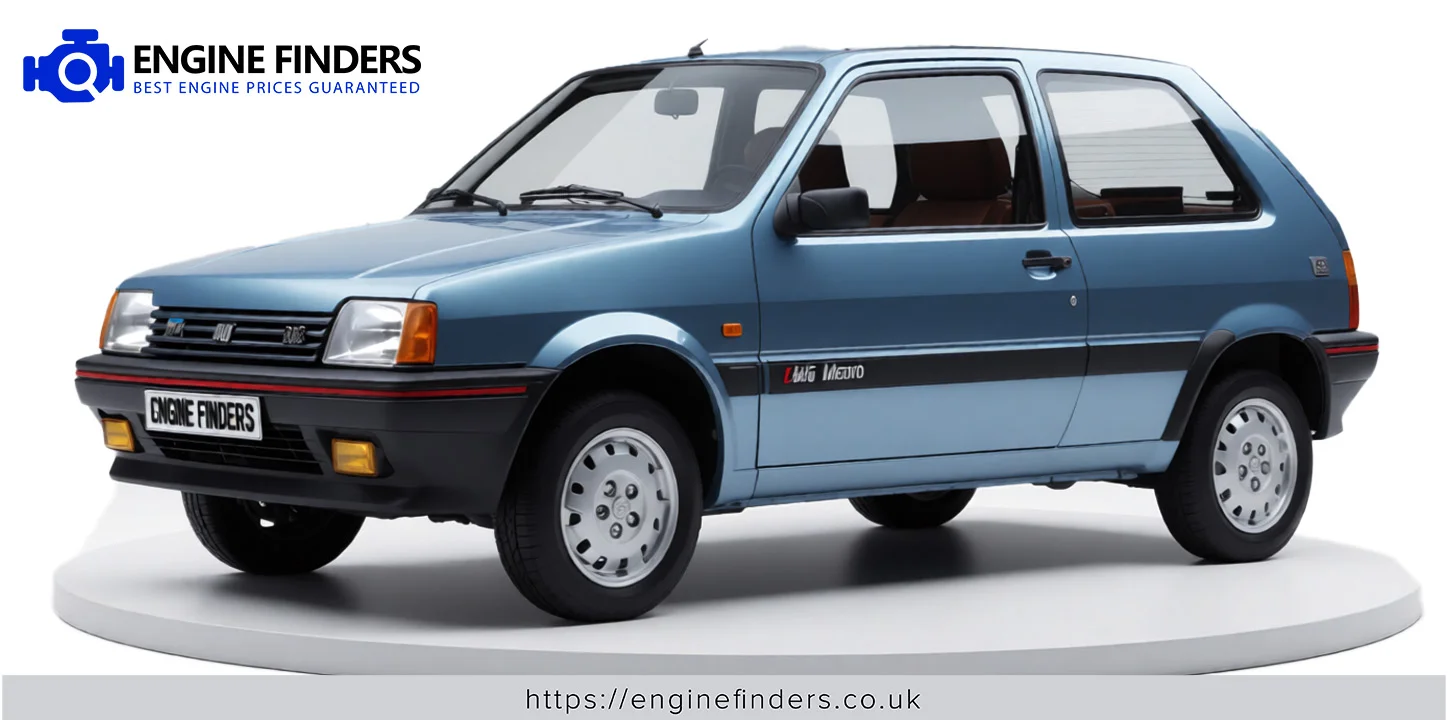
MG Metro Replacement Engines Options - Verified Units (UK Supply)
All engines bench-tested, VAT-inclusive, with 12-month warranty. MoT-compliant. Nationwide delivery. Direct OEM fitment for LC8 Chassis.
A-Plus series rebuilds featuring reinforced head gaskets and lead-free cylinder head conversions.
Stripped to bare blocks and remachined to resolve classic oil consumption and crank wear.
Metro 1275cc units inspected for gearbox-in-sump integrity with new water pumps installed.
Direct-fit A-Plus swaps for Turbo and naturally aspirated variants with verified mounting points.
Cleaned and performance-tuned units, addressing standard Metro carburetor and ignition timing setups.
Cost-effective A-series options with verified compression and historic maintenance records.
MG Metro Compatible Engine Codes & Average Prices on Rebuilt Units
All engines professionally reconditioned, bench-tested, and supplied with 12-month warranty. Direct OEM fitment. VAT-inclusive. Nationwide UK delivery.

Why Choose Engine Finders for Your MG Metro Engine?
Engine Finders connects UK drivers with vetted specialists for reliable, reconditioned MG Metro replacement engines. Covering all series from the 848cc A-Series engines to later 1275cc variants, we resolve recurring issues like head gasket failures, carburettor misalignment, and timing chain wear. Whether addressing oil pump wear or overheating concerns, our series-level expertise ensures every Metro engine performs reliably.
-
✔ Metro-Wide Timing Chain & Tensioner Service
All A-Series engines in the Metro experience timing chain elongation and tensioner wear (OEM 18G623). Engine Finders provides full series replacements, restoring precise timing across all Metro variants.
-
✔ Cylinder Head & Gasket Reconditioning
Head gasket and warping issues affect the full Metro series (OEM 18G614). Engine Finders performs series-level reconditioning to ensure sealing integrity and prevent coolant or compression loss.
-
✔ Oil Pump & Lubrication System Upgrades
Oil pump degradation is common across all Metro engines (OEM 18G1341). Engine Finders provides series-specific lubrication system upgrades to maintain proper pressure and reduce engine wear.
-
✔ Carburettor & Fuel System Overhaul
SU carburettor wear and misalignment affect all Metro variants (OEM 18G296). Engine Finders rebuilds and tunes fuel systems at series level to restore smooth delivery and performance.
-
✔ Cooling System & Water Pump Maintenance
Overheating from water pump and thermostat wear is prevalent across the Metro series (OEM 18G1243). Engine Finders ensures reliable cooling through series-focused maintenance and part replacement.
-
✔ Ignition & Electrical System Overhaul
Distributor and ignition component wear (OEM 18G2090) affects all Metro engines. Engine Finders provides series-wide electrical and ignition overhauls to maintain reliable starting and performance.
-
✔ Exhaust & Emissions Component Servicing
Exhaust manifolds and emissions systems degrade across the Metro series (OEM 18G721). Engine Finders conducts series-focused servicing to maintain efficiency and long-term engine health.
-
✔ Series-Level Diagnostics & Sensor Calibration
All Metro engines benefit from precise sensor calibration (OEM 18G722). Engine Finders provides series-wide diagnostics to ensure accurate readings, smooth performance, and reliable operation across the full Metro range.
Rated 4.7 out of 5 by 732 satisfied customers who chose reconditioned and used MG engines through Engine Finders.
Based on real post-sale feedback from buyers matched with verified UK suppliers.
MG Metro Engines for Sale | Engine Finders
Engine Finders connects UK drivers with specialists for reliable, reconditioned MG Metro replacement engines. Whether battling the notorious head gasket failures in early A-Series Plus units or oil consumption issues in later K-Series variants, we provide direct OEM-spec solutions for the entire Metro series.
MG Metro Replacement Engines
The MG Metro evolved through two distinct technical eras: the legendary A-Series Plus era (1982–1990) and the advanced K-Series era (1990–1994), often referred to as the Rover Metro/100 phase. Throughout this evolution, the series shared critical engineering DNA with the Mini and Maestro. A series-wide technical concern for A-Plus engines involved the "Sintered" rocker gear wear, addressed in Austin Rover service bulletins to rectify top-end noise. For K-Series models, the shared "sandwich" construction design created a universal vulnerability to head gasket failure (Part LVB101030) due to plastic dowel shifting. Cross-generation failure patterns also include gearbox-in-sump oil contamination in A-Series variants and cooling system air-locks in all 16V K-Series trims. Our reconditioned units address these historical weaknesses by utilizing uprated multi-layer steel gaskets and hardened valve seats across the entire series.
MG Metro Models & Engines Codes
The MG Metro utilized high-output versions of Austin Rover’s most versatile engine families:
- A-Series Plus (1275cc): 1982–1990 (Naturally Aspirated/Turbo) – Shared primary gear wear and crankshaft thrust washer erosion across all sport variants.
- K-Series 16V (1.4L): 1990–1994 (GTi/GTa) – Cylinder liner "drop" and shared head gasket (LVB101030) failure in all 16-valve power outputs.
- K-Series 8V (1.1L/1.4L): 1990–1994 – Shared plastic inlet manifold warping and coolant rail corrosion across the entire entry-level series.
- Turbocharged A-Plus: 1983–1989 – Shared sodium-filled valve failures and oil feed blockages affecting all forced-induction MG variants.
All engines in the Metro series require specific attention to the "S" vs "A" grade liners when performing block-level remanufacturing to ensure long-term compression stability.
Buy Used and Second-Hand MG Metro Engines
For MG Metro owners, used engines carry high risk due to the shared age-related degradation of the K-Series cooling seals and A-Series gearbox-in-sump wear. We recommend reconditioned units for several reasons:
- K-Series Rebuilds: Essential for GTi models to include Multi-Layer Steel (MLS) gaskets and steel dowels to fix the series-wide HGF issue.
- A-Series Remanufacturing: Includes hardened valve seats for unleaded fuel and crankshaft balancing to prevent the vibration-induced mount failure common to the series.
- Turbo Considerations: Remanufactured Turbo units feature upgraded oil pumps and reinforced head studs for modern boost reliability.
Quality assurance is vital as shared components, such as the distributor drive gear, fail identically across both naturally aspirated and turbocharged A-Plus variants.
MG Metro Engines in Stock
Our reconditioned MG Metro engines are engineered to withstand modern traffic conditions and superior performance expectations:
- Refined Top Ends: Every K-Series unit features a shimmed oil pressure relief valve and resurfaced cylinder heads to meeting Rover T4 standards.
- Crankshaft Polishing: All A-Series crankshafts are ground and polished with new main shells to rectify the series-wide oil pressure drops at low RPM.
- Sealing Upgrades: Modern Viton valve stem seals are fitted across the series to eliminate the blue-smoke start-up issue typical of used units.
All stock undergoes 4-hour dyno tests simulating real-world loads across 1.3L A-Plus and 1.4L GTi power bands, ensuring compression consistency for the entire Metro series.
Warranty for Replacement MG Metro Engines
We provide a 12-month warranty on all rebuilt engines. This standard coverage applies to all engine families in the MG Metro series, including Turbo and GTi variants.
- Series-Wide Protection: Covers internal lubricated components including the crankshaft, camshaft, and valvetrain.
- Family Exclusions: Turbo units require proof of oil feed pipe replacement (Part CAM6544) to maintain full warranty coverage.
- Vetted Suppliers: Engine Finders connects you with UK suppliers who offer specialized support for the A-Plus and K-Series architectures.
Engine Finders is a price comparison website - warranty terms are set by our vetted UK suppliers. Final coverage varies by engine family and mileage.
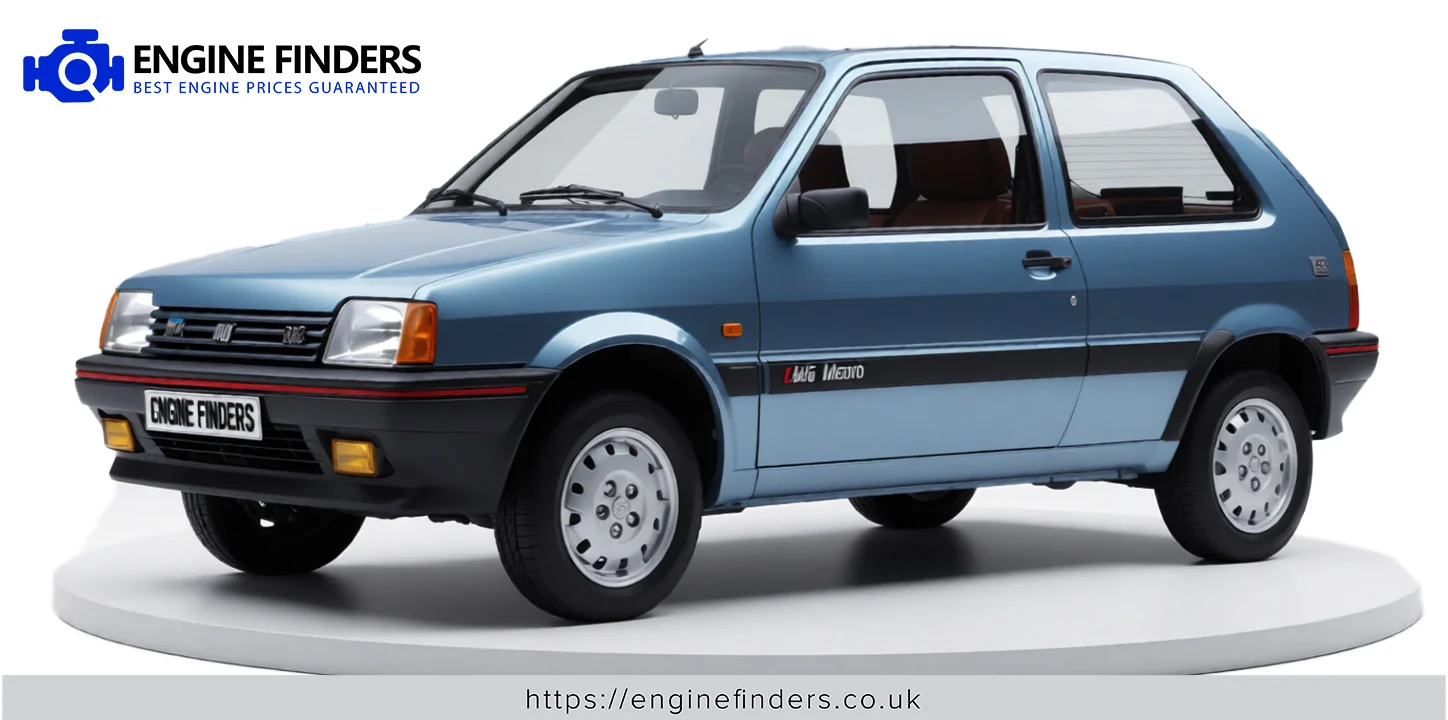
Expert Tips for Choosing the Right Engine for Your MG Metro
♻️ MG Metro Engine Types Explained
- Reconditioned A-Plus: Best for the 1275cc unit, addressing worn valve guides and oil leaks.
- Exchange Units: Common for the high-output 1275cc 'MG Metro' engine from a specialist.
- Used Low-Mileage: A viable option sourced from a dry-stored, non-rusted donor car.
- Turbocharged engines require a specialist rebuild focusing on oil feed lines and turbo bearings.
£ MG Metro Replacement Engine Cost in the UK
- Reconditioned 1275cc A-Plus (non-turbo): £1,200 - £2,000.
- Performance 'Stage 1' rebuilt engine: £2,000 - £3,000.
- Rebuilt turbocharged 1275cc unit: £3,000 - £4,500.
- Used, running engine from a breaker: £400 - £800.
🔍 Finding the Right MG Metro Engine
- Identify by engine number prefix: '12G' for MG Metro, '12H' for Turbo.
- Check for 'MG' stamp on the block near the fuel pump, distinguishing it from standard A-Plus.
- Turbo engines have an oil feed take-off point on the side of the block.
- Ensure the engine has the correct sump for the Metro's unique front subframe.
⛽ MG Metro Petrol vs Diesel Engines
- The MG Metro was only produced with petrol engines (1.3L A-Plus).
- Pre-1983 carburetted models are ULEZ exempt; later fuel-injected models may not be.
- No factory diesel existed; a diesel conversion would be impractical and devalue the car.
- The turbo model offers significantly more power but requires more meticulous maintenance.
🔒 Quality Assurance & Warranty
- For turbo engines, verify the turbo has been rebuilt or replaced with a Garrett unit.
- Check that unleaded valve seats have been fitted for any engine rebuild.
- A 12-month warranty on parts and labour is standard for a reputable reconditioner.
- Request a compression test report (target ~180 psi across all four cylinders).
🛒 Compare & Save on MG Metro Engines
- Provide your old engine as an exchange core to save £300-£500.
- Source a used engine from a reputable Mini/Metro specialist breaker.
- Avoid turbo engine sellers who haven't addressed the oil feed line and cooler.
- We work with specialists like Somerford Mini or Minisport for quality rebuilds.
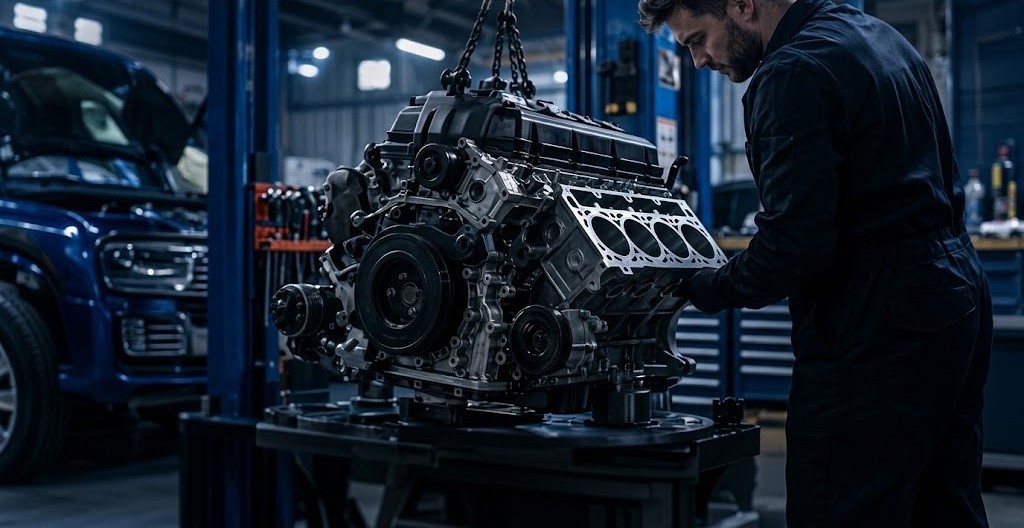
⚙️ MG Metro Engine Works: How Experts Rebuild Engines
When your engine fails, MG Metro engine works can restore performance at a fraction of the cost of a brand-new engine. From diagnostics to rebuild, here's how experts ensure optimal results.
1. A-Plus Engine Strip & Diagnosis
The engine is disassembled, with focus on common A-Series issues: worn rocker shafts and valve guides causing oil consumption, and crankshaft end-float. On turbo models, the turbocharger is inspected for shaft play and oil contamination.
2. Block & Head Machining for Performance
The block is cleaned, checked for cracks, and the cylinders are bored or honed. The cylinder head is refurbished with new unleaded valve seats, guides, and a 3-angle valve cut. The crankshaft is reground if necessary, and new bearings are fitted.
3. Reassembly with Upgraded Components
The engine is rebuilt with a new oil pump, timing chain, and tensioner. For performance builds, a fast-road camshaft and duplex timing gear are installed. On turbo models, all oil and water lines are replaced, and a rebuilt or new turbo is fitted.
4. Fuel & Ignition System Overhaul
The SU or HIF carburettor is fully rebuilt and tuned. For fuel-injected models, the injectors are cleaned and tested. The distributor is recurved or replaced with electronic ignition. All cooling system components (pump, thermostat) are replaced.
5. Dyno Run-In & Precise Tuning
The engine is run on a dyno with break-in oil. Valve clearances are set. Carburettor mixture and ignition timing are meticulously adjusted to achieve optimal power and smooth idle, crucial for the small-capacity engine's driveability.
6. Final Testing & Road Validation
A full compression and leak-down test confirms rebuild integrity. The engine is installed in a test vehicle or run under load to verify cooling and oil pressure. For turbo models, boost pressure and fuelling are checked to prevent detonation.