GUIDE
BMW N47 Engine Failure: The Timing-Chain Concern
The most prominent documented N47 engine concern in the supplied technical evidence is timing-chain wear involving the chain, guides and tensioner. FAI Technical Bulletin TB0092 describes chain stretch, deterioration of the guide material and tensioner weakness. It also identifies a metallic rattle, particularly when starting a cold engine, as a symptom that should prompt investigation. The bulletin is a supplier technical document summarising BMW service information; it is not itself a BMW-issued service bulletin.
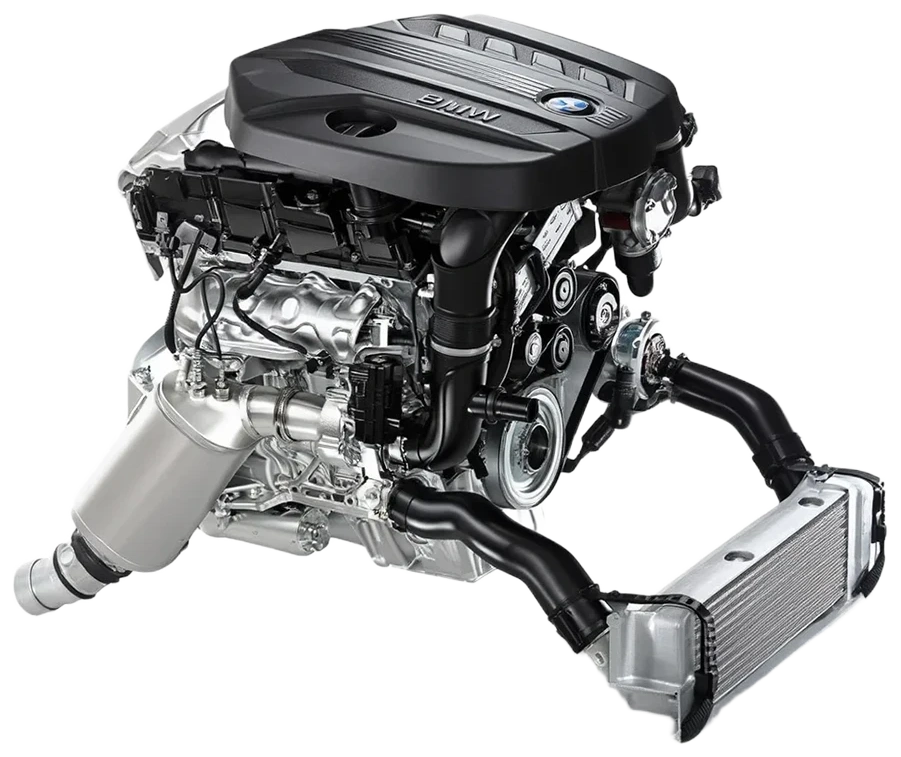
Rear-mounted timing chain, guides and tensioner
The N47 timing chain is positioned at the rear of the engine, adjacent to the gearbox. This location makes access more involved than on an engine where the timing drive is straightforward to reach from the front. If chain, guide or tensioner work is required, the repairer must establish the exact engine version and follow the correct procedure for that application. The access arrangement is one reason a timing-chain repair can involve substantial labour; it does not, by itself, tell you the price or prove that every noisy N47 needs a complete engine.
The chain drive is not just one component. The main chain, guides and tensioner work together to maintain correct timing. The FAI bulletin also discusses the oil-pump chain where required and updated chain-drive components described in the service information it summarises. A quote should therefore make clear which parts are being renewed, what inspection has been carried out and whether any secondary damage has been found.
N47 timing-chain symptoms: cold-start rattle, rough running and timing faults
A metallic rattle from the rear of the engine, especially during a cold start, is a recognised warning sign in the FAI technical material. Other possible clues include rough running or misfires after a cold start and diagnostic faults involving crankshaft and camshaft synchronisation. The bulletin lists examples of timing-related diagnostic trouble codes, including P0016 and P0017. A fault code is not a complete diagnosis: it needs to be interpreted alongside the engine's noise, running condition and mechanical timing checks.
A useful inspection starts with listening to the engine from cold rather than only after it has warmed up. A technician may use appropriate listening equipment, review stored diagnostic faults and inspect the oil filter for debris consistent with deteriorating guide material. These are diagnostic clues, not a substitute for the manufacturer's procedure or a qualified inspection. A seller who has warmed the engine before a viewing may make a cold-start noise harder to assess, so ask for a genuinely cold start where practical.
What happens if an N47 timing chain fails?
If the timing chain jumps or breaks, the camshaft and crankshaft can lose their correct relationship. Severe timing failure can cause major internal engine damage. Depending on the engine's condition and the exact failure, the repair may extend beyond replacing the chain drive to inspection or repair of valves, pistons, cylinder head and other affected components. It is not possible to determine the damage from the sound alone; the engine needs proper diagnosis.
If the engine develops a sudden loud metallic noise, stops unexpectedly, runs very roughly or displays a serious timing-related warning, avoid repeatedly restarting it to see whether the noise disappears. Continuing to crank or run an engine after a suspected timing failure may increase damage. Arrange professional diagnosis and recovery where necessary.
N47 variant and production-date caveats
The N47 name covers multiple variants, including N47D20A, N47D20B, N47D20C and later technical updates. The supplied FAI bulletin discusses early and later service measures, including updates to chain and guide components. It does not justify a single universal production-year cutoff that guarantees an engine is either affected or free of risk. A specific car must be checked by VIN, engine code, build date and service history.
The Engine Finders proprietary 2025 enquiry dataset records 1,450 quote requests for N47D20C. This is an internal demand signal: it records quote requests in that dataset. It does not mean 1,450 engines failed, 1,450 unique vehicles needed replacements, or that 1,450 is a failure rate. It must not be used to calculate the probability that an N47 will fail.