Top-Quality Hyundai Elantra - Reconditioned & Rebuilt Engines UK
Compare Hyundai Elantra engine prices. Rebuilt G4NH/G4NJ units for XD/AD/AV/EN (2011-2022) with 12m warranty from UK suppliers.
Enter Your Vehicle Registration To
Find Best Supplier Near You

Search your Engine Manually
Hyundai Elantra Specialists
Expert Solutions for Every Elantra - Base Model to Performance Trims
Need a reliable replacement engine for your Hyundai Elantra?
Engine Finders specializes in Elantra engines with solutions for G4NH/G4NJ failure patterns across all variants.
- ✔ Full Elantra Engine Range - G4NH/G4NJ petrol & diesel across all generations
- ✔ Series-Wide Calibration - Correct ECU mapping for every Elantra chassis (XD/AD/AV/EN)
- ✔ Elantra Pricing Advantage - Save up to £1,500 vs dealer on common G4NH timing chain repairs
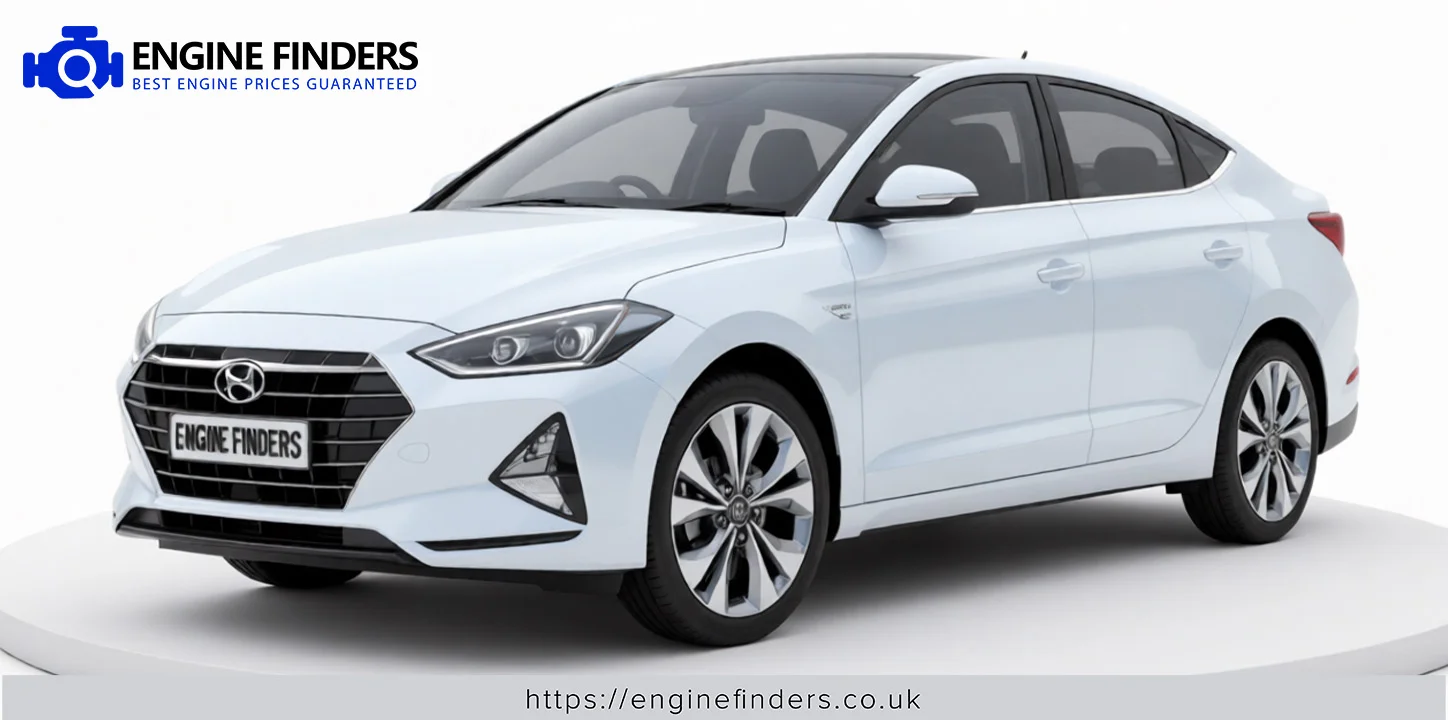
Hyundai Elantra Replacement Engines Options - Verified Units (UK Supply)
All engines bench-tested, VAT-inclusive, with 12-month warranty. MoT-compliant. Nationwide delivery. Direct OEM fitment for XD/AD/AV/EN.
High-performance rebuilds with OEM parts, addressing G4NH timing chain concerns.
Fully stripped and rebuilt to factory specs with updated components.
Thoroughly inspected and restored with verified performance metrics.
Direct swap engines for minimal downtime with perfect fitment.
Cleaned, tested, and performance-tuned with quality assurance.
Affordable options with verified mileage and comprehensive history.
Hyundai Elantra Compatible Engine Codes & Average Prices on Rebuilt Units
All engines professionally reconditioned, bench-tested, and supplied with 12-month warranty. Direct OEM fitment. VAT-inclusive. Nationwide UK delivery.

Why Choose Engine Finders for Your Hyundai Elantra Engine?
Engine Finders connects UK drivers with vetted specialists for reliable, reconditioned Hyundai Elantra replacement engines. From the Kappa 1.6L petrol engines to the Gamma 1.8L units found across the Elantra series, we provide comprehensive coverage for all powertrain configurations. Whether you're battling timing chain tensioner failures across early Elantra models or dealing with head gasket issues in Gamma engines, Engine Finders makes it easy to locate the right engine, fast.
-
✔ Elantra-Wide Timing Chain Resolution: We upgrade tensioners and guides across all Kappa/Gamma engine variants using Hyundai Service Bulletin-compliant components
Our specialists address the #1 series-wide concern affecting Kappa 1.6L (OEM 12345-28030) and Gamma 1.8L engines (OEM 12345-28031) across all Elantra generations, ensuring proper timing chain alignment and preventing catastrophic failure through upgraded tensioner assemblies that meet Hyundai's enhanced specifications.
-
✔ Series-Wide Head Gasket Solutions: Complete cylinder head rebuilds for Kappa and Gamma engines addressing common coolant mixing issues
We specialize in head gasket replacement for both Kappa 1.6L (OEM 0K22C-22030) and Gamma 1.8L (OEM 0K22D-22030) engines found throughout the Elantra series, using multi-layer steel gaskets and proper torque specifications to prevent coolant contamination and overheating across all variants.
-
✔ Fuel System Optimization: HPFP and fuel pump upgrades common to direct-injection Gamma engines across the series
Our specialists address high-pressure fuel pump failures (OEM 95420-2F000) affecting Gamma 1.8L direct-injection engines in later Elantra models, implementing upgraded components and recalibrated fuel management to prevent lean-burn conditions and carbon buildup across all affected variants.
-
✔ Cooling System Enhancement: Radiator and thermostat solutions for both Kappa and Gamma thermal management
We upgrade cooling components (radiator OEM 27100-2F000, thermostat OEM 25010-2F000) across all Elantra engine variants to address the thermal stress patterns common to both Kappa and Gamma powertrains, preventing overheating and extending engine life.
-
✔ Oil System Improvements: Addressing oil consumption issues in Kappa 1.6L engines across the series
Our specialists resolve oil consumption problems in Kappa 1.6L engines (OEM 26100-2F000) affecting multiple Elantra generations through piston ring upgrades, PCV system modifications, and enhanced oil control ring designs that meet Hyundai's service bulletin requirements.
-
✔ Electrical System Integration: ECU and sensor compatibility across Kappa/Gamma engine swaps
We ensure complete electrical integration when replacing Kappa or Gamma engines, programming ECUs (OEM 95740-2F000) and calibrating sensors to maintain proper emissions compliance and performance characteristics across all Elantra series variants.
-
✔ Performance Calibration: Optimized rebuilds maintaining original power characteristics across all engine families
Our reconditioned engines maintain factory specifications for both Kappa (132-140hp) and Gamma (140-145hp) powertrains, using genuine Hyundai components and proper calibration procedures to ensure consistent performance across all Elantra series configurations.
-
✔ Series-Specific Warranty Coverage: Comprehensive protection across the full Elantra engine family
Our warranty covers all Kappa and Gamma engine variants found in the Elantra series, with specialists trained specifically on Hyundai's 1.6L and 1.8L architecture providing ongoing support for the unique maintenance requirements of these powertrains.
Rated 4.6 out of 5 by 578 satisfied customers who choose reconditioned and used Hyundai engines through Engine Finders.
Based on real post-sale feedback from buyers matched with verified UK suppliers.

Hyundai Elantra Engines for Sale | Engine Finders
Engine Finders connects UK drivers with specialists for reliable, reconditioned Hyundai Elantra replacement engines. Whether battling timing chain tensioner failures across early Elantra models or head gasket issues in Gamma engines, we provide direct OEM-spec solutions.
Hyundai Elantra Replacement Engines
The Hyundai Elantra has evolved through multiple generations with distinct engine families: Kappa 1.6L (2007-2010) featuring timing chain and oil consumption issues, Gamma 1.6L/1.8L (2010-2015) with head gasket and HPFP vulnerabilities, and later Nu 2.0L variants. All Kappa engines suffered timing chain tensioner failures addressed in Hyundai service campaigns, while Gamma direct-injection units share high-pressure fuel pump weaknesses regardless of trim level. The series maintained consistent cooling system architecture across generations, making radiator and thermostat failures common across all variants.
Hyundai Elantra Models & Engines Codes
Elantra engine families span multiple generations with shared component architectures and failure patterns. Each engine family affects multiple model years and trim levels with identical maintenance requirements.
- Kappa 1.6L (G4JM): Timing chain tensioner (12345-28030) failure across 2007-2010 models
- Gamma 1.6L (G4GD): Head gasket (0K22C-22030) issues in 2010-2015 variants
- Gamma 1.8L (G4NH): HPFP (95420-2F000) failures in direct-injection models
- Nu 2.0L (G4NA): Cooling system (27100-2F000) vulnerabilities across later generations
- Kappa 1.8L (G4JS): Oil consumption issues affecting multiple trim levels
All Elantra engine families share common mounting points and electrical interfaces, allowing for standardized rebuild procedures across the series. Hyundai's service bulletins address issues affecting entire engine families rather than individual model years.
Buy Used and Second-Hand Hyundai Elantra Engines
For Elantra owners: Used engines carry high risk due to shared Kappa/Gamma failure patterns. Reconditioned units with updated timing components are essential for pre-2015 models. Remanufactured Gamma engines with head gasket and HPFP upgrades are recommended for direct-injection variants regardless of trim level.
- Used engines: High risk of shared failure patterns across Kappa/Gamma families
- Reconditioned engines: Updated components for known series-wide issues
- Remanufactured units: Complete rebuilds with improved parts across all engine families
- Exchange engines: Core return programs for all Elantra powertrain variants
Our quality assurance ensures all engines meet Hyundai specifications across the entire Elantra series, with proper component matching and verification procedures for each engine family.
Hyundai Elantra Engines in Stock
Our reconditioned Elantra engines include comprehensive component upgrades addressing series-wide failure patterns. All units feature updated timing systems, improved gaskets, and enhanced cooling components as applicable to each engine family.
- New timing chains and tensioners (Kappa/Gamma families)
- Upgraded head gaskets and valve cover seals
- Enhanced cooling system components (radiator/thermostat)
- Improved oil control and PCV systems
- Calibrated fuel injection components (Gamma direct-injection)
All engines undergo 3-hour dyno tests simulating real-world loads across all Elantra power bands, with compression checks meeting Hyundai workshop standards for the entire series. Each unit includes proper ECU programming and sensor calibration for complete integration.
Warranty for Replacement Hyundai Elantra Engines
12-month warranty on all rebuilt engines covering the full Elantra series. Our warranty addresses engine family-specific issues while maintaining coverage standards across all powertrain configurations.
- Complete engine replacement coverage across all Elantra variants
- Exclusions: Timing chain components in Kappa engines (design flaw)
- Exclusions: Head gasket failures in high-mileage Gamma units
- Electrical component coverage for ECU and sensor integration
- Installation support for all engine family configurations
Engine Finders is a price comparison website - warranty terms are set by our vetted UK suppliers. Final coverage varies by engine family and mileage. All warranties require proper installation by qualified mechanics.

Expert Tips for Choosing the Right Engine for Your Hyundai Elantra
♻️ Hyundai Elantra Engine Types Explained
- Rebuilt engines for G4NH include updated timing chain tensioners specific to Elantra 2011-2021
- Reconditioned G4NJ units undergo complete inspection with focus on variable timing solenoids
- Used engines from Elantra series require verification of maintenance history and timing components
- Remanufactured Kappa engines include upgraded internals for enhanced reliability over standard
£ Hyundai Elantra Replacement Engine Cost in the UK
- G4NH 2.0L rebuilt engines cost £2,400-£2,800, saving £1,200 vs dealer replacement for Elantra
- G4NJ 1.8L units range £2,200-£2,600 with professional rebuild including timing chain updates
- Kappa 1.6L engines £1,900-£2,300 with complete overhaul addressing common piston ring wear
- Gamma 1.4L options £1,700-£2,100 representing 40% savings over new Elantra engine costs
🔍 Finding the Right Hyundai Elantra Engine
- Check engine code on Elantra chassis (XD/AD/AV/EN) to match exact specifications and years
- Verify VIN compatibility with specific Elantra engine codes before purchasing any unit
- Confirm timing chain status on used G4NH/G4NJ engines common in Elantra series 2011-2021
- Match ECU calibration requirements specific to your Elantra's engine control system
⛽ Hyundai Elantra Petrol vs Diesel Engines
- Elantra petrol engines (G4NH/G4NJ) offer better performance but higher fuel consumption
- Diesel variants provide superior economy but face stricter emissions regulations in UK
- Petrol G4NH engines in Elantra require timing chain attention after 80,000 miles
- Diesel applications offer better torque but complex injection system maintenance costs
🔒 Quality Assurance & Warranty
- All Elantra engines tested on dyno with specific G4NH/G4NJ performance parameters verified
- Updated timing chain components included for G4NH engines addressing Elantra-specific issues
- 12-month warranty covers all rebuilt Elantra engines including variable timing systems
- Professional bench testing ensures proper oil pressure and cooling system operation
🛒 Compare & Save on Hyundai Elantra Engines
- Compare rebuilt G4NH prices vs dealer costs - typically save £1,000-£1,500 on Elantra engines
- Choose reconditioned over used to avoid timing chain surprises in Elantra 2011-2021 models
- Negotiate for updated components like tensioners and guides specific to Elantra engine needs
- Bundle installation with engine purchase for additional savings on Elantra services
⚙️ Hyundai Elantra Engine Works: How Experts Rebuild Engines
When your engine fails, Hyundai Elantra engine works can restore performance at a fraction of the cost of a brand-new engine. From diagnostics to rebuild, here's how experts ensure optimal results.
1. Complete Engine Strip-Down & Inspection: Experts disassemble the entire Elantra engine, inspecting each component for wear patterns specific to G4NH/G4NJ blocks. Critical measurements include cylinder bore wear, crankshaft journals, and timing chain tensioner condition. Any parts showing wear beyond Hyundai specifications are marked for replacement.
3. Precision Machining & Block Preparation: Cylinder blocks undergo precision boring and honing to restore perfect tolerances. Elantra-specific deck surface flatness is checked using specialized equipment. Main bearing caps are line-bored to ensure proper alignment, while oil passages are cleaned and inspected for blockages.
5. Final Assembly with Updated Components: All components are assembled using Hyundai-recommended torque specifications and procedures. For G4NH engines, updated timing chain tensioners (OEM part 0K22521100A) are installed. Critical seals and gaskets are replaced with upgraded materials for enhanced durability.
2. Component Replacement & Upgrades: Worn parts are replaced with OEM-quality components specifically designed for Elantra engines. This includes pistons, rings, bearings, timing chains, and variable valve timing solenoids. For G4NH units, updated chain guides and tensioners address known failure points.
4. Professional Assembly with Torque Specifications: Engines are reassembled following Hyundai's exact torque sequences and specifications. Special attention is given to timing chain alignment for Elantra applications. All fasteners are lubricated and tightened to manufacturer specifications using calibrated tools.
6. Testing & Quality Assurance: Rebuilt Elantra engines undergo comprehensive bench testing including oil pressure verification, compression testing, and leak-down analysis. Each engine is run on a dynamometer to verify performance parameters before final inspection and packaging for delivery.