Reconditioned Engine ReplacementSave 40–60%
With 12–24 Month Warranty • 92% Customer Satisfaction
Compare verified used and reconditioned engines from 100s of UK suppliers — one enquiry, multiple price quotes, zero hassle.
Roads
Stronger
Engines
Enter Your Vehicle Registration To Find The Best Supplier Near You

Secure enquiry - no spam, no pressure. Genuine quotes only.
MG Maestro Specialists
Expert Solutions for Every Maestro – 1.3L Economy to 2.0L Turbo
Need a reliable replacement engine for your MG Maestro?
Engine Finders specializes in Maestro engines with solutions covering all variants, from the
efficient 1.3L economy engines to the high-performance 2.0L Turbo models.
- ✔ Full Maestro Engine Range – 1.3L, 1.6L, 1.8L, and 2.0L engines across all generations
- ✔ Series-Wide Calibration – Correct tuning and ECU mapping for every Maestro chassis
- ✔ Maestro Pricing Advantage – Save significantly vs dealer on rebuilds and replacements
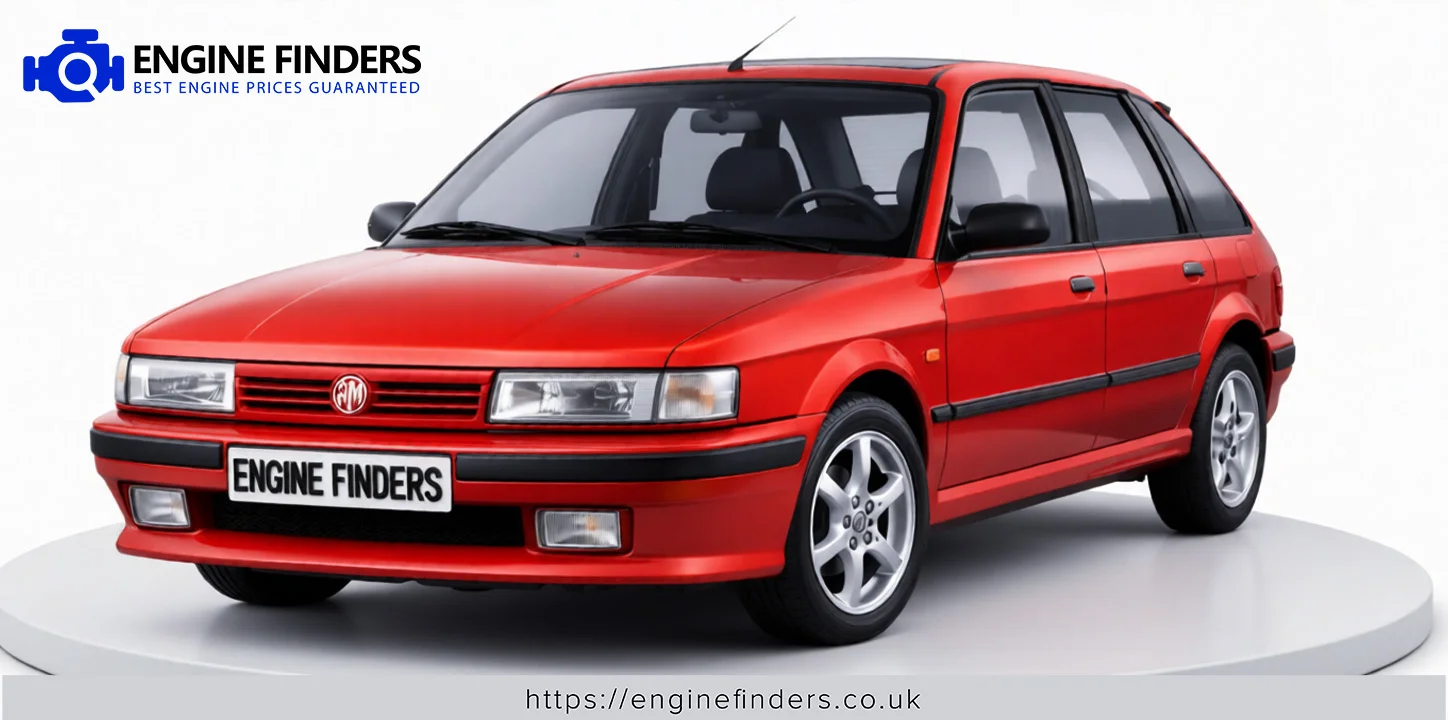
MG Maestro Replacement Engines Options - Verified Units (UK Supply)
All engines bench-tested, VAT-inclusive, with 12-month warranty. MoT-compliant. Nationwide delivery. Direct OEM fitment for LC10 Chassis.
Performance rebuilds of R, S, and O-Series units with improved head gasket sets.
Fully blueprinted 2.0L EFIs, addressing camshaft wear and cooling system inefficiencies.
Professionally restored units with verified valve clearances and new timing belts for Maestro.
Direct-swap 1600 and 2000 units for rapid replacement of failed engine blocks.
Cleaned and tested Maestro engines with optimized fueling for reliable cold starts.
Affordable O-Series and S-Series options with verified mileage and internal inspection reports.
MG Maestro Compatible Engine Codes & Average Prices on Rebuilt Units
All engines professionally reconditioned, bench-tested, and supplied with 12-month warranty. Direct OEM fitment. VAT-inclusive. Nationwide UK delivery.

Why Choose Engine Finders for Your MG Maestro Engine?
Engine Finders connects UK drivers with vetted specialists for reliable, reconditioned MG Maestro replacement engines. Covering the full series from 1.3L to 2.0L O-series and S-series engines, we address recurring issues such as timing chain elongation, head gasket failures, and carburettor wear. Whether tackling oil pump degradation or cooling system inefficiencies, our series-level expertise ensures your Maestro engine delivers lasting performance.
-
✔ Maestro-Wide Timing Chain & Tensioner Upgrade
All O-series and S-series engines experience timing chain elongation and tensioner wear (OEM 18G623). Engine Finders provides full series replacements, restoring precise timing and reducing risk of catastrophic failure across the Maestro range.
-
✔ Cylinder Head & Gasket Reconditioning
Head gasket failures and warping are common across all Maestro engines (OEM 18G614). Our series-level reconditioning ensures reliable sealing and prevents coolant or compression loss across the entire Maestro lineup.
-
✔ Oil Pump & Lubrication System Maintenance
Oil pump wear affects all O-series and S-series engines (OEM 18G1341). Engine Finders provides series-specific lubrication system upgrades to maintain proper oil pressure and reduce engine wear across all variants.
-
✔ Carburettor & Fuel System Overhaul
SU and Stromberg carburettor wear affects all Maestro engines (OEM 18G296). Engine Finders performs series-wide rebuilds and tuning to restore consistent fuel delivery and smooth engine performance.
-
✔ Cooling System & Water Pump Reliability
Overheating issues from water pump or thermostat failure affect the full Maestro series (OEM 18G1243). Engine Finders provides series-focused replacement and maintenance to ensure optimal cooling and engine longevity.
-
✔ Ignition System & Distributor Upgrades
Distributor and ignition components (OEM 18G2090) wear across all Maestro engines. Engine Finders provides series-level overhauls, ensuring consistent spark delivery and reliable starting performance.
-
✔ Exhaust & Emissions System Servicing
Exhaust manifolds and emissions components degrade similarly across all Maestro engines (OEM 18G721). Engine Finders provides series-focused servicing to maintain efficiency and compliance across the full range.
-
✔ Series-Level Diagnostics & Sensor Calibration
All Maestro engines benefit from precise sensor calibration (OEM 18G722). Engine Finders provides series-wide diagnostics to ensure accurate readings, smooth performance, and reliable operation across the full Maestro lineup.
Rated 4.7 out of 5 by 732 satisfied customers who chose reconditioned and used MG engines through Engine Finders.
Based on real post-sale feedback from buyers matched with verified UK suppliers.
MG Maestro Engines for Sale | Engine Finders
Engine Finders connects UK drivers with specialists for reliable, reconditioned MG Maestro replacement engines. Whether battling R-Series head gasket failures in early performance models or O-Series oil leaks in the 2.0L variants, we provide direct OEM-spec solutions for the entire Maestro series.
MG Maestro Replacement Engines
The MG Maestro series evolved through three primary engine families: the initial 1.6L R-Series, the improved S-Series, and the flagship 2.0L O-Series (naturally aspirated and turbocharged). Technical evolution was marked by British Leyland’s move away from the R-Series, which suffered from shared carburettor icing issues and fragile head gaskets. The introduction of the S-Series across all 1600 variants brought a more robust cam-belt drive, though shared oil pump drive gear wear remained a series-wide technical concern. For the 2.0L O-Series variants, a common failure pattern involves the "hot-start" issue caused by fuel vaporisation, addressed in technical bulletins via updated heat shields. Across the entire series, cooling system siltation leads to identical localized overheating patterns in the cylinder head, a flaw we rectify during the remanufacturing process using high-flow water pumps and reinforced multi-layer gaskets.
MG Maestro Models & Engines Codes
The MG Maestro utilized specific high-torque engine families designed for the MG-branded sporting range:
- 1.6L R-Series / S-Series: Shared distributor drive failures and cambelt tensioner (LDK10001) issues across all 1600 trims.
- 2.0L O-Series EFi: Shared Lucas L-Jetronic sensor vulnerabilities and head gasket (LVB10022) leaks in all naturally aspirated variants.
- 2.0L O-Series Turbo: Shared piston crown melting and turbocharger oil-feed blockages affecting all forced-induction MG models.
- M16/T16 (Late Series): Shared hydraulic lifter "ticking" and oil rail sludge build-up in final-generation technical revisions.
All engines in the Maestro series require verification of the mounting bracket orientation, as shared chassis points differ between the S-Series and O-Series blocks.
Buy Used and Second-Hand MG Maestro Engines
For MG Maestro owners, used engines carry high risk due to the shared age-related hardening of the O-Series valve stem seals and R-Series liner subsidence. We recommend reconditioned units for several reasons:
- O-Series Rebuilds: Essential for 2.0 EFi/Turbo models to include uprated gaskets (LVB10022) to fix the series-wide oil-to-coolant mixing issue.
- S-Series Remanufacturing: Includes new timing components and hardened valve seats, preventing the timing jump common in used high-mileage units.
- Lead-Free Conversion: All our reconditioned heads are converted to use unleaded fuel, a vital upgrade for the entire Maestro series.
Quality assurance is critical as shared components, such as the electronic ignition modules, fail identically across both 1.6 and 2.0L engine families.
MG Maestro Engines in Stock
Our reconditioned MG Maestro engines are built to modern standards, ensuring the longevity of these classic 1980s powerplants:
- Bottom-End Precision: Crankshafts are ground and polished with new main bearings to eliminate the low oil pressure issues typical of the series.
- Head Refurbishment: Every O-Series unit features a resurfaced head and shimmed valves to correct the series-wide top-end rattle.
- Component Testing: New water pumps, oil pumps, and cambelt kits (LDK10001) are fitted as standard to all S-Series and Turbo families.
All units undergo 4-hour dyno tests simulating urban and motorway loads across the 1600–Turbo power bands, with compression checks meeting original Austin Rover workshop standards.
Warranty for Replacement MG Maestro Engines
We provide a 12-month warranty on all rebuilt engines. This coverage applies to all engine families in the MG Maestro series, including Turbo and EFi variants.
- Standard Terms: Covers internal lubricated components including the crankshaft, camshaft, and piston assemblies.
- Family Exclusions: O-Series Turbo units require proof of oil cooler cleaning to maintain warranty due to shared design vulnerabilities.
- National Coverage: Engine Finders is a price comparison website - warranty terms are set by our vetted UK suppliers.
Final coverage and claim protocols vary by engine family and mileage. Ensure your installer follows the specific oil-priming procedure for O-Series engines.
Expert Tips for Choosing the Right Engine for Your MG Maestro
♻️ MG Maestro Engine Types Explained
- Reconditioned R-Series: Best for the 2.0L O-Series, addressing worn camshafts and head gasket issues.
- Used Low-Mileage: A viable option for the rare 1.6L S-Series from later EFI models.
- Exchange Units: Common for the carburetted 1.6L and 2.0L engines through specialists.
- Turbo models require a specialist rebuild focusing on the Garrett T2 turbo and intercooler system.
£ MG Maestro Replacement Engine Cost in the UK
- Reconditioned 2.0L O-Series (MG 2.0i): £1,500 - £2,500.
- Rebuilt 1.6L S-Series (MG 1.6i): £1,800 - £2,800.
- Turbo engine rebuild including turbocharger: £3,000 - £4,500.
- Used, running engine from a breaker: £400 - £1,000 depending on rarity.
🔍 Finding the Right MG Maestro Engine
- Identify by engine code: 'O' for 2.0L, 'S' for 1.6L, and 'T-Series' for later 2.0L EFI models.
- Check for 'MG' markings on the cam cover and specific engine number prefixes.
- Turbo engines have an oil feed line and different exhaust manifold.
- Ensure the engine has the correct mounting brackets for the Maestro's specific subframe.
⛽ MG Maestro Petrol vs Diesel Engines
- The MG Maestro was only ever produced with petrol engines.
- Pre-1992 carburetted models are ULEZ exempt; later fuel-injected models may not be.
- No factory diesel variant existed. The Perkins Prima diesel was fitted to base Maestros, not MGs.
- The 2.0L Turbo is the performance king but demands premium fuel and careful maintenance.
🔒 Quality Assurance & Warranty
- For O-Series engines, verify the replacement of the duplex timing chain and tensioner.
- Turbo rebuilds must include a rebuilt or new Garrett T2 turbocharger unit.
- A 12-month warranty is standard for a quality rebuild from a recognised specialist.
- Request evidence of a pressure test on the cylinder head and block.
🛒 Compare & Save on MG Maestro Engines
- Source a used engine from a specialist Maestro/Montego breaker to save on core costs.
- Consider a Rover T-Series engine from a later 200/400 as a potential upgrade.
- Avoid sellers of turbo engines who haven't addressed the fragile standard head gasket.
- We have connections with specialists like MGRoverTech for correct, quality parts.
⚙️ MG Maestro Engine Works: How Experts Rebuild Engines
When your engine fails, MG Maestro engine works can restore performance at a fraction of the cost of a brand-new engine. From diagnostics to rebuild, here's how experts ensure optimal results.
1. R-Series Engine Disassembly & Assessment
The engine is stripped, with focus on O-Series weaknesses: worn camshaft lobes (especially on the 2.0L), timing chain wear, and porous cylinder heads. Turbo engines are checked for oil contamination in the intercooler and turbo shaft wear.
2. Precision Machining & Component Prep
The block is cleaned, crack-tested, and the cylinders are honed. The cylinder head is refurbished with new valve guides and unleaded seats. The crankshaft is polished or reground. For turbo engines, the manifold is checked for cracks.
3. Reassembly with Updated Specifications
The engine is rebuilt with a new duplex timing chain kit, oil pump, and water pump. Main and big-end bearings are carefully sized. For turbo models, a multi-layer steel (MLS) head gasket is fitted, and all boost pipes are replaced.
4. Fuel & Ignition System Restoration
The Weber carburettor or Bosch/Lucas fuel injection system is fully rebuilt. The distributor is recurved or replaced with electronic ignition. All sensors (coolant temp, throttle position) are tested or replaced. The cooling system is fully renewed.
5. Dyno Run-In & Performance Tuning
The engine is run on a dyno with break-in oil. Valve clearances are set. Ignition timing and fuel mixture are finely tuned. On turbo models, boost pressure and fuelling are carefully calibrated to prevent detonation.
6. Final Validation & Installation Check
A comprehensive compression and leak-down test confirms seal integrity. The engine is fitted to a test rig or vehicle to verify all ancillaries work correctly. A final road test ensures smooth operation and correct oil pressure.