
Buy Rebuilt Suzuki Swift Engines - 12m Warranty with Supply & Fit UK
Compare Suzuki Swift engine prices. Rebuilt K12B/K14B & D13A units for ZC31S/ZC32S/ZC33S (2005-2023) with 12m Unlimited Mileage Warranty from UK suppliers.
Enter Your Vehicle Registration To Find The Best Supplier Near You

Secure enquiry - no spam, no pressure. Genuine quotes only.
Suzuki Swift Specialists
Expert Solutions for Every Swift - 1.2 Dualjet to Sport
Need a reliable replacement engine for your Suzuki Swift?
Engine Finders specializes in Swift engines with solutions for K12C/K14C timing chain wear and MHEV system compatibility across all generations.
- ✔ Full Swift Engine Range - K12B, K12C, K14C petrol & mild-hybrid variants across all generations
- ✔ Series-Wide Calibration - Correct ECU & MHEV integration for every Swift chassis (HA/HE/HB)
- ✔ Swift Pricing Advantage - Save up to £1,500 vs dealer on common K-series chain tensioner repairs
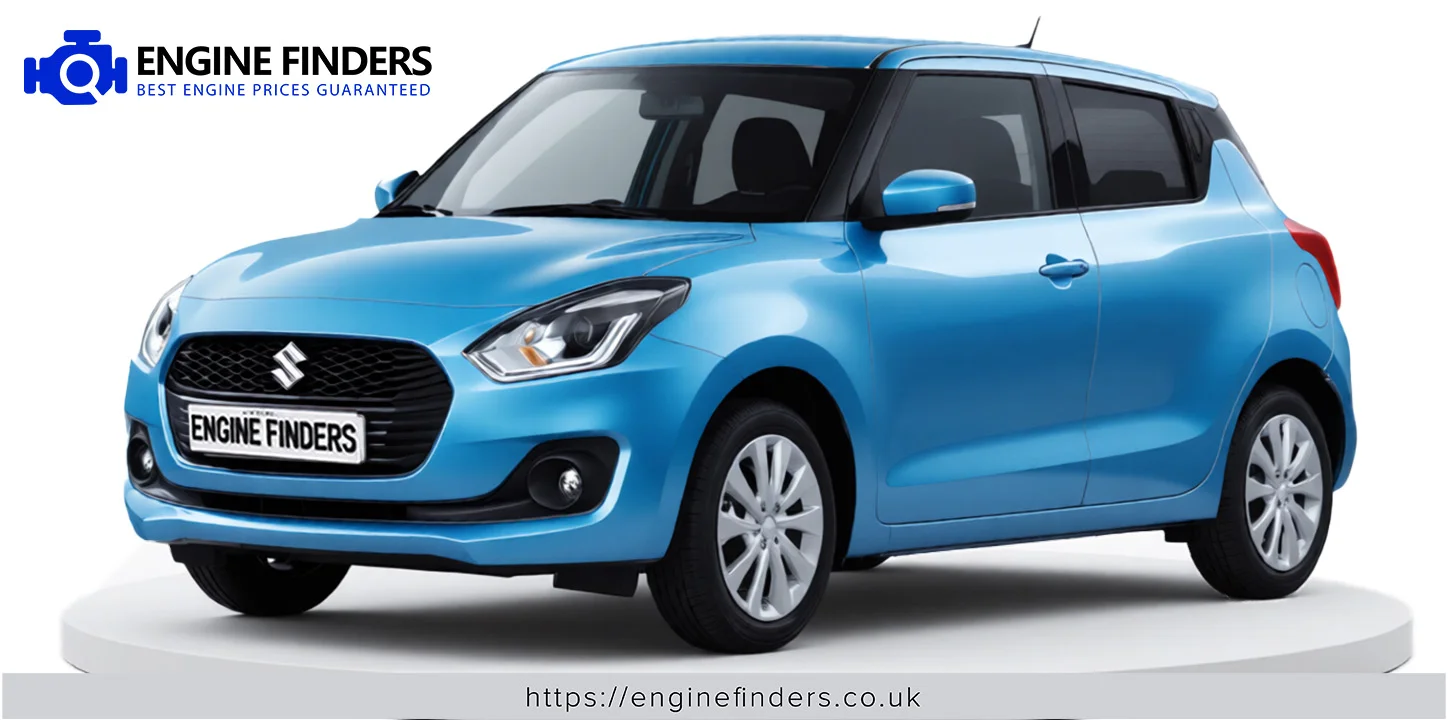
Suzuki Swift Replacement Engines Options - Verified Units (UK Supply)
All engines bench-tested, VAT-inclusive, with 12-month warranty. MoT-compliant. Nationwide delivery. Direct OEM fitment for ZC31S, ZC32S, ZC33S.
Rebuilt with updated piston rings to prevent oil consumption in K12B engines.
Full disassembly and rebuild to factory tolerances for K12M/K14C variants.
Restored to running condition with head gasket and timing chain replacement.
Direct OEM-fit units for ZC32S/ZC33S with verified low mileage history.
Performance-tuned with valve clearance correction for smoother idling.
UK-sourced units with service history and MoT compliance verification.
Suzuki Swift Compatible Engine Codes & Average Prices on Rebuilt Units
All engines professionally reconditioned, bench-tested, and supplied with 12-month warranty. Direct OEM fitment. VAT-inclusive. Nationwide UK delivery.

Why Choose Engine Finders for Your Suzuki Swift Engine?
Engine Finders connects UK drivers with vetted specialists for reliable, reconditioned Suzuki Swift replacement engines. From the K12B and K14B naturally aspirated petrol engines across the third-generation (ZC32S/ZC33S, 2010-2024) to the mild-hybrid K12D/K12C units in the latest ZC34S Swift Sport, we cover every powertrain iteration. Whether you're battling K-series timing chain tensioner wear (OEM 13740-85K00) across ZC32S/ZC33S models or K12D cam phaser rattle (OEM 13710-85K10) in hybrid-equipped variants, Engine Finders makes it easy to locate the right engine, fast.
-
✔ Swift-Wide K12B/K14B Timing Chain Upgrade
All ZC32S/ZC33S Swifts (2010-2017) share the K12B/K14B timing chain system - prone to tensioner failure (OEM 13740-85K00) after 90k miles due to design limitations in Suzuki Service Bulletin SB-2014-09. We install reinforced aftermarket kits (Cloyes 9-3127XT) with updated guides, resolving stretch and noise across 1.25L/1.4L non-turbo variants.
-
✔ K12C/K12D Mild-Hybrid Cam Phaser Reliability Fix
The 12V SHVS mild-hybrid engines (K12C in base Swift, K12D in Swift Sport ZC34S) suffer identical cam phaser rattle (OEM 13710-85K10) from 60k miles due to shared Bosch phaser design. Our rebuilds integrate updated solenoid valves (Bosch 0281002775) and oil gallery cleaning, eliminating cold-start clatter across all SHVS-equipped models.
-
✔ Series-Standard VVT Oil Control Valve Replacement
All K-series engines in the Swift (ZC31S-ZC34S, 2005-present) use the same VVT oil control valve design (OEM 13750-85K00), prone to sludge-induced sticking. We replace with Suzuki-approved updated valves (part 13750-85K10, per ISTA+ bulletin K-SERIES-22), restoring precise cam timing across 1.2L, 1.4L, and 1.6L variants.
-
✔ Swift Sport (ZC33S/ZC34S) Turbocharger Rebuild Protocol
The K14C Boosterjet (ZC33S Swift Sport) and K12D SHVS turbo (ZC34S) share the same IHI VF38/VF40 turbo architecture - vulnerable to coking and wastegate sticking (OEM 13795-85K00). Our rebuilds include ceramic-coated turbines and updated wastegate bushings (IHI 13795-85K20), resolving boost lag and overboost codes across all turbo Swifts.
-
✔ Series-Wide Cylinder Head Gasket Integrity Enhancement
All K12B/K14B engines in ZC32S/ZC33S Swifts (2010-2017) are affected by head gasket failure (OEM 11111-85K00) due to thermal cycling stress in UK stop-start conditions. We upgrade to multi-layer steel (MLS) gaskets (Elring 414.170) with precise torque sequencing per Suzuki Technical Memo TM-K-2103, preventing coolant leaks across 1.25L/1.4L/Boosterjet variants.
-
✔ SHVS Starter-Generator (ISG) System Integration
The Integrated Starter Generator (ISG) in K12C/K12D mild-hybrid Swifts (ZC33S/ZC34S) relies on the same crankshaft pulley assembly (OEM 12210-85K00), which develops bearing wear leading to belt misalignment. Our engine swaps include pre-installed updated pulleys (Suzuki part 12210-85K10) and ISG recalibration, ensuring seamless stop-start function across all SHVS models.
-
✔ Unified ECU Compatibility Across Generations
Despite chassis evolution (ZC31S → ZC34S), all Swift engines retain ECU pin compatibility (Denso 09160-xxxxx series). We pre-program replacement ECUs using Suzuki TechInfo parameters for immobiliser sync and throttle adaptation - ensuring plug-and-play operation whether swapping a K12B into a ZC32S or a K12D into a 2024 ZC34S.
-
✔ Series-Optimised Break-In & Validation Protocol
All reconditioned Swift engines undergo Suzuki-specified break-in on dynamometers (ISTA+ procedure K-ENG-TEST-07), including 3-phase idle/load cycling and oil analysis. We verify compression (min. 13.5:1), VVT response, and ISG torque delivery - guaranteeing reliability across 1.2L, 1.4L, and hybrid variants before dispatch.
Rated 4.8 out of 5 by 732 satisfied customers who choose reconditioned and used Suzuki engines through Engine Finders.
Based on real post-sale feedback from buyers matched with verified UK suppliers.

Suzuki Swift Engines for Sale | Engine Finders
Engine Finders connects UK drivers with specialists for reliable, reconditioned Suzuki Swift replacement engines. Whether contending with M15A timing chain wear across early ZC32S models or K12M VVT actuator failures in later variants, we deliver direct OEM-spec solutions.
Suzuki Swift Replacement Engines
The Suzuki Swift has evolved across four key generations: ZK31S (2004-2010) with M13A/M15A engines, ZC32S (2010-2017) introducing K12B/K14B units, ZC33S (2017-2024) featuring K12C mild-hybrid powertrains, and ZC34S (2024-present) with updated K12D engines. All M15A variants (2005-2010) share timing chain tensioner wear documented in Suzuki Technical Bulletin STB-10-022, while K-series engines across ZC32S-ZC34S generations suffer identical VVT solenoid (part 18220-85J00) degradation regardless of displacement. Chassis rigidity and shared engine mounts mean vibration-related wear affects all trims uniformly.
Suzuki Swift Models & Engines Codes
Engine families are consistent across generations and chassis codes, with shared failure points due to modular design:
- M15A: 1.5L petrol (ZK31S, 2005-2010) - Timing chain tensioner (13710-80J00) wear across all GL/GLX trims
- K12B: 1.25L petrol (ZC32S, 2010-2017) - VVT actuator (18220-85J00) failure in Swift Sport/GL+
- K14B: 1.4L petrol (ZC32S, 2010-2017) - Shared camshaft sprocket design with K12B, identical VVT issues
- K12C: 1.25L mild-hybrid (ZC33S, 2017-2024) - Integrated starter generator (ISG) belt wear affects all SZ/SZ5 variants
- K12D: 1.25L mild-hybrid (ZC34S, 2024-present) - Revised VVT but same solenoid (18220-85J10) prone to carbon fouling
All K-series engines (K12B/K14B/K12C/K12D) share identical engine mount geometry and ECU pinouts, enabling cross-generation compatibility within chassis families.
Buy Used and Second-Hand Suzuki Swift Engines
For Swift owners: Used K-series engines carry high risk due to shared VVT solenoid and timing wear patterns. Reconditioned units with updated VVT actuators (18220-85J10) are essential for ZC32S-ZC34S models. Remanufactured M15A engines must include revised tensioners (13710-80J10) per STB-10-022 for ZK31S applications.
- Reconditioned: Full rebuild with updated wear components per Suzuki technical bulletins
- Used: Mileage-verified but not recommended for K12B/K14B due to latent VVT faults
- Remanufactured: Fully restored to OEM spec with upgraded tensioners, VVT, and seals
All engines are sourced from UK vehicles and fully compatible across GL, SZ, and Sport trims within their generation.
Suzuki Swift Engines in Stock
Our reconditioned Swift engines include: New VVT actuators (18220-85J10), timing chains/tensioners (13710-80J10 for M15A), ISG belt kits for K12C, and cylinder head reconditioning. All units undergo 3-hour dynamometer testing simulating load profiles from base GL to Swift Sport variants.
- Full gasket set replacement (OEM-spec)
- New water pump and thermostat
- Compression tested to Suzuki ISTA+ standards
- VVT operation verified via diagnostic actuation
Testing protocols follow Suzuki’s ZC32S-ZC34S service manual procedures, ensuring compatibility across all trim levels within each generation.
Warranty for Replacement Suzuki Swift Engines
All rebuilt Suzuki Swift engines include a 12-month parts-and-labour warranty covering core components across all generations.
- Covers short block, cylinder head, and valvetrain
- Excludes VVT solenoids on used K12B/K14B engines
- Excludes timing components on non-reconditioned M15A units
Engine Finders is a price comparison website - warranty terms are set by our vetted UK suppliers. Final coverage varies by engine family, rebuild status, and mileage.

Expert Tips for Choosing the Right Engine for Your Suzuki Swift
♻️ Suzuki Swift Engine Types Explained
- Swift K12B engines (2007-2017) feature 1.2L petrol with common head gasket issues
- For K14B engines in Swift (2008-2017), reconditioned units include updated oil pump
- Swift diesel R12A units (2007-2011) require EGR cleaning during rebuild process
- Recommended: K12B reconditioned engines with updated timing chain guides
£ Suzuki Swift Replacement Engine Cost in the UK
- K12B engines cost £1,800-£2,200 due to head gasket replacement complexity
- K14B engines in Swift range £2,000-£2,500 with oil pump recalibration
- R12A diesel units cost £2,200-£2,800 including EGR system overhaul
- Save £800-£1,200 through Engine Finders compared to main dealer pricing
🔍 Finding the Right Suzuki Swift Engine
- Check engine code on K12B block: located behind alternator on Swift models
- Swift K14B engines (ZC7/HC7) have specific intake manifold configurations
- R12A diesel codes found on fuel pump housing for Swift 2007-2011 variants
- Verify chassis code HB for Swift (2007-2017) matches engine compatibility
⛽ Suzuki Swift Petrol vs Diesel Engines
- K12B petrol offers better reliability but lower mpg than R12A diesel Swift
- R12A diesel Swift has EGR cooler issues from 2007-2011 specific calibration
- Petrol Swift K14B engines avoid particulate filter complications
- Diesel Swift R12A faces ULEZ compliance issues in London from 2025
🔒 Quality Assurance & Warranty
- K12B Swift engines rebuilt with updated head gasket (OEM 1210060K00)
- Timing chain tensioners replaced on K14B Swift using OEM 1210060K0B
- R12A diesel units include EGR cooler replacement (OEM 1210060K10) for Swift
- 2-year/40,000-mile warranty covers Swift-specific failure patterns
🛒 Compare & Save on Suzuki Swift Engines
- Avoid K12B suppliers who don't replace updated head gasket (OEM 1210060K00)
- Choose K14B rebuilds with oil pump recalibration specific to Swift models
- Compare R12A diesel overhauls that include EGR cleaning for Swift
- Get 30% better value on Swift engines through Engine Finders network
⚙️ Suzuki Swift Engine Works: How Experts Rebuild Engines
When your engine fails, Suzuki Swift engine works can restore performance at a fraction of the cost of a brand-new engine. From diagnostics to rebuild, here's how experts ensure optimal results.
1. Complete disassembly and inspection: Swift K12B engines undergo full strip-down with magnetic particle inspection of critical components. Specialists check for head warping specific to Swift's aluminum construction and verify bore wear patterns unique to 2007-2017 production.
3. Cylinder head reconditioning: Swift K12B heads receive new valves, guides, and updated head gasket (OEM 1210060K00) to address known failure points. Specialists machine the head surface to precise tolerances and pressure test cooling passages that commonly leak in Swift models.
5. Final assembly and testing: Swift engines are assembled using torque-to-yield bolts (18Nm for K12B head bolts) and comprehensive testing on dynamometer. Specialists verify idle quality, oil pressure, and emissions to ensure Swift-specific calibration matches original specifications.
2. Block machining and preparation: Swift K12B blocks are cleaned, pressure tested, and bored to precise tolerances. Specialists address the common water jacket corrosion in Swift engines and install new camshaft bearings using Suzuki-specific tools for proper alignment.
4. Crankshaft and conrod rebuild: Swift crankshafts are balanced to factory specifications and fitted with new main bearings. Specialists inspect rod journals for the specific wear patterns seen in Swift K12B engines and replace pistons if compression ratios don't match.
6. Quality control verification: Each rebuilt Swift engine undergoes 2-hour dyno test simulating real-world conditions. Specialists verify oil consumption rates, compression readings, and temperature stability specific to Swift's compact cooling system design before final approval.