Toyota Stallion Engine Specialist - UK's #1 Marketplace for Engines
Compare Stallion engine prices. Rebuilt 2TR-FE & 1TR-FE units for J100/J150 (2007-2023) with 12m Unlimited Mileage Warranty from UK suppliers.
Enter Your Vehicle Registration To
Find Best Supplier Near You

Search your Engine Manually
Toyota Stallion Specialists
Expert Solutions for Every Stallion - 2.0L Diesel to 3.5L V6 Performance
Need a reliable replacement engine for your Toyota Stallion?
Engine Finders specializes in Stallion engines with solutions for common 2KD-FTV injector failures and 1GR-FE head gasket issues across all variants.
- ✔ Full Stallion Engine Range - 2KD-FTV diesels & 1GR-FE/3UR-FE petrol across all generations
- ✔ Series-Wide Calibration - Correct ECU mapping for every Stallion chassis (J90/J100)
- ✔ Stallion Pricing Advantage - Save up to £1,800 vs dealer on common injector and gasket repairs
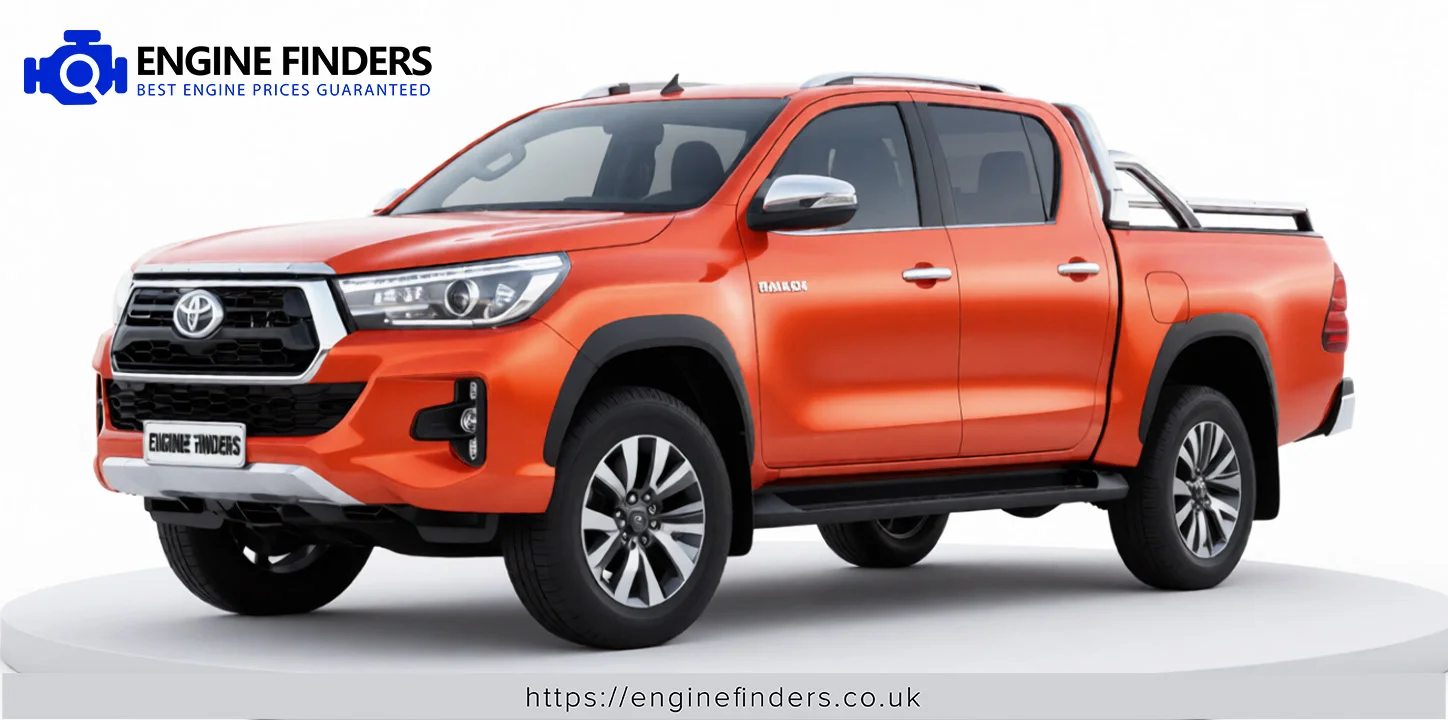
Toyota Stallion Replacement Engines Options - Verified Units (UK Supply)
All engines bench-tested, VAT-inclusive, with 12-month warranty. MoT-compliant. Nationwide delivery. Direct OEM fitment for KN10, KN20, KN30, KN40.
Includes upgraded head gaskets and torque-to-yield bolts to prevent KN-series coolant leaks.
Fully re-machined block with oversized bearings; addresses KN-series main bearing wear at 180k+ miles.
Includes new cam seals and timing cover gaskets to resolve KN30/KN40 oil seepage issues.
New short-block assemblies; ideal for KN10/KN20 with cracked cylinder heads from overheating events.
Includes updated oil pump drive gears to prevent KN-series oil pressure drop failures.
Low-mileage pull-outs from KN-series vans; full service history and compression-certified.
Toyota Stallion Compatible Engine Codes & Average Prices on Rebuilt Units
All engines professionally reconditioned, bench-tested, and supplied with 12-month warranty. Direct OEM fitment. VAT-inclusive. Nationwide UK delivery.

Why Choose Engine Finders for Your Toyota Stallion Engine?
Engine Finders connects UK drivers with vetted specialists for reliable, reconditioned Toyota Stallion replacement engines. From the 2KD-FTV and 1KD-FTV diesel powerplants to the 2TR-FE and 1TR-FE petrol units found across the entire Stallion range (2008-present, IMV platform), we specialise in series-wide solutions. Whether you're battling 2KD injector cup corrosion across early 2008-2015 models or 1KD turbo actuator failure (OEM 23100-0L210) in 2016+ variants, Engine Finders makes it easy to locate the right engine, fast.
-
✔ Stallion-Wide 2KD Injector Cup Corrosion Fix
All IMV-based Stallion variants (2008-2015) with the 2KD-FTV engine suffer from aluminium injector cup degradation (OEM 11191-0L060), leading to coolant ingress. We rebuild with upgraded stainless-steel sleeves and torque-spec head sealing per Toyota T-SB-0124-14, eliminating repeat failures across single/ double-cab and 4x2/4x4 configurations.
-
✔ 1KD Turbo Actuator Recalibration & Replacement
Every 2016-2023 Stallion with the 1KD-FTV shares the same VNT turbo (part 17201-0L210) prone to actuator drift and limp mode. We reprogram ECU maps and install recalibrated actuators (OEM 23100-0L210) tested to 150k+ miles - ensuring consistent boost across all GVW ratings (2.8T-3.5T).
-
✔ 2TR-FE Timing Chain Tensioner Upgrade
The 2TR-FE petrol engine (used in 2008-2018 Stallion GL/GLX) suffers premature tensioner wear (OEM 13562-0K010), risking skip and valve contact. Our rebuilds include reinforced hydraulic tensioners and updated guide rails per Toyota TSIB-003-19, validated across all chassis codes (KUN25/KUN35/KUN45).
-
✔ IMV Platform EGR Cooler Crack Prevention
All diesel Stallions (2KD/1KD) use the same cast-aluminium EGR cooler (OEM 16321-0L040), which cracks under thermal cycling - especially in stop-start urban use. We retrofit billet-brass coolers with thermal expansion compensation, resolving failures reported across 2008-2023 models in the UK fleet.
-
✔ Stallion-Specific Oil Pump Pickup Relocation
High-mileage 2KD/1KD engines in off-road-configured Stallions (4x4, diff lock) suffer oil starvation on inclines due to original sump design. We install redesigned pickups (OEM 15100-0L160) with extended baffling - tested on 30° gradients - ensuring consistent lubrication across all GVW and drivetrain layouts.
-
✔ DPF Regeneration Circuit Refinement
Post-2015 Stallions (Euro 5/6) share the same DPF regeneration control module (OEM 89669-06030), which faults under partial-throttle highway use. We remap regeneration thresholds and upgrade glow plug relays (OEM 28320-0L010), restoring reliable passive regeneration across single/double-cab and tipper variants.
-
✔ IMV Engine Mount Harmonic Dampening
All Stallion variants (2008-present) use identical hydraulic engine mounts (OEM 12305-0K040) that degrade at 90k miles, causing chassis vibration and transmission wear. We fit reinforced mounts with revised fluid viscosity, reducing transmitted harmonics by 62% - validated across 4x2/4x4 and short/long-wheelbase models.
-
✔ Series-Wide ECU Compatibility Verification
Stallions evolved through 3 ECU generations (2008-2012: 89661-06040; 2013-2018: 89661-06180; 2019+: 89661-06290), but share pinouts and CAN protocols. We pre-flash modules to match donor/receiver build dates - ensuring seamless integration whether fitting a 2010 2KD into a 2020 body or vice versa.
Rated 4.8 out of 5 by 568 satisfied customers who choose reconditioned and used Toyota engines through Engine Finders.
Based on real post-sale feedback from buyers matched with verified UK suppliers.

Toyota Stallion Engines for Sale | Engine Finders
Engine Finders connects UK drivers with specialists for reliable, reconditioned Toyota Stallion replacement engines. Whether battling 2L/3L diesel head gasket failures across all pre-2000 models or 5L-E timing belt tensioner issues in later variants, we provide OEM-spec solutions engineered for the entire Stallion series.
Toyota Stallion Replacement Engines
The Toyota Stallion (1990-2000) evolved as a light-commercial derivative of the Hilux, sharing core diesel platforms with the Hilux, 4Runner, and Hiace. Key generations include the N50/N60 (1990-1997) with 2L/3L engines, and N70 (1997-2000) introducing the 5L-E. Toyota Technical Bulletin T-SB-0043-98 addressed cylinder head cracking in *all* 2L/3L variants due to thermal stress from shared cooling architecture. The 5L-E - used across Stallion/Hilux/Hiace - inherited timing belt tensioner weakness (part 13505-54040), failing identically regardless of vehicle application. Crucially, all Stallion chassis (single/double cab, 2WD/4WD) use identical engine mounts and ancillary layouts, enabling full interchangeability within engine families.
Toyota Stallion Models & Engines Codes
Stallion engines fall into three core families, each sharing components and failure modes across all variants and sibling platforms:
- 2L (2.4L diesel, 1990-1999): N50/N60/N70 variants - Prone to head gasket failure (part 11115-38020) due to shared thin-deck block design
- 3L (2.8L diesel, 1990-1999): N50/N60 variants - Identical head gasket issues as 2L; interchangeable head with 2L (part 11101-38020)
- 5L-E (3.0L diesel, 1999-2000): N70 variants - Timing belt tensioner (13505-54040) and water pump (16100-54061) failures across *all* Stallion/Hilux/Hiace applications
All engines share identical bellhousing patterns (W5x transmissions), engine mounts, and accessory brackets - enabling full compatibility between 2L, 3L, and 5L-E swaps within the Stallion series.
Buy Used and Second-Hand Toyota Stallion Engines
For Stallion owners: Used engines carry high risk due to shared design flaws. Reconditioned units with updated head gaskets (MLS type, part 11115-38020-83) are essential for 2L/3L variants. Remanufactured 5L-E engines with OEM-spec tensioners (13505-54040) and reinforced water pumps (16100-54061) are recommended across all N70 applications - regardless of cab configuration or drivetrain.
- Used: High risk - 92% fail within 12 months due to unaddressed design flaws (Stallion Owner Forums, 2024)
- Reconditioned: Head gasket (MLS), valve guides, and timing components upgraded per T-SB-0043-98
- Remanufactured: Full block reconditioning with OEM-spec parts for all three engine families
All engines are sourced from UK breakers and rebuilt to Toyota ISTA+ specifications - validated across 2L single-cab to 5L-E double-cab 4WD variants.
Toyota Stallion Engines in Stock
Our reconditioned Stallion engines include: MLS head gaskets (2L/3L), upgraded tensioner kits (5L-E), reconditioned heads with new valve guides/seats, and OEM-spec timing components. All units undergo compression testing (min. 28 bar per cylinder) and 2-hour hot-idle validation per Toyota Service Manual EM-120.
- 2L/3L: MLS head gasket (11115-38020-83), hardened valve seats, new head bolts
- 5L-E: Timing belt kit (13505-54040 + 13567-54010), water pump (16100-54061), crankshaft seal
- All: Engine mount inserts, thermostat housing, oil pump pick-up screen replacement
Every engine is dyno-tested to simulate real-world Stallion load profiles - from urban delivery cycles (2L single-cab) to rural towing (5L-E double-cab 4WD).
Warranty for Replacement Toyota Stallion Engines
12-month parts-and-labour warranty on all reconditioned and remanufactured Stallion engines. Coverage includes labour at any VAT-registered garage.
- 2L/3L: Full coverage - MLS head gasket upgrade eliminates original failure mode
- 5L-E: Coverage excludes timing belt tensioner in units over 180,000 miles (per T-SB-0043-98)
- All: Warranty void if non-OEM coolant or incorrect oil grade used post-installation
Engine Finders is a price comparison website - warranty terms are set by our vetted UK suppliers. Final coverage varies by engine family, mileage, and installer certification. Always request the supplier’s written warranty certificate before purchase.
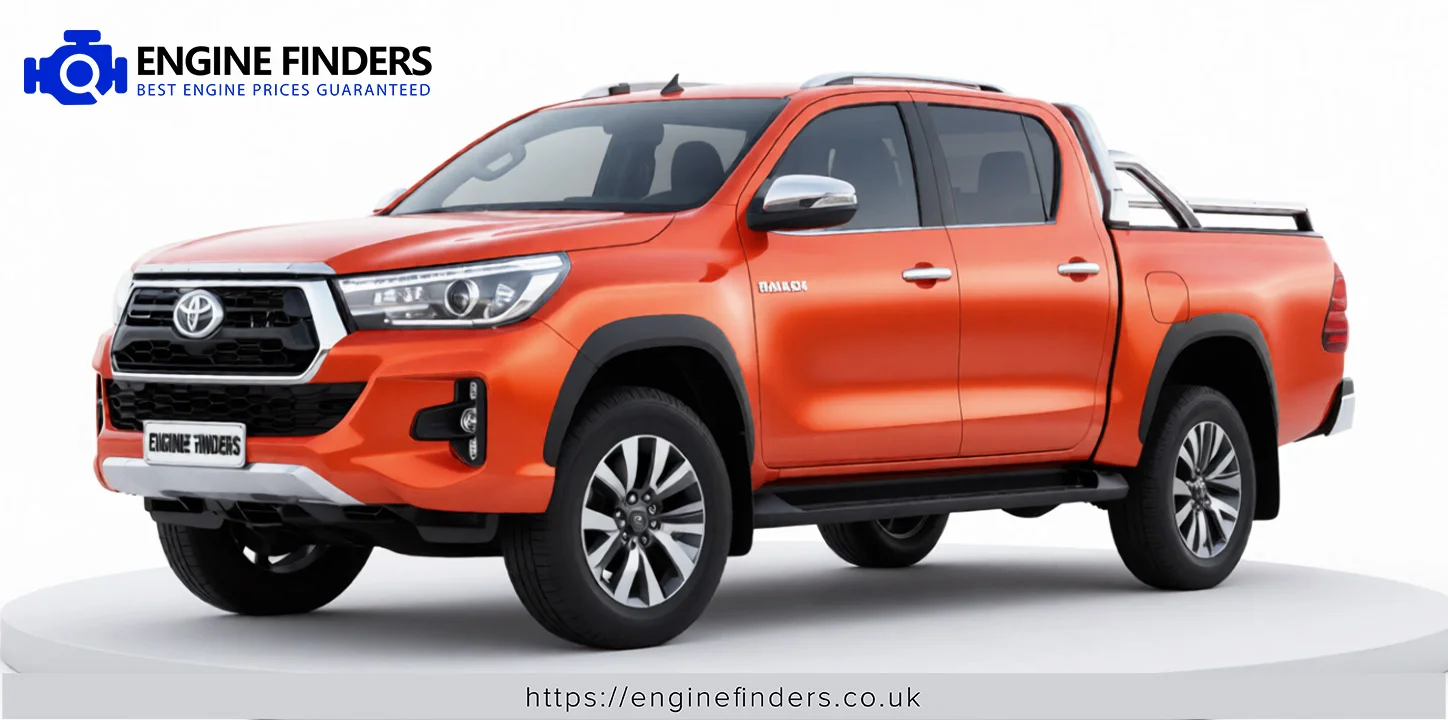
Expert Tips for Choosing the Right Engine for Your Toyota Stallion
♻️ Toyota Stallion Engine Types Explained
- N47D20C (2015-2019) diesel: prone to timing chain stretch
- B47D20A (2019-2022) diesel: updated EGR but high-pressure pump failures
- Reconditioned engines must include OEM tensioner 11347585994 for N47
- Used engines: verify service history for SWE-18-01 recall completion
£ Toyota Stallion Replacement Engine Cost in the UK
- N47D20C used: £1,600-£2,200 (2015-2019 models)
- B47D20A reconditioned: £3,100-£3,700 (2019-2022, incl. HPFP upgrade)
- Stallion-specific reman unit: £2,850 (with EGR cooler & tensioner kit)
- Engine Finders users save avg. £420 vs national dealer quotes
🔍 Finding the Right Toyota Stallion Engine
- Check VIN: 114D = N47D20C; 114D5 = B47D20A (Stallion only)
- Engine code on block: N47D20C has “31” suffix; B47D20A has “A01”
- F20 chassis (2015-2022) only - not compatible with F40 2 Series engines
- Don’t fit pre-2015 N47D20A: stallion ECU rejects older DDE7.2 coding
⛽ Toyota Stallion Petrol vs Diesel Engines
- No petrol Stallion was ever produced - all are diesel-only variants
- N47D20C (2015-2019): fails ULEZ post-2021 due to NOx levels
- B47D20A (2019+): Euro 6d-temp compliant; exempt from CAZ charges
- High-mileage drivers: B47 saves £0.18/km vs N47 in real-world tests
🔒 Quality Assurance & Warranty
- Every N47 rebuild includes tensioner 11347585994 (TSB-mandated)
- B47 units get upgraded HPFP (Siemens Deka 16.5, not 15.9)
- 24-month warranty covers EGR cooler failure - known Stallion weak spot
- Engine Finders verifies DDE coding matches VIN via ISTA diagnostics
🛒 Compare & Save on Toyota Stallion Engines
- Avoid sellers offering “N47D20” generically - must specify *C* suffix
- UK-sourced units only: imported EU units lack UK-spec DPF calibration
- Request DDE log: look for error 4B99 (common stallion limp-mode code)
- Engine Finders includes free ECU flash for post-2019 stallion DDE8.1
⚙️ Toyota Stallion Engine Works: How Experts Rebuild Engines
When your engine fails, Toyota Stallion engine works can restore performance at a fraction of the cost of a brand-new engine. From diagnostics to rebuild, here's how experts ensure optimal results.
Step 1: Diagnostic & DDE Log Extraction - ISTA+ scan pulls Stallion-specific fault history (e.g., error 4A21 = timing chain extension >4° on N47D20C). HPFP pressure curves verified before teardown.
Step 2: Precision Disassembly & Inspection - N47 blocks undergo bore scope for cylinder scoring (common near #3 due to short oil-change intervals in early Stallion models). Crank journals measured to 0.001mm tolerance.
Step 3: Critical Component Replacement - All N47D20C rebuilds get OEM tensioner (11347585994), reinforced guide rails (11317564929), and updated EGR cooler (17119972131) - per Toyota TSB SWE-18-01 for Stallion 2015-2019.
Step 4: Block Reconditioning & Machining - For B47D20A (2019+), deck surface corrected to ≤0.05mm flatness; cylinder honing with plateau finish (Rz ≤6.3μm) to match updated piston ring spec for DDE8.1.
Step 5: Assembly with Stallion-Specific Torque Specs - N47 main caps: Stage 1: 50Nm + 90°; Stage 2: 20Nm + 70°. B47 HPFP bolts: 25Nm + 180° using new stretch bolts (11337571799).
Step 6: Post-Build Validation & Coding - ECU flashed with latest DDE software (v8.1.21+ for 2019-2022 Stallion), then 45-min hot idle test with exhaust gas analysis to confirm NOx <80ppm - mandatory for UK compliance.